
10 Best Rear Delt Exercises: Proper Form and Workout Routines
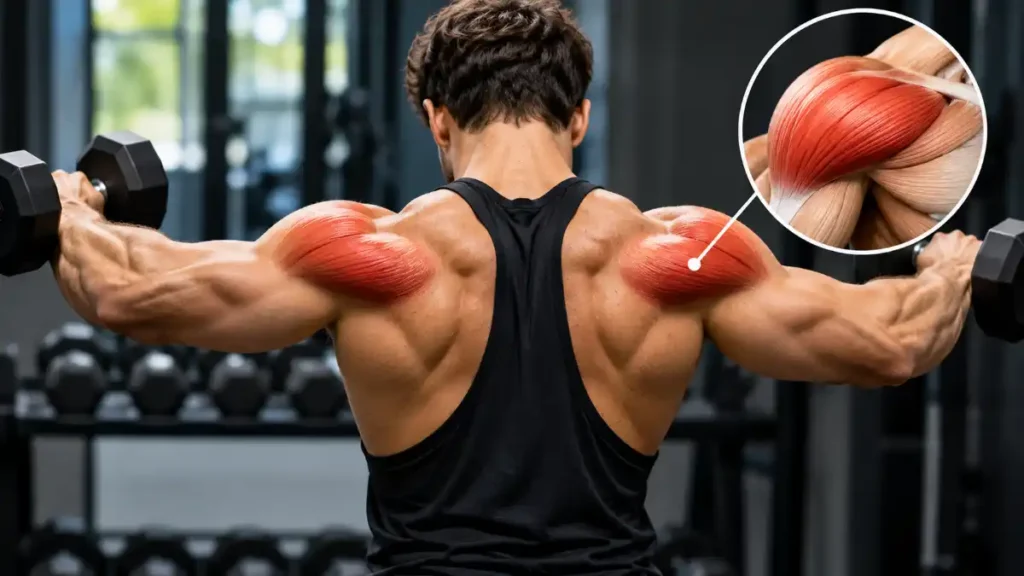
Rear delt exercises strengthen and develop the posterior deltoids, the muscles at the back of your shoulders. Some of the best options include reverse pec deck flies, cable rear delt flies, dumbbell reverse flies, chest-supported raises, face pulls, and wide-elbow rows. These exercises strengthen your rear shoulders, support balanced shoulder development, and help build fuller-looking deltoids.
To get the most from rear delt training, choose exercises that match your available equipment, focus on controlled movements, and gradually increase resistance as your strength improves. Reverse fly variations place greater emphasis on the rear deltoids, while face pulls and rows also work several upper-back muscles.
10 Best Rear Delt Exercises for Strength and Muscle Growth
You can train your rear delts effectively with machines, cables, dumbbells, or resistance bands. Each option has advantages, and no single exercise has been conclusively proven to produce the most muscle growth for everyone.
| Exercise | Equipment | Primary Movement | Difficulty | Best Use |
| Reverse pec deck fly | Machine | Horizontal abduction | Beginner | Stable rear delt training |
| Cable rear delt fly | Cable machine | Horizontal abduction | Intermediate | Adjustable resistance direction |
| Dumbbell reverse fly | Dumbbells | Horizontal abduction | Beginner | Gym or home workouts |
| Chest-supported rear delt raise | Dumbbells, bench | Horizontal abduction | Beginner | Reduced torso movement |
| Face pull | Cable, rope | Pulling with external rotation | Beginner | Rear delts and upper back |
| Wide-elbow rear delt row | Dumbbells or cable | Horizontal pulling | Intermediate | Compound rear delt training |
| Resistance band reverse fly | Resistance band | Horizontal abduction | Beginner | Home workouts |
| Single-arm cable rear delt fly | Cable machine | Horizontal abduction | Intermediate | Unilateral training |
| Incline bench rear delt row | Dumbbells, bench | Horizontal pulling | Beginner | Supported rowing |
| Rear delt row machine | Row machine | Horizontal pulling | Beginner | Guided pulling movement |
1. Reverse Pec Deck Fly
Sit facing the machine’s chest pad and adjust the seat so the handles are approximately shoulder height. With your elbows slightly bent, move your arms outward and backward, then return slowly to the starting position.
Keep your chest against the pad and avoid shrugging or squeezing your shoulder blades together excessively. Choose a weight you can control throughout a comfortable range of motion.
Alternative: Cable rear delt fly.
2. Cable Rear Delt Fly
Set two cable pulleys around shoulder height and grasp the opposite handles, crossing your arms in front of your body. Keep a slight bend in your elbows as you open your arms outward.
Focus on moving through your shoulders rather than swinging your torso. Bring your arms back together gradually, maintaining control of the cables.
The cable reverse fly technique allows you to adjust resistance direction through pulley positioning.
Alternative: Dumbbell reverse fly.
3. Bent-Over Dumbbell Reverse Fly
Hold a light dumbbell in each hand and hinge forward at your hips. Keep your knees slightly bent, your back neutral, and your arms hanging beneath your shoulders.
Raise the dumbbells outward with a gentle bend in your elbows, then lower them steadily. Avoid jerking your torso upward to move heavier weights.
Alternative: Resistance band reverse fly.
4. Chest-Supported Rear Delt Raise
Lie face-down on an incline bench with a dumbbell in each hand. Let your arms hang beneath your shoulders, then lift them outward while keeping your elbows slightly bent.
Maintain contact between your chest and the bench instead of arching your back to lift the weights. The supported position reduces the need to stabilize your torso, making it easier to concentrate on the shoulder movement.
For additional positioning guidance, the incline reverse fly exercise instructions explain proper bench setup and lifting technique.
Alternative: Bent-over dumbbell reverse fly.
5. Face Pull
Attach a rope handle to a cable pulley around face height. Hold both ends with a neutral grip, palms facing each other, and step backward until the cable is taut.
Pull the rope toward your forehead or upper face while separating your hands and allowing your shoulders to rotate outward. Keep your torso steady and extend your arms slowly to return.
Face pulls strengthen the rear delts while also involving the trapezius, rhomboids, and shoulder external rotators. The face pull exercise guide provides further technique guidance and identifies common mistakes.
Alternative: Resistance band face pull.
6. Wide-Elbow Rear Delt Row
With your torso supported or hinged forward, hold dumbbells or a cable handle. Pull your elbows backward and outward rather than keeping them tucked against your ribs.
Avoid twisting or rocking your upper body to complete the movement. Unlike reverse flies, this exercise involves more elbow bending and recruits several upper-back muscles alongside the rear delts.
Alternative: Chest-supported wide-elbow row.
7. Resistance Band Reverse Fly
Hold a light resistance band in front of your chest with your arms nearly straight. Adjust your hand spacing so the band provides manageable tension without limiting your range of motion.
Pull your hands apart until your arms reach a comfortable outward position. Then bring them back together slowly instead of allowing the band to snap back.
This variation works well for home workouts because it requires little space and no exercise machine.
Alternative: Light dumbbell reverse fly.
8. Single-Arm Cable Rear Delt Fly
Stand sideways to a cable machine with the pulley around shoulder height. Reach across your body and grasp the handle with the hand farther from the machine.
Keeping your elbow slightly bent, move that arm outward across your body. Resist the temptation to rotate your torso as you pull, and return the handle under control.
Training one arm at a time lets you concentrate on each shoulder independently.
Alternative: Bilateral cable rear delt fly.
9. Incline Bench Rear Delt Row
Adjust a bench to a comfortable incline and lie face-down with a dumbbell in each hand. Allow your arms to hang naturally before beginning the row.
Pull your elbows outward and backward, keeping your upper arms angled away from your torso. Lower the dumbbells steadily while keeping your chest supported.
Unlike a chest-supported reverse fly, this movement uses substantial elbow bending and involves more upper-back pulling.
Alternative: Chest-supported wide-elbow dumbbell row.
10. Rear Delt Row Machine
Choose a seated row machine that allows your elbows to move outward comfortably. Adjust the seat and handles so you can maintain a stable position without forcing your shoulders into an awkward angle.
Pull the handles toward your upper torso with your elbows angled away from your sides. Return slowly, keeping your chest against the support if the machine has one.
Although this movement emphasizes the posterior shoulders, the trapezius and rhomboids also contribute.
Alternative: Wide-elbow dumbbell row.
How to Target Your Rear Delts Without Common Form Mistakes
The posterior deltoids help move your upper arms backward and outward, particularly during shoulder horizontal abduction. However, the trapezius, rhomboids, and other upper-back muscles also contribute to many rear delt movements.
If you struggle to feel your rear delts during reverse flies, pay attention to these technique details:
- Choose manageable weights: Excessive resistance often leads to swinging, shortened repetitions, or unnecessary torso movement.
- Focus on shoulder movement: Move your upper arms outward rather than relying mainly on squeezing your shoulder blades together.
- Avoid shrugging: Keep your neck relaxed and shoulders comfortably positioned instead of lifting them toward your ears.
- Use a comfortable range of motion: Raise your arms as far as you can without forcing an awkward shoulder position.
- Breathe steadily: Exhale during the lifting or pulling phase and inhale as you return to the starting position.
- Control the lowering phase: Resist gravity or cable tension rather than letting the weights drop.
Some upper-back involvement is normal, especially during face pulls and rows. You also don’t need to feel an intense muscle burn to make progress. Consistent technique, sufficient training effort, and gradual progression matter more than chasing a particular sensation.
Rear Delt Workout Routines for Muscle Growth
You don’t need a long list of exercises in every session. One or two well-chosen movements can provide useful direct rear delt training alongside your existing back or shoulder routine.
| Routine | Exercises | Sets and Reps |
| Beginner | Dumbbell reverse fly + face pull | 2 × 10–15 each |
| Intermediate gym | Reverse pec deck + cable rear delt fly | 3 × 10–15 each |
| Home workout | Band reverse fly + dumbbell reverse fly | 2 × 12–20 each |
These routines are starting examples, not fixed prescriptions. Adjust the workload according to your experience, recovery, and the amount of pulling already included in your training program.
How Often Should You Train Rear Delts?
Training rear delts twice per week is a practical approach if you’re recovering well between sessions. Beginners may need less direct work, particularly when their back workouts already include several rowing exercises.
The 2026 resistance training guidelines highlight consistency, progressive training, and individualized programming. Higher weekly training volumes can support hypertrophy, with approximately 10 sets per muscle group serving as a general reference rather than a requirement for rear delt isolation.
Rest around 60–120 seconds between accessory sets, taking longer when necessary to maintain good technique.
To progress, gradually add repetitions or increase resistance. When you can consistently complete the upper end of your repetition range with controlled form, try a small weight increase. There is no need to push every set to absolute muscular failure; resistance training research indicates that doing so is not consistently necessary for muscle growth.
Rear Delt Training Safety and Exercise Selection
Before heavier sets, warm up with light resistance and comfortable shoulder movements. Start with weights you can handle confidently, especially when learning an unfamiliar exercise.
Dumbbells are convenient for home training, cables offer flexibility in resistance direction, and machines can provide a stable setup. Each can support rear delt development, so choose the equipment that lets you train consistently with good technique.
Avoid forcing movements that cause sharp pain. If you experience shoulder instability, persistent discomfort, or symptoms following a recent injury, consult a qualified healthcare professional before continuing.
Reas also: Rear Delt Exercises
Frequently Asked Questions
Should You Train Rear Delts on Back Day or Shoulder Day?
Either option works. Back day is convenient because rows and other pulling exercises already involve the posterior deltoids. Training them on shoulder day is equally reasonable if you prefer to separate your exercises. The important factors are consistent training, manageable weekly volume, and enough recovery between sessions.
Do Regular Rows Work the Rear Delts?
Yes. Most rowing variations involve the posterior deltoids to some degree, although their contribution depends on your elbow position, shoulder movement, and technique. Rows performed with elbows angled outward generally place more emphasis on the rear shoulders than rows with elbows tucked close to the body. However, both variations also work other back muscles.
Are Cables Better Than Dumbbells for Rear Delts?
Neither is automatically better. Cables let you adjust the direction of resistance, which can make certain rear delt movements easier to set up. Dumbbells are more accessible for home training and can be just as useful for muscle development. Choose the option that feels comfortable, allows controlled repetitions, and supports gradual progression.




2 thoughts on “10 Best Rear Delt Exercises: Proper Form and Workout Routines”