
Bone Broth: Nutrition, Benefits, Recipe, and How to Choose It
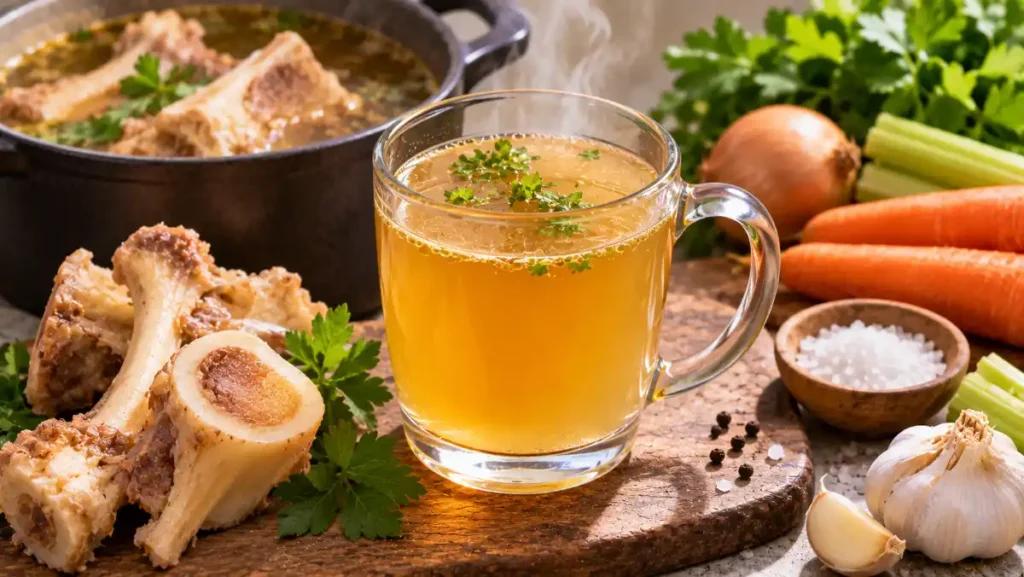
Bone broth is a savory liquid made by simmering animal bones, connective tissue, vegetables, and seasonings in water. During cooking, collagen from the connective tissue breaks down into gelatin, adding body and richness to the broth. It provides fluids, protein, and varying amounts of minerals, making it a useful addition to a balanced diet. A typical cup contains around 5–10 grams of protein, although the nutritional content varies considerably between homemade recipes and packaged products.
You can sip bone broth warm, use it as a soup base, or add it to everyday cooking. But while it’s often promoted for improving joint health, digestion, and skin appearance, scientific evidence doesn’t support many of these claims. Its most reliable benefits come from its fluid and protein content rather than any special healing properties.
What Is Bone Broth?
Bone broth is commonly made from chicken, beef, turkey, or other animal bones, often with cartilage and connective tissue still attached. Simmering these ingredients for several hours develops the flavor and releases gelatin, which may cause the broth to thicken or set into a jelly-like consistency when refrigerated.
The distinction between bone broth, regular broth, and stock isn’t always clear-cut. Regular broth often emphasizes meat and vegetables, while stock typically relies on bones for flavor and body. Bone broth is generally simmered longer, although the ingredients and cooking methods overlap considerably.
Bone Broth Nutrition Facts
Bone broth’s nutritional value depends on the bones used, the amount of meat and connective tissue, added vegetables, water, salt, and cooking time. Even two homemade batches prepared with similar ingredients can have different nutrient concentrations.
The following figures represent the labeled nutrition of one commercially prepared chicken bone broth per 1-cup (240-mL) serving. They are an example, not an average for all bone broths.
| Nutrient | Amount per cup |
| Calories | 35 |
| Protein | 8 g |
| Total fat | 0 g |
| Carbohydrates | Less than 1 g |
| Sodium | 350 mg |
| Potassium | 400 mg |
These values come from a commercial chicken bone broth nutrition label. Homemade versions may contain very little added sodium, while some packaged products contain considerably more.
Bone broth also provides collagen-derived amino acids, including glycine and proline. However, collagen is an incomplete protein because it lacks tryptophan, an essential amino acid. That means bone broth can contribute to your daily protein intake, but it shouldn’t replace complete protein sources such as eggs, dairy, meat, or soy.
Despite its reputation as a mineral-rich food, bone broth isn’t necessarily an excellent source of calcium or magnesium. The quantities can be relatively small, depending on how it’s prepared.
What Are the Health Benefits of Bone Broth?
Bone broth offers some practical nutritional benefits, but it’s important to distinguish those from the therapeutic effects often promoted in wellness marketing.
- Hydration: Because bone broth is mostly water, drinking it contributes to your daily fluid intake. A warm cup may be particularly appealing when you want something savory instead of a cold drink.
- Protein intake: Depending on the recipe or product, a serving can provide several grams of protein. However, collagen-derived protein doesn’t have the same amino acid profile as complete protein sources.
- Digestive comfort: Warm broth may be easier to consume when you prefer something light. However, there’s insufficient human evidence that drinking it repairs the intestinal lining, heals a “leaky gut,” or treats digestive disorders.
- Joint and skin health: Some studies have examined collagen supplements for joint discomfort and skin elasticity. Those findings don’t establish that drinking ordinary bone broth produces the same results.
- Weight management: A relatively low-calorie cup of broth may be a satisfying alternative to a higher-calorie snack. However, it doesn’t directly burn fat or cause weight loss on its own.
Claims about reduced inflammation, stronger immunity, better sleep, and cartilage repair also lack convincing clinical evidence specifically involving bone broth.
Research discussed in Harvard’s overview of collagen and bone broth highlights an important distinction: consuming collagen doesn’t mean that it travels directly to your skin or joints. The digestive system breaks dietary proteins down into amino acids and peptides, which the body uses according to its needs.
Bone broth can certainly be part of a healthy diet, but its nutrients are also available from other foods.
How to Make Bone Broth at Home
Making chicken bone broth at home gives you control over the ingredients, seasoning, and salt content. It’s also a practical way to use chicken carcasses and other leftover bones.
Ingredients
- 4 lb (1.8 kg) chicken bones, including carcasses, wings, or necks
- 6–8 cups (1.4–1.9 L) water, or enough to barely cover the bones
- 2 carrots, roughly chopped
- 2 celery stalks, chopped
- 1 onion, quartered
- 2 garlic cloves
- 1 bay leaf
- 1 tablespoon apple cider vinegar (optional)
- Peppercorns and salt to taste
Preparation time: Approximately 15–20 minutes.
Estimated yield: Approximately 5–7 cups (1.2–1.7 L), depending on the water added, evaporation, and how much liquid remains with the strained solids.
Stovetop instructions
- Place the bones, vegetables, seasonings, and optional vinegar in a large stockpot, approximately 8 quarts (7.6 L). Add enough water to barely cover the bones. Depending on their size and arrangement, you may need to adjust the water quantity.
- Bring the mixture to a boil, then lower the heat until the liquid maintains a gentle simmer.
- Cook partially covered for approximately 6–12 hours. Check occasionally and add water if necessary to prevent the exposed bones from drying out.
- Pour the broth through a fine-mesh sieve, discarding the bones and cooked vegetables. Taste and adjust the seasoning.
- Divide the hot broth into shallow containers, refrigerate promptly, and remove the solidified layer of fat once chilled if you prefer a lighter result.
For a deeper, roasted flavor, you can brown uncooked bones in the oven before simmering them. A chilled broth that develops a jelly-like texture contains gelatin, but this doesn’t tell you exactly how much protein or collagen it provides.
Slow Cooker and Pressure Cooker Methods
For a slow cooker, place the ingredients in the appliance, add water without exceeding its maximum fill line, and cook on low for approximately 12–24 hours. Strain the broth once it develops the flavor and richness you prefer.
For a compatible electric pressure cooker, follow your appliance’s chicken bone broth instructions. For example, Instant Pot’s cooking guidance lists two hours at high pressure followed by natural pressure release for chicken bone broth. Allow additional time for the cooker to build and release pressure.
Never exceed the appliance’s maximum fill line, and don’t attempt to open a pressure cooker before it has fully depressurized.
Storage and Reheating
Divide freshly cooked broth into shallow containers so it cools quickly. Refrigerate it within two hours, or within one hour if the surrounding temperature exceeds 90°F (32°C). Keep refrigerated broth at 40°F (4°C) or below and use it within 3–4 days.
These precautions follow USDA guidance for safely handling leftovers.
For longer storage, freeze broth in suitable containers, leaving room for expansion. Aim to use frozen portions within 2–3 months for the best quality, consistent with recommended storage periods for soups and stews.
When reheating, bring broth to a rolling boil. Don’t leave a large pot of cooked broth sitting at room temperature overnight.
Chicken vs. Beef Bone Broth: What’s the Difference?
Chicken and beef bone broth have different flavor profiles, but neither is automatically more nutritious. Their protein, fat, and mineral contents depend on the ingredients and preparation methods.
| Feature | Chicken bone broth | Beef bone broth | Conventional stock |
| Main ingredients | Chicken bones and connective tissue | Beef bones and connective tissue | Bones, vegetables, and aromatics |
| Flavor | Generally lighter | Generally richer | Depends on ingredients |
| Cooking | Several hours or longer | Often simmered longer | Varies by recipe |
| Nutrition | Depends on recipe | Depends on recipe | Depends on recipe |
Chicken bone broth may be preferable when you want a milder flavor for soups or lighter dishes. Beef bone broth often works well in heartier soups, stews, and sauces.
Neither variety is consistently higher in collagen. The types of bones, amount of connective tissue, water ratio, and cooking method all influence the finished broth.
Homemade vs. Store-Bought Bone Broth
Homemade bone broth lets you choose the ingredients and control the amount of added salt. Packaged versions are more convenient, especially when you don’t have time to simmer bones for several hours.
Store-bought options include ready-to-drink cartons, liquid concentrates, and powders. Their protein content, sodium levels, and preparation requirements can differ substantially.
When shopping, compare protein and sodium per serving, ingredient lists, serving sizes, and cost per prepared cup. If you’re buying a concentrate or powder, calculate the nutritional values after dilution so you’re comparing equivalent portions. Watch for added salt, flavorings, and other ingredients that may affect the final product.
Labels such as “collagen-rich,” “premium,” or “slow-simmered” don’t necessarily mean a product contains more protein. The Nutrition Facts panel offers a more reliable basis for comparison than promotional language.
Can You Drink Bone Broth Every Day? Side Effects and Precautions
Most healthy adults can drink bone broth regularly as part of a varied, balanced diet. A cup is a convenient serving size, although there’s no medically established amount that everyone should consume daily.
Sodium deserves particular attention, especially if you’re managing high blood pressure or following a sodium-restricted diet. Some packaged broths contain substantial amounts of sodium, so drinking several servings can increase your daily intake quickly.
People with kidney disease or prescribed limits on sodium, potassium, protein, or fluids should discuss regular consumption with their healthcare professional. Certain ingredients may also cause allergic reactions in sensitive individuals.
Researchers have examined potential heavy-metal contamination in bone broth, but findings vary. Available evidence doesn’t justify assuming that every broth is dangerous or that every product is completely free of contaminants.
Remember that bone broth isn’t a nutritionally complete meal. Enjoy it as a warm drink, a base for soup, a cooking liquid for grains, or an ingredient in sauces. Plain, low-carbohydrate broth can also be useful when preparing meals from keto diet recipes, provided the other ingredients fit your dietary goals.
Frequently Asked Questions
Does bone broth break a fast?
Yes. Bone broth contains calories and protein, so it breaks a strict calorie-free fast. Some modified fasting plans allow small amounts of broth, but whether it’s appropriate depends on the specific fasting approach and your goals.
Is bone broth keto-friendly?
Plain bone broth is generally compatible with ketogenic diets because it’s usually low in carbohydrates. However, packaged varieties may contain added sugars, starches, or other carbohydrate-containing ingredients. Check the Nutrition Facts label before including one in your meal plan.
Does bone broth contain collagen?
Yes. Bone broth contains collagen-derived gelatin and related proteins released during cooking. The amount varies with the bones and preparation method. Drinking bone broth supplies amino acids, but it doesn’t guarantee increased collagen production or visible improvements in skin and joints.




1 thought on “Bone Broth: Nutrition, Benefits, Recipe, and How to Choose It”