
Lil Jeff: Biography, Music, Death, and the Facts Behind the Online Rumors
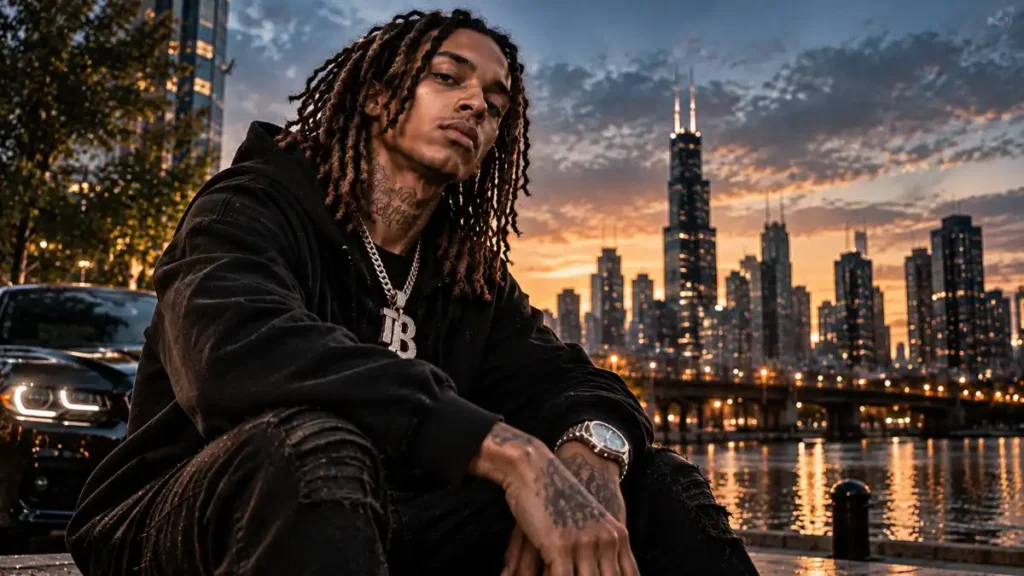
Lil Jeff was a Chicago rapper associated with the city’s drill scene whose music career developed rapidly before his death in June 2024. He is also known as Bloodhound Lil Jeff, and his posthumous releases have kept his name active across major music platforms. Music databases list him as a Chicago artist born on July 14, 2002, who died in Chicago on June 8, 2024, at age 21.
Because much of the discussion surrounding him comes from social media, fan pages, videos, and community-driven sources, some details about his life and death are repeated with more certainty than the evidence allows. This guide separates the better-documented parts of his biography and music career from claims that remain disputed or unverified.
Who Was Lil Jeff?
Lil Jeff was a Chicago hip-hop artist who performed under the name Bloodhound Lil Jeff. MusicBrainz identifies him as a Chicago-born artist and records his birth date as July 14, 2002, with his death occurring on June 8, 2024. IMDb also lists Jeffery Harris as his birth name, although online sources are not completely consistent about the full form of his legal name.
His recorded output is closely connected with Chicago drill, and his catalog includes collaborations with artists such as Bloodhound Q50, Rell Vert, and G Herbo. Music databases document releases including “Can’t Beat Us,” “AHHH,” “Triple 3,” “Don’t Blink or Stare,” and other tracks released during 2024 and afterward.
Read More: Lil Jeff
Lil Jeff Meaning and Stage Name
The name “Lil Jeff” is the shorter form commonly used for the artist, while Bloodhound Lil Jeff became another prominent artist name associated with his catalog.
The “Bloodhound” name is also strongly connected with the collective and collaborators appearing throughout his music. However, specific claims about personal affiliations, gang membership, or the meaning behind every part of the name are frequently repeated online without the kind of primary documentation that would make them appropriate to state as established biographical facts.
For that reason, it is safer to distinguish the artist’s documented stage names from broader claims about his personal or street affiliations.
Lil Jeff’s Music Career
The available music records show an artist whose catalog expanded quickly during the period immediately before and after his death.
MusicBrainz lists releases from 2024 including “Can’t Beat Us,” “AHHH,” “I Love My Draco,” “Triple 3” and “Don’t Blink or Stare.” IMDb’s music-video credits also document appearances connected to songs such as “Should of Saw It,” “L.A.X.,” “Triple 3” and “Ahhh.”
Rather than describing his career using unsupported claims about exactly when he became “famous,” the stronger conclusion is that his catalog expanded substantially in 2024 and continued to attract listeners through posthumous releases.
Read More: Lil Jeff
Lil Jeff Songs and the “Ahhh” Connection
One of the most recognizable tracks associated with his catalog is “Ahhh,” including the version featuring G Herbo.
Apple Music lists “Ahhh (feat. G Herbo)” on Stepping In Blood with a June 26, 2024 release date. Shazam likewise credits Bloodhound Lil Jeff and G Herbo on the track and identifies Stepping In Blood as its album. MusicBrainz also records “AHHH” among the artist’s 2024 releases.
This collaboration is important because it provides a documented connection between Lil Jeff’s music and an established Chicago rapper. It is more useful to readers than relying on unverified claims about his wider industry status.
Lil Jeff’s Posthumous Music
His death did not end the release of his recorded music.
Stepping In Blood appears in music databases as a 2024 album by Bloodhound Lil Jeff. “Ahhh (feat. G Herbo)” is listed on that project, and the song was released on June 26, 2024.
A second project, Bloody Bruddas, was released on January 1, 2025. Apple Music lists it as a 15-song hip-hop/rap album, while Amazon Music also lists 15 tracks. The project includes songs such as “Shots,” “Flamethrower,” “Through The Ceiling,” “Fighting Death,” “AR-15,” “BH4L,” and “Made Em Run.”
The release history demonstrates why his music continues to appear in searches even after his death: previously recorded material has continued to enter streaming catalogs and attract listeners.
What Happened to Lil Jeff?
Lil Jeff died after being shot in Chicago on June 8, 2024. MusicBrainz records the date and Chicago as his place of death, while IMDb identifies the cause as a gunshot. Contemporary editorial reporting from NurPhoto described a fatal shooting on the 6600 block of South Rhodes Avenue in Chicago on the same date and reported that the victim was later identified as Bloodhound Lil Jeff.
The available reporting does not justify presenting every detail circulating online as fact.
In particular, online discussions have offered different accounts of the circumstances surrounding the shooting, including claims about who initiated the confrontation, what happened immediately beforehand, and whether particular people were responsible. Those claims should not be presented as confirmed unless supported by police records, court documents, or reliable reporting.
Read More: Lil Jeff
Why Are Reports About His Death So Conflicting?
The confusion comes partly from the way information about underground music scenes spreads online.
Social-media posts can appear before traditional reporting has established the facts. A later video can repeat an earlier post, and subsequent websites may repeat the video without independently checking it. After several rounds of repetition, an unsupported claim can begin to look like a documented fact.
That is particularly important when discussing allegations involving violence or criminal conduct. A lyric, social-media statement, fan theory, or anonymous video is not automatically equivalent to a police report, court record,d or verified news report.
How Many Times Was Lil Jeff Shot?
There is no sufficiently reliable, consistently cited public source in the material reviewed here that establishes one definitive wound count.
Different online sources have circulated different numbers. Because those figures cannot be tied consistently to an authoritative publicly available medical or investigative record, they should not be presented as an established fact.
This is a good example of why repeating a precise number can make an article look more informative while actually making it less reliable. If the underlying evidence is inconsistent, the responsible answer is simply that the exact number has not been reliably established by the sources available for verification.
Read More: Lil Jeff
Was Lil Jeff’s Death an Ambush?
Accounts circulating online have described different versions of the shooting. Some portray it as an attack, while other narratives describe a confrontation involving multiple people.
The available evidence reviewed for this article does not establish a sufficiently reliable basis for choosing one online version as the definitive account. Contemporary reporting confirms the fatal shooting, but that does not automatically verify every later claim about the circumstances surrounding it.
Readers should therefore be cautious with videos or posts that present a detailed reconstruction without identifying police records, court documents, or reliable reporting behind the account.
Did Lil Jeff’s Lyrics Admit to Real Crimes?
Lil Jeff’s music contains violent first-person language, as is common in drill and other forms of rap that use street-centered storytelling.
For example, the lyrics cataloged for “Ahhh” contain first-person references to violence. However, the existence of those lyrics does not by itself establish that every event described in a song literally happened or that the artist was legally responsible for a particular crime. Shazam’s track information confirms the song’s credits, but song lyrics should not be treated as a criminal record.
This distinction matters. A song can draw from personal experience, fictional narration, exaggeration, reputation, local events, or a mixture of those elements. Without independent evidence connecting a lyric to a specific criminal event, calling it a confession goes beyond what the music itself can establish.
Was Lil Jeff Arrested or Charged for the Crimes Mentioned in His Songs?
Claims about alleged crimes should be separated from documented legal records.
The material reviewed for this article does not establish a reliable public criminal case that would allow specific lyrics to be converted into factual claims about particular murders or shootings. That means an article should not state that Lil Jeff committed a crime simply because a song contains first-person violent language.
The same standard applies to claims about alleged school-shooting involvement, named suspects, confessions, or other serious allegations. Unless supported by authoritative records or credible reporting, they should remain clearly labeled as unverified claims.
Read More: Lil Jeff
Lil Jeff Discography: Key Releases
His recorded catalog includes both pre-death material and posthumous releases.
Some of the documented titles associated with his catalog include:
- “Can’t Beat Us”
- “AHHH”
- “I Love My Draco”
- “Triple 3”
- “Don’t Blink or Stare”
- “Should’ve Saw It”
- “L.A.X.”
- Stepping In Blood
- Bloody Bruddas
MusicBrainz records Stepping In Blood and Bloody Bruddas as albums in his discography and lists several of the associated singles and collaborations.
Apple Music lists Bloody Bruddas as a 15-song project released January 1, 2025, while Stepping In Blood is associated with the June 2024 release period.
The posthumous catalog is especially significant for readers researching his music because it means a search for his songs can return releases that appeared after his death.
Why His Story Continues to Attract Attention
Lil Jeff’s story sits at the intersection of Chicago drill, social media culture, underground rap, and posthumous music releases.
His death occurred while his catalog was still developing, and subsequent releases introduced his music to listeners who may not have discovered it during his lifetime. The continued availability of songs and albums has also created a large amount of online discussion about his background, lyrics,s and death.
At the same time, the speed of social-media distribution makes this a topic where misinformation can easily become part of the accepted narrative.
A useful way to evaluate information about the artist is to separate it into three categories:
- Documented facts: release information, credited songs, artist identity information,n and the date and location of his death supported by identifiable sources.
- Reported but incompletely established details: elements of the shooting that appear in contemporary or secondary reporting but lack a consistently documented authoritative record.
- Online rumors: anonymous claims, speculative videos, alleged confession material, and unverified stories that cannot be independently corroborated.
That distinction gives readers a clearer picture without turning rumors into biography.
Read More: Lil Jeff
Lil Jeff Biography: What Can Be Established?
A concise biography can safely focus on information that appears consistently in established music databases.
He was a Chicago rapper who performed as Bloodhound Lil Jeff. MusicBrainz lists his birth date as July 14, 200,2 and his death date as June 8, 2024. The same database records Chicago as both his birthplace and place of death. IMDb separately lists Jeffery Harris as his birth name and identifies June 8, 2024, as his date of death.
His recorded work includes collaborations with Bloodhound Q50, Rell Vert, and G Herbo. His posthumous catalog includes Stepping In Blood and Bloody Bruddas, with the latter released in January 2025.
Some more detailed biographical claims found online are less consistently sourced. For that reason, a reliable biography should avoid presenting disputed personal details as fact.
Frequently Asked Questions
Who was Lil Jeff?
Lil Jeff was a Chicago rapper also known as Bloodhound Lil Jeff. MusicBrainz identifies him as a Chicago-born artist born July 14, 2002, who died in Chicago on June 8, 2024, at age 21.
What was Lil Jeff’s real name?
Music databases are not completely consistent about the full form of his legal name. IMDb lists his birth name as Jeffery Harris, while other music-related databases list Jefferey Lamar Harris Jr. Because of that discrepancy, the safest wording is to identify Jeffery Harris as the name documented by IMDb rather than treating a longer version as universally settled.
When did Lil Jeff die?
He died on June 8, 2024, in Chicago. MusicBrainz and IMDb both record that date.
How old was Lil Jeff when he died?
MusicBrainz lists his birth date as July 14, 2002, and his death date as June 8, 2024, making him 21 when he died.
What happened to Lil Jeff?
He was fatally shot in Chicago on June 8, 2024. Contemporary editorial reporting placed the shooting on the 6600 block of South Rhodes Avenue. More detailed claims about the circumstances should be treated cautiously because online accounts are inconsistent.
What are some Lil Jeff songs?
His documented catalog includes songs such as “Can’t Beat Us,” “AHHH,” “I Love My Draco,” “Triple 3,” “Don’t Blink or Star,e,” and “Should of Saw It.” MusicBrainz also lists several collaborations and releases associated with his catalog.
Did Lil Jeff make a song with G Herbo?
Yes. “Ahhh (feat. G Herbo)” is officially listed on Stepping In Blood. Apple Music and Shazam both credit Bloodhound Lil Jeff and G Herbo on the track.
What albums did Lil Jeff release?
His posthumous catalog includes Stepping In Blood, associated with 2024, and Bloody Bruddas, which Apple Music lists as a 15-song album released January 1, 2025.
Did Lil Jeff’s lyrics prove that he committed murders?
No. Violent first-person lyrics are not, by themselves, proof that a rapper committed the crimes described. Claims connecting particular lyrics to real crimes require independent evidence beyond the song itself.
Why is there conflicting information about Lil Jeff online?
Much of the discussion comes from social media, fan-created material, and secondary websites that may repeat information without independently verifying it. For biographical and criminal claims, readers should prioritize identifiable music databases, official records, and reliable reporting over anonymous posts or unsourced videos.