
Furniture Flipping: Smart Ideas, Proven Techniques, and Profitable Selling Tips
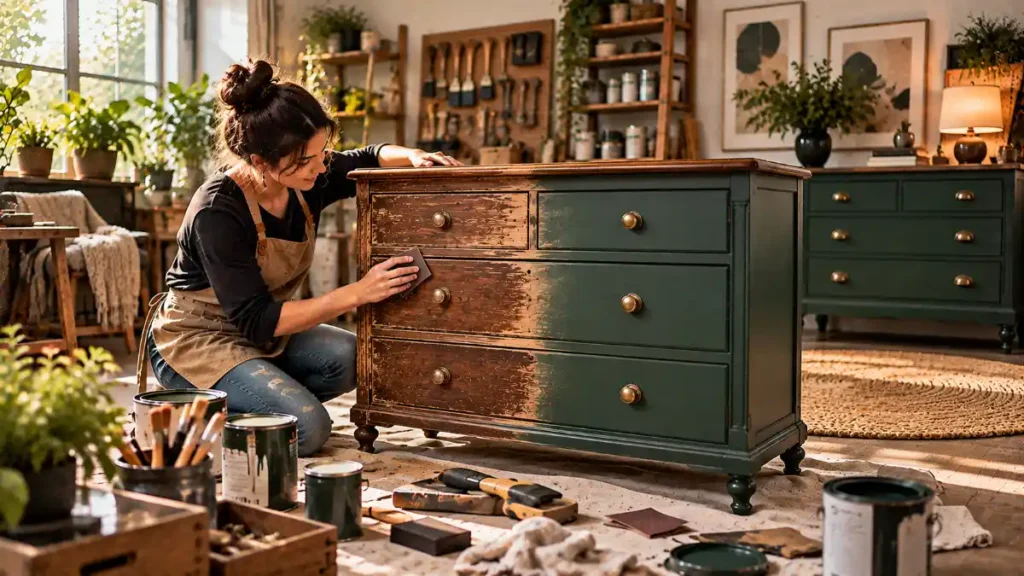
Furniture flipping is a realistic method of machine those unused positioned tables, dressers, chairs, cabinets and other pieces into resale stock. While the biggest error even newbie property investors make is only concentrating at that makeover. A good flip begins before you buy: with an understanding of local demand, purchase price, repair ease (or lack thereof), transport issues, materials available to be purchased and labor disposal costs-and real selling price on the resale market.
Fine furniture is to find ugly stuff and make it beautiful. The plan is to purchase at the appropriate piece price, increase it and not over invest during the time spent improving, then sell it for a cost that will pay you back your components, money, and chance.
You will learn how to select pieces of furniture, assess if they should be flipped or not, how to refinish metal, wood and more, calculating profits, finding inventory free resources such as Facebook Marketplace – and what tools you need to get started creating better listings and building a sustainable repeatable furniture flipping business.
What Makes a Good Furniture Flip?
A piece is not automatically a good flip because it is cheap. In fact, an extremely cheap item can become an expensive mistake if it requires extensive repairs, specialized tools, difficult transportation, or weeks of storage.
Before buying, evaluate five factors:
- Local demand: Do people in your area actually want this type of furniture?
- Purchase price: Is there enough room between your acquisition cost and realistic resale price?
- Condition: Can the piece be improved without major structural work?
- Transport: Can you safely move and store it?
- Time required: How many hours will cleaning, repairing, refinishing, photographing, and selling take?
A useful rule is to think about the finished value before buying, rather than becoming emotionally attached to a bargain.
For example, a $20 nightstand that needs only cleaning and new hardware may be more attractive than a $50 antique cabinet requiring extensive stripping, repairs, and specialty transportation.
The strongest flips generally have what resellers call good bones: sound construction, useful proportions, attractive details, and cosmetic problems that can be improved.
Read more: Furniture Flipping
Best Furniture to Flip for Beginners
The best starting category depends on your local market, skills, workspace, and vehicle. Still, certain furniture types are particularly practical for beginners because they combine manageable size with recognizable buyer demand.
Nightstands and Side Tables
Nightstands and small side tables are often suitable first projects because they are relatively easy to transport and do not require a large workshop.
Look for:
- Solid construction
- Functional drawers
- Minimal structural damage
- Attractive legs or proportions
- Replaceable hardware
- Surfaces that can be cleaned or refinished
Matching pairs can be particularly useful because buyers often want two pieces for a bedroom.
Dressers and Chests
Dressers offer more surface area and storage, which can make them visually impressive after a makeover.
Inspect every drawer before purchasing. Check whether it opens smoothly, whether the bottom is intact, and whether the drawer joints are separating.
Solid-wood dressers can be excellent candidates for cleaning, staining, or painting. Veneered dressers can also be viable, but aggressive sanding can damage the thin veneer.
Dining Tables
Dining tables can create a strong before-and-after transformation, particularly when the tabletop has attractive wood grain underneath a worn finish.
Before buying, inspect:
- Tabletop warping
- Loose legs
- Cracks
- Missing leaves
- Water damage
- Veneer condition
- Hardware and fasteners
Large tables require more workspace and transportation planning, so they are not always the easiest first project.
Read more: Furniture Flipping
Wooden Chairs
Individual chairs may have lower resale value than complete sets, but matching sets can become more attractive to buyers.
Check the frame carefully. Sit on the chair if possible and do a movement test. A loose joint may be repairable, while a severely damaged frame may not justify the labor.
Reupholstering a removable seat can also create a significant visual change without requiring you to rebuild the entire chair.
Bookshelves and Cabinets
Bookshelves, cabinets, and storage furniture can work well because functionality remains a major part of their appeal.
Prioritize pieces with:
- Strong shelves
- Stable construction
- Useful dimensions
- Working doors
- Repairable hardware
- Minimal swelling from moisture
Be cautious with severely swollen particleboard or MDF. Cosmetic improvement cannot always solve structural deterioration.
Desks
Desks can be attractive resale pieces for home offices, students, and people furnishing smaller workspaces.
Look for sturdy construction, clean lines, useful storage, and a surface that can be restored without excessive labor.
The key is transportation. A desk that is difficult to carry through a doorway or staircase can quickly become a storage problem.
Mid-Century Modern Pieces
Mid-century modern furniture can have strong appeal because of its recognizable design language, including clean lines, tapered legs, and natural wood finishes.
However, don’t assume every vintage-looking piece is valuable. Authenticity, designer attribution, condition, construction, and local buyer demand can all affect value.
A common mistake is painting a potentially desirable original wood surface simply because the finish looks dated. If the piece has attractive original wood, cleaning and careful restoration may be more appropriate than covering it with paint.
Current resale marketplaces continue to show substantial demand for vintage and used furniture, including designer and mid-century pieces.
Read more: Furniture Flipping
Furniture You Should Be Careful About Buying
Not every piece with a low asking price is an opportunity.
Avoid or carefully price pieces with:
- Severe water damage
- Extensive mold or persistent odor
- Major structural cracks
- Warped components
- Missing essential parts
- Extensive veneer loss
- Heavy smoke or pet damage
- Difficult transportation requirements
- Unknown safety issues
Upholstered furniture deserves extra inspection because odors, stains, pests, and damaged internal materials can be difficult to identify from photographs alone.
The important distinction is between ugly and damaged.
Ugly furniture can often be transformed.
Damaged furniture can consume your entire margin.
How to Evaluate a Piece Before Buying
A quick inspection can prevent many bad purchases.
Step 1: Check the Structure
Push gently against different sections. Look for movement where there shouldn’t be any.
Inspect legs, joints, frames, drawer boxes, shelves, and doors.
Step 2: Identify the Material
Try to determine whether the piece is:
- Solid wood
- Veneer over wood
- MDF
- Particleboard
- Metal
- Upholstered
- A combination of materials
Material affects which refinishing methods are appropriate.
Step 3: Inspect the Finish
Look for peeling, deep scratches, stains, discoloration, bubbling, and previous repairs.
Cosmetic defects are not necessarily bad. They can actually create the opportunity for a flip.
Step 4: Measure Everything
Measure the furniture before purchasing it.
Also consider the dimensions of your vehicle, workshop, storage area, doorways, elevators, and staircases.
A profitable piece that cannot be transported safely is not a practical purchase.
Step 5: Estimate the Finished Value
Search comparable local listings and consider the actual condition of your piece.
Do not base your expected selling price solely on the original retail price. Used furniture competes with other used furniture.
Read more: Furniture Flipping
Furniture Flipping Economics: Calculate Profit Before You Buy
One of the biggest weaknesses in beginner flipping is confusing revenue with profit.
If you sell a dresser for $250, you have not necessarily made $250.
Your basic calculation should account for:
Net profit = Sale price − purchase cost − materials − repair costs − selling fees − delivery/transport costs − other direct expenses
You should also track your labor.
For example, imagine a hypothetical project:
- Purchase: $40
- Materials: $30
- Hardware: $20
- Transportation and other costs: $15
- Sale price: $225
The cash profit before valuing your labor would be:
$225 − $40 − $30 − $20 − $15 = $120
If the project took eight hours, that $120 needs to be viewed differently from a project that took three hours.
This is why the purchase decision matters so much.
A beautiful $300 sale can be a poor flip if you spent $200 on the furniture and supplies and worked on it for 20 hours.
Refinishing Techniques That Work
The right refinishing method depends on the furniture’s material, existing finish, condition, and intended selling price.
Cleaning and Surface Preparation
Cleaning should usually come before aggressive refinishing.
Remove dirt, grease, dust, and loose residue. Then inspect what remains.
Sometimes a piece looks dramatically better after cleaning alone.
Preparation also determines whether paint or stain will adhere properly. Follow the instructions for the specific products you use rather than assuming every surface needs the same treatment.
Painting
Painting can be useful when the existing finish is unattractive, heavily damaged, or unsuitable for staining.
It can also work on some veneer and manufactured-wood pieces when the surface is structurally sound and properly prepared.
Do not assume that one type of paint works for every substrate.
A durable finish requires appropriate surface preparation, compatible products, adequate drying time, and a suitable protective finish when needed.
Staining
Stain is most useful when the goal is to enhance visible wood grain.
Solid wood with attractive grain can be a strong candidate.
Veneer requires more caution because its decorative wood layer can be very thin. Heavy sanding can expose the underlying material and permanently damage the appearance.
Read more: Furniture Flipping
Sealing and Protection
A beautiful finish still needs to survive normal use.
Depending on the product and furniture type, a protective topcoat can help protect against wear, moisture, and scratches.
Follow the manufacturer’s application and curing instructions. A rushed finish can undermine an otherwise good restoration.
Hardware Replacement
Hardware is one of the simplest ways to change the appearance of a dresser, cabinet, nightstand, or desk.
Before buying new hardware, measure the existing hole spacing. New pulls that do not match the existing holes can create additional drilling and repair work.
Also consider whether replacement hardware fits the style of the furniture.
Reupholstering
Reupholstery can make sense for chairs and benches with structurally sound frames.
For a simple removable seat, the project may involve:
- Removing the old fabric.
- Inspecting the foam and seat base.
- Replacing damaged materials where necessary.
- Cutting new fabric.
- Stretching it evenly.
- Securing it with staples.
- Reinstalling the seat.
More complex upholstered furniture requires significantly more skill and labor.
Read more: Furniture Flipping
Furniture Flipping Safety: Older Painted Pieces Need Extra Care
Older furniture requires more caution when paint is involved.
The Consumer Product Safety Commission regulates lead in paint and similar surface coatings and specifically includes certain furniture articles such as beds, bookcases, chairs, chests, tables, dressers, desks, and sofas.
Do not assume that an old painted piece is safe to aggressively sand simply because it is being reused.
Activities such as scraping and abrasive sanding can disturb painted surfaces and create dust or paint chips.
If you suspect lead-based paint, use appropriate lead-safe practices and follow applicable local requirements rather than treating the project like an ordinary sanding job. EPA guidance specifically warns against unsafe methods for disturbing lead-based paint.
Also check furniture for product recalls when appropriate, especially children’s furniture and products where safety is critical.
Where to Find Furniture to Flip
Good sourcing is often more important than advanced refinishing skills.
Potential sources include:
- Facebook Marketplace
- Garage and estate sales
- Thrift stores
- Local auctions
- Moving sales
- Community resale groups
- Curbside or giveaway listings
- Furniture being sold during relocations
The opportunity is usually created by the difference between what the seller wants today and what the piece could reasonably sell for after preparation.
Seasonal Sourcing
Timing can influence inventory.
Outdoor furniture may become easier to find when sellers are clearing storage, while demand can increase as warmer weather approaches.
College move-out periods can also create additional supply of desks, shelves, small tables, and other apartment-friendly furniture.
The exact timing varies by location, so treat seasonal patterns as a sourcing hypothesis rather than a guaranteed pricing rule.
Read more: Furniture Flipping
How to Flip Furniture: A Simple Repeatable Process
A repeatable process makes each project easier.
1. Find the Piece
Search multiple local sources and focus on categories you understand.
2. Inspect It
Check structure, material, finish, dimensions, odor, damage, and hardware.
3. Calculate the Numbers
Estimate purchase cost, materials, transportation, labor, selling costs, and realistic resale price.
4. Buy With a Maximum Price
Decide your maximum purchase price before negotiating.
This prevents excitement from taking over the financial decision.
5. Clean and Repair
Fix structural problems before concentrating on appearance.
6. Refinish Strategically
Choose paint, stain, cleaning, hardware changes, or upholstery based on the actual condition and style.
7. Inspect the Finished Piece
Open every drawer. Test doors. Check joints. Look for paint defects, dust, uneven finish, or loose hardware.
8. Photograph It Properly
Take clear photographs showing the whole piece, front, sides, storage areas, dimensions, and important details.
9. Write an Honest Listing
Include:
- Exact dimensions
- Material when known
- Condition
- What was repaired or refinished
- Any remaining imperfections
- Pickup or delivery information
- Price
10. Track the Result
Record purchase price, expenses, sale price, days to sell, and approximate labor hours.
After several projects, this information becomes more valuable than guesses about what should be profitable.
How to Price Flipped Furniture
Avoid choosing a price simply because you want a particular profit.
Instead, research comparable furniture in your local market.
Compare:
- Similar dimensions
- Similar material
- Similar condition
- Similar style
- Similar brand
- Similar age when relevant
- Similar level of restoration
Then consider how your piece compares.
Leave some room for negotiation if that is normal in your marketplace, but do not start with a price so high that your listing receives no serious interest.
The objective is not always the highest theoretical price. A slightly lower price that produces a reasonable return and faster inventory turnover can sometimes be more useful to a small operation.
Where to Sell Flipped Furniture
The best selling channel depends on the furniture.
Local Marketplaces
Local marketplaces are useful for large furniture because buyers can arrange pickup and avoid shipping costs.
They can be especially practical for beginners testing different categories.
Chairish
Chairish focuses heavily on vintage, used, antique, and design-oriented furniture. Its marketplace includes a broad range of vintage pieces and designer furniture.
It may therefore make more sense for a distinctive vintage or designer-oriented piece than an ordinary mass-market nightstand.
AptDeco
AptDeco provides an online furniture marketplace with selling, pickup, and delivery services in supported areas. Its seller information also states that sellers can list used, new, and vintage furniture.
Check current availability, fees, service areas, and seller requirements before relying on any marketplace as your primary channel.
Social Media
Social platforms can help build recognition around a particular style.
Instead of trying to sell every possible type of furniture, a flipper might develop a recognizable focus such as:
- Natural wood restoration
- Mid-century furniture
- Painted dressers
- Vintage cabinets
- Small-space furniture
- Upcycled chairs
A recognizable style can make future listings easier to market.
Read more: Furniture Flipping
How to Build a Furniture Flipping Business
A hobby becomes a business when you start managing the economics systematically.
Start by choosing one or two categories.
For example, you might focus on small case goods such as nightstands, dressers, and cabinets.
Then create a simple tracking system for:
- Purchase price
- Material expenses
- Transportation
- Labor hours
- Listing date
- Sale date
- Final sale price
- Net profit
- Days held
After several completed projects, look for patterns.
Which pieces sell fastest?
Which ones produce the highest profit per hour?
Which projects repeatedly require unexpected repairs?
Which selling channels produce the best buyers?
That information can help you stop buying based on appearance alone and start buying based on evidence from your own market.
Common Beginner Mistakes
Buying Because Something Is Cheap
Low purchase price does not guarantee profit.
Ignoring Labor
Your time has economic value even if you are doing the work yourself.
Over-Restoring
Not every piece needs a complete transformation. Sometimes cleaning, minor repairs, and preservation are better than an elaborate makeover.
Painting Valuable Wood Automatically
A dated finish does not necessarily mean the underlying wood should be covered.
Forgetting Transportation
Large furniture can create costs and logistical problems that erase an otherwise attractive margin.
Pricing From Hope
A seller’s desired price is not the same as what buyers in your market will pay.
Keeping Unsold Inventory Too Long
Storage has a cost. If something repeatedly fails to sell, reconsider the price, presentation, category, or your original valuation.
Frequently Asked Questions
Beginner Furniture Flips – Which Ones Are Easiest to Flip?
Compact items such as small nightstands, side tables, and other similarly sized pieces are mostly practical because they are easier to transport, store, inspect, and refinish than bigger furniture pieces.
What furniture do I buy to flip?
Strong build, easy fixes, affordable buying price vs local need and affordable selling price. Cosmetic issues tend to be more desirable than major structural damage.
Is furniture flipping profitable?
It can be profitable, but it might not generate any money. Results vary by purchase price, sale price, materials investement, hourly labor rate, transportation rate, listing fees on platforms used to sell the item at the end of its useful life and how quickly that you can flip it.
Which furniture out of the list is the best for flipping?
There is no one best category. The purchase price and local demand need to make the economics work for most every type of stuff including nightstands, dressers, tables, chairs, cabinets, desks and unique vintage furniture pieces.
Is flipping furniture for beginners hard to do?
You can access the basic process behind flipping homes, but successfully profiting from home flips requires more than just a fresh coat of paint. You cover everything from sourcing, inspection/repair/refinishing to pricing, photography/negotiation/inventory management.
Can veneer furniture be refinished?
Yes, but you should be careful with veneer. The decorative wood layer can be very thin, making it easy to sand it away aggressively. If the existing surface cannot be restored safely, painting might be more appropriate.
Should I paint furniture or stain?
Consider the material and condition. You can be very flattering to the attractive wood grain with a stain, and if you have an unattractive finish on pieces you are working on or one that has been severely damaged in some places painting over it is often a good idea. Select a method that is compatible with your existing surface (and the product directions).
What furniture should beginners avoid?
Avoid heavily water damaged, structurally compromised, permanently foul smelling or exceedingly incomplete furniture that you feel ill equipped to assess what it would cost to fix.
Where do I sell refinished furniture?
These can be local marketplaces, social media, vintage-based marketplaces, or resale platforms that specifically serve the furniture market. It all comes down to the size, style, value and location of the piece along with transportation needed.
How can I earn more flipping furniture?
Fine-tune the process as a whole, it is not only about the makeover. Be more picky with purchases, keep material costs down, limit overhead labour, focus on better listings, pay attention to what actually sells and concentrate on categories that do well in your area.