
Chair Covers: Smart Ways to Protect and Style Your Furniture – Common Mistakes to Avoid
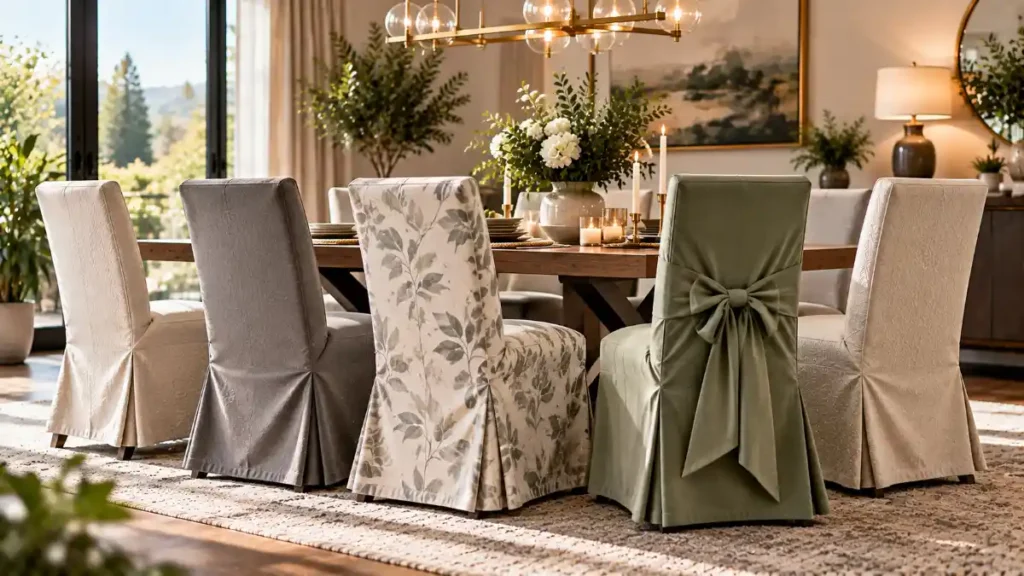
Chair covers can do much more than hide worn upholstery or change the look of a dining room. The right cover can protect against spills, pet hair, everyday friction, stains, and occasional messes while giving an older chair a cleaner appearance. The challenge is choosing a material, fit, and care routine that matches how the chair is actually used. A cover for everyday family dining has different requirements from one used for a wedding, formal dinner, or occasional decorating.
The best choice comes down to four things: what you need to protect, how often the chair is used, what type of fabric suits the situation, and how accurately the cover fits the chair. Getting those decisions right before buying can prevent common problems such as slipping, stretching, shrinking, difficult cleaning, or an untidy appearance.
What Should You Consider Before Buying Chair Covers?
Start with the chair rather than the fabric. Think about where the chair is used, who uses it, and what type of protection you actually need.
For example, dining chairs used several times a day need a different solution from occasional accent chairs. A household with children or pets may prioritize easy cleaning, while someone preparing a formal event may care more about a consistent appearance across dozens of seats.
A useful way to narrow the options is to consider these five factors:
- Daily use: How frequently will the chair be sat on?
- Protection: Are spills, stains, dust, or pet hair the main concern?
- Appearance: Do you want a subtle refresh or a completely different look?
- Fit: Is the chair a standard dining chair, a folding chair, a banquet chair, or something more unusual?
- Maintenance: Will you regularly wash the cover, or will it mainly be used for occasional events?
This simple assessment prevents a common buying mistake: selecting a cover because it looks attractive online without considering how it will perform in the room.
Choose the Right Type for Your Chair
Different chair covers solve different problems. There is no single fabric or construction that is automatically right for every chair.
Chair covers for dining chairs.
Dining chairs generally benefit from fabrics that balance appearance, comfort, and maintenance. Stretch blends are popular because they can conform to different chair shapes and are easier to install than highly tailored covers.
For everyday dining, look for:
- A secure fit around the seat and back
- A fabric that can tolerate regular cleaning
- Sufficient stretch without excessive looseness
- A surface that does not show every minor wrinkle
- Care instructions that match your washing routine
If your chairs have exposed wooden frames, ornate backs, arms, or unusual seat shapes, check the cover’s intended chair style before ordering. A generic dining-chair cover may not accommodate every design.
Stretch chair covers
Stretch covers are useful when you want a close-fitting appearance without ordering a custom-made cover. Polyester-spandex blends are common because the combination provides flexibility while retaining the structure of the main fabric.
However, stretch does not mean universal. A cover can stretch over a chair and still fit badly. Excess fabric around the seat, loose corners, or an oversized back section can make the finished result look untidy.
Care also matters. Some commercially sold polyester-spandex slipcovers are specifically labeled for cold or around-30°C washing, mild detergent, and air drying, but instructions vary by product. Always follow the label supplied with the particular cover rather than assuming every stretch fabric has identical care requirements.
Read More: Chair Covers
Washable chair covers
Washability is particularly valuable for dining rooms and high-traffic areas. A washable cover is easier to maintain after everyday spills because you can remove it and clean the fabric rather than treating the chair itself every time.
Do not confuse washable with stain-proof or waterproof. A fabric may be completely machine washable while still allowing liquid to penetrate quickly.
Before purchasing, check:
- Recommended water temperature
- Machine-wash instructions
- Whether bleach is permitted
- Drying instructions
- Ironing restrictions
- Whether the cover needs to be washed separately
Following the manufacturer’s instructions is more important than applying a generic laundry rule.
Waterproof chair covers
Water protection is useful when spills are a major concern, but product descriptions need to be read carefully.
Terms such as water-resistant, water-repellent, and waterproof are not interchangeable in practical use. A fabric may resist droplets without creating a completely sealed barrier. Construction details such as coatings, membranes, and seams can affect how much liquid protection a product provides.
For that reason, do not assume that a product described as waterproof can withstand prolonged soaking. If liquid protection is important, check the manufacturer’s stated construction and care requirements.
Performance fabrics also demonstrate why care instructions should be material-specific. For example, Sunbrella’s published guidance for some of its fabrics recommends mild soap, cold-to-lukewarm water, thorough rinsing, and air drying, while specific products can have different instructions.
How to Measure for the Right Fit
Correct measurement is one of the most important steps when shopping for chair covers. A beautiful fabric will not look right if the cover is too loose, too short, or designed for a different chair profile.
Because sizing varies between manufacturers, measure your actual chair and compare those measurements with the product’s size chart.
Measure these chair dimensions.
Seat width: Measure across the widest part of the seat.
Seat depth: Measure from the front edge of the seat toward the backrest.
Back height: Measure from the seat area to the highest point of the chair back.
Back width: Measure across the widest part of the backrest.
Overall height: Useful when the cover is designed to extend farther down the chair or includes a skirt.
Arm dimensions: If the chair has arms, also check arm width, height, and spacing because many standard covers are designed for armless chairs.
Do not rely on a measurement from a similar-looking chair. Two dining chairs can appear almost identical while having different seat depths, back widths, or frame shapes.
Read More: Chair Covers
Stretch fit versus tailored fit.
A stretch design can be more forgiving when chairs have small differences in shape. A tailored cover can create a cleaner appearance when the chair dimensions closely match the manufacturer’s specifications.
The choice depends on your priority:
- Stretch fit: easier installation and more flexibility
- Tailored fit: more structured appearance
- Universal fit: convenient for varied chair shapes, but potentially less precise
- Custom fit: closest visual match, but usually requires more accurate measurements
A cover should feel secure without putting excessive strain on seams, elastic, or closures.
How to Care for Different Cover Materials
The correct maintenance routine depends on the actual fabric and construction. There is no universal washing method that applies to every cover.
Caring for stretch and polyester-spandex fabrics
Many stretch covers are designed for relatively simple home care, but the label remains the final authority.
If the care instructions permit machine washing:
- Use the recommended water temperature.
- Choose a gentle cycle when specified.
- Use a suitable mild detergent.
- Avoid bleach unless the manufacturer explicitly permits it.
- Avoid excessive heat when drying.
- Reshape the cover before it fully dries if the instructions recommend it.
Some stretch-cover products specifically recommend cold washing, mild detergent, and air drying or low-temperature drying.
Do not assume that every product containing spandex should be treated identically. Fiber percentage, construction, dyes, elastic components, and finishing treatments can all affect care instructions.
Caring for cotton and linen covers
Cotton can provide a natural, comfortable appearance, but shrinkage can be a concern if the product’s care instructions are ignored.
Linen has a distinctive textured appearance and can work well in relaxed interiors, but it can wrinkle more easily than many synthetic blends. If a chair is constantly being pulled away from a dining table, frequent movement can make wrinkles more noticeable.
For both materials, check the label before washing and drying because the same fiber can be manufactured into products with different care requirements.
Caring for coated or performance fabrics
Do not automatically put a coated or performance cover into a washing machine.
Some performance fabrics are specifically designed for spot cleaning. Sunbrella’s care guidance for several fabric categories recommends removing loose dirt, cleaning with mild soap and lukewarm water, rinsing thoroughly, and allowing the material to air dry.
The important lesson is simple: follow the care instructions for the exact product. A generic rule such as “never machine wash waterproof fabric” is too broad because different coated and performance fabrics are constructed differently.
Read More: Chair Covers
How to Keep Covers Looking Good Longer
Good maintenance begins before the first wash.
Remove spills promptly rather than allowing them to dry and become harder to treat. Blot liquid instead of aggressively rubbing it into the fabric. For removable covers, clean according to the manufacturer’s instructions instead of experimenting with strong household cleaners.
It is also worth rotating covers when you own more than one set. A second set allows you to keep chairs covered while the first set is being cleaned and reduces the temptation to keep using a visibly dirty cover.
Store clean covers completely dry. Folding a damp fabric can encourage unpleasant odors and can make stains or residue more difficult to deal with later.
Avoid storing covers in direct sunlight for long periods if fading is a concern. Keep them in a clean, dry location where they are protected from unnecessary dust and moisture.
Styling Chair Covers Without Making the Room Look Overdone
A cover should complement the chair and the room rather than simply hide everything underneath.
For a dining room, neutral shades can create a quieter appearance, while stronger colors can become a deliberate part of the room’s design. If the chair itself has attractive woodwork or metal detailing, a full cover may hide one of its best visual features.
Use partial protection when appropriate.
Seat-only or back-only covers can protect the areas that receive the most contact while leaving part of the original chair visible.
This can work particularly well when:
- The chair frame is decorative
- Only the seat upholstery needs protection
- You want a lighter visual effect
- You frequently change decorative accents
A partial cover can also be easier to remove and clean than a full slipcover.
Read More: Chair Covers
Layer everyday and occasional styling.
A practical approach is to use a durable base cover for regular use and add removable decorative elements for special occasions.
For example, a neutral washable cover can provide the everyday foundation, while a sash, cushion, or other removable accent can create a more formal appearance for a dinner or celebration.
This avoids forcing one material to perform two completely different jobs.
Choosing Covers for Weddings and Events
Event seating introduces a different set of requirements. When dozens of chairs need to look consistent, fit becomes particularly important.
Common event chair types include banquet, folding, and Chiavari chairs, but their dimensions can vary between manufacturers and rental companies. That means a cover designed for one chair style should not automatically be assumed to fit another.
Confirm the chair before ordering.
If you are buying covers for an event, ask the venue or rental company for the exact chair type and, where possible, its measurements.
Pay attention to:
- Seat width
- Seat depth
- Back width
- Back height
- Armrests, if present
- Leg and frame shape
- Desired floor coverage
This is more reliable than ordering based only on a generic chair name.
Match the overall event design.
For formal events, the cover should work with the surrounding table setting. Consider the relationship between the chair fabric, tablecloth, napkins, centerpieces, and overall color scheme.
The goal is consistency rather than simply covering every chair with the same material.
Common Problems and Practical Fixes
| Problem | Likely Cause | Practical Fix |
| Cover looks loose after washing | Shrinkage, stretching, or incorrect fit | Recheck the measurements and follow the care label |
| Stretch fabric loses its shape | Excessive heat, unsuitable washing, or normal wear | Use the manufacturer’s recommended wash and drying method |
| Liquid passes through quickly | Fabric is water-resistant rather than fully waterproof | Check the product’s protection specifications |
| Cover keeps shifting | Poor fit or unsuitable chair shape | Compare chair dimensions with the manufacturer’s size chart |
| Cover looks wrinkled | Fabric characteristics, storage, or installation | Follow the product’s ironing or steaming instructions |
| Event cover looks inconsistent | Different chair models or incorrect sizing | Confirm the exact rental or venue chair before ordering |
| Protective finish appears damaged | Incompatible cleaning method or heat exposure | Stop using the damaged care method and follow the manufacturer’s instructions |
Read More: Chair Covers
How to Choose Based on Your Main Priority
The easiest way to make a decision is to start with your biggest problem.
For everyday dining: prioritize washable construction, secure fit, and easy removal.
For children or frequent spills: prioritize easy cleaning and appropriate liquid resistance.
For pets: prioritize durable fabric, removable construction, and simple washing.
For formal events: prioritize consistent sizing, appearance, and compatibility with the event chair.
For occasional decorating: prioritize appearance and storage convenience.
For mismatched chairs: consider a flexible stretch design, but still measure every chair type before ordering.
The “best” cover is therefore not necessarily the thickest, most expensive, or most water-resistant option. It is the one whose construction matches the job you need it to perform.
Frequently Asked Questions
Are chair covers worth buying for everyday dining chairs?
They can be worthwhile when the chairs experience frequent spills, stains, pet hair, or visible wear. Their value depends on the cost of the covers, the condition of the chairs, how often they are used, and whether the covers are easy to remove and clean.
What are the best chair covers for dining chairs?
For everyday use, look for a cover with an appropriate fit, practical care instructions, and a fabric that suits the amount of wear the chairs receive. Stretch blends can be convenient for many chair shapes, while tailored designs may provide a more structured appearance.
Are stretch chair covers machine washable?
Some are, but not all. Many polyester-spandex products are sold with machine-wash instructions, often involving cold or low-temperature washing and mild detergent. Always check the individual product’s care label before washing.
Are washable and waterproof chair covers the same thing?
No. “Washable” describes how the cover can be cleaned. “Waterproof” describes its resistance to liquid penetration. A washable fabric can absorb spills, while a water-resistant or waterproof material may repel some or most liquid depending on its construction.
How do I measure chair covers correctly?
Measure the seat width and depth, back height and width, and any relevant overall or arm dimensions. Then compare those measurements with the manufacturer’s size chart. Do not assume that one universal measurement applies to every brand.
Can I use slipcovers for chairs with unusual shapes?
Possibly, but the fit may be less precise. Stretch or flexible designs can accommodate some variation, while tailored covers generally require closer dimensional matching. Chairs with arms, unusual backs, or distinctive frames need particular attention to the product’s compatibility.
How should I clean a waterproof chair cover?
Follow the manufacturer’s instructions because waterproof and coated fabrics differ. Some performance fabrics are intended for spot cleaning with mild soap and lukewarm water rather than routine machine washing.
Can chair covers be used for weddings?
Yes. They are commonly used to create a consistent appearance across event seating. The important consideration is matching the cover to the exact chair type and checking dimensions before ordering, especially when chairs are supplied by a venue or rental company.
Why do my chair covers keep slipping?
The most common practical reason is a mismatch between the chair and the cover. A cover that is too large may shift during use, while one designed for a different chair shape may fail to sit correctly around the seat and back.
How can I make chair covers look more polished?
Focus on accurate sizing, proper installation, clean fabric, and coordinated colors. Remove wrinkles according to the manufacturer’s care instructions and avoid using decorative elements that overwhelm the chair or the surrounding room.





1 thought on “Chair Covers: Smart Ways to Protect and Style Your Furniture – Common Mistakes to Avoid”