Metrosexual Explained: The Positive Side, Common Myths & Modern Meaning
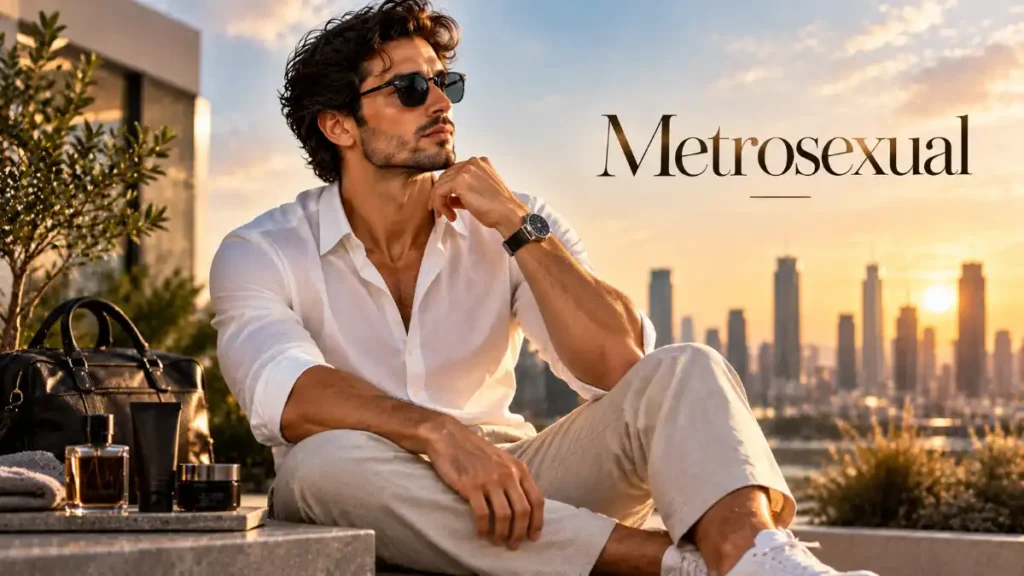
The term metrosexual describes a man who places noticeable attention on fashion, grooming, appearance, and personal style. Although the word became especially popular in the early 2000s, the behaviors associated with it are now much more common in mainstream men’s fashion and grooming.
The term has an interesting history, too. British journalist Mark Simpson is credited with introducing it in print in 1994, while his 2002 essay about David Beckham helped bring the word to a much wider audience.
Today, understanding the word requires looking at both definitions: what it originally meant and how men’s grooming culture has changed since then.
What Does Metrosexual Mean?
The simplest metrosexual meaning is a man who takes an active interest in his appearance, including clothing, grooming, skincare, hair, fragrance, and personal presentation.
Traditional dictionary definitions often describe the person as heterosexual and urban. Oxford, for example, defines the noun as a heterosexual man living in a city who is interested in areas such as fashion, shopping, and appearance. Cambridge similarly describes a man who is usually heterosexual and particularly interested in fashion, grooming, and his appearance.
However, the historical origin of the word is more nuanced.
When Mark Simpson introduced the concept in 1994, he was describing a new form of masculinity shaped by advertising, fashion, media, consumer culture, and a growing willingness among men to care about how they looked. In his later 2002 writing, Simpson explicitly said that the typical man he was describing could be gay, straight, or bisexual.
So, the word should not be treated as a synonym for sexual orientation.
Read More: Metrosexual
Is Metrosexual a Sexual Orientation?
No.
The word combines “metropolitan” with “sexual,” but the definition and sexual orientation are different concepts.
The term describes appearance, consumption, grooming, and lifestyle habits rather than who someone is attracted to. Its historical use has included men of different sexual orientations, even though modern dictionaries commonly describe the stereotypical or traditional version as heterosexual.
That distinction is important because the word can otherwise be misunderstood.
Where Did the Term Come From?
Mark Simpson is generally credited with coining the term metrosexual in a 1994 essay published in The Independent. His original concept focused on an increasingly appearance-conscious form of masculinity.
The word did not immediately become a global cultural phenomenon.
That changed in 2002, when Simpson revisited the idea in his essay “Meet the Metrosexual.” He used David Beckham as a prominent example of the emerging image-conscious male celebrity. The essay helped introduce the term to a much wider American audience and contributed to its rapid spread in popular culture.
This history explains why Beckham became so closely associated with the concept. He did not invent the idea or the word; he became one of its most recognizable public examples.
What Defines a Metrosexual Lifestyle?
A metrosexual lifestyle is less about following a fixed checklist and more about treating personal appearance as something worth actively managing.
Common characteristics can include:
- Paying attention to clothing fit and styling
- Maintaining a consistent grooming routine
- Using skincare products
- Choosing hairstyles deliberately
- Taking an interest in fragrance
- Managing facial or body hair
- Shopping with appearance and quality in mind
- Following fashion trends
- Spending time researching personal-care products
- Treating presentation as part of personal expression
None of these behaviors automatically makes someone metrosexual. Modern men can practice one, several, or all of them without using the label.
That is one reason the concept has become harder to define as a distinct identity. Many behaviors that once seemed unusual for men are now ordinary parts of personal care.
Read More: Metrosexual
A Practical Metrosexual Grooming Routine
The most useful way to translate the old concept into modern life is to focus on habits rather than labels.
Start With Basic Skincare
A simple skincare routine does not need to contain a large collection of products.
A practical starting point is a gentle cleanser, moisturizer, and sunscreen. From there, products can be added according to specific needs rather than because a trend recommends them.
The goal is consistency.
If a routine is complicated enough that you stop following it after a week, it is less useful than a simple routine you can maintain every day.
Make Your Haircut an Intentional Choice
Hair has a significant effect on overall appearance, which is why a deliberate haircut can change the way an outfit looks without requiring an expensive wardrobe.
Consider your hair type, maintenance preferences, face shape, and everyday lifestyle when choosing a style.
A useful haircut is not necessarily the trendiest one. It works with your features and is practical enough to maintain.
Prioritize Fit Over Logos
One of the easiest ways to improve men’s fashion is to pay attention to fit.
A well-fitting shirt, jacket, pair of trousers, or pair of jeans can look more polished without requiring a designer label.
This is particularly relevant to the metrosexual fashion concept because appearance-conscious dressing is fundamentally about presentation. Brand names can be part of fashion, but they are not a substitute for proportion, fit, coordination, and personal style.
Read More: Metrosexual
Treat Fragrance as Part of Personal Style
Fragrance can become another element of personal presentation.
Instead of buying numerous bottles simply because they are popular, consider having fragrances that work for different situations, such as everyday wear, professional settings, or evenings.
The important point is moderation. A fragrance should complement your presentation rather than dominate the room.
Include Hands, Feet, and Facial Hair
Modern male grooming extends beyond shaving and haircuts.
Keeping nails clean and maintained, caring for dry skin on the hands and feet, and managing facial or body hair are all ordinary personal-care choices.
You do not need to adopt every grooming practice. The broader idea is simply that appearance can be maintained deliberately rather than treated as something that takes care of itself.
Metrosexual Fashion: What Actually Matters?
The original image associated with the term often involved fashionable clothing, accessories, grooming, and visible attention to appearance.
But modern metrosexual fashion does not have to mean wearing expensive clothing or following every runway trend.
A stronger foundation is:
- Fit: Clothes should work with your proportions.
- Condition: Clean, maintained clothing generally looks more polished.
- Coordination: Colors and pieces should work together.
- Context: Dress appropriately for the occasion.
- Personal style: Your wardrobe should reflect your preferences rather than copying someone else’s entire appearance.
This approach also makes the concept more practical for different budgets.
A person can care deeply about fashion while buying inexpensive clothing. Conversely, expensive clothes do not automatically create a polished appearance.
Read More: Metrosexual
Metrosexual Grooming vs. Modern Men’s Grooming
The biggest change is that the label has become less necessary.
A man can have a detailed skincare routine, use sunscreen, visit a barber regularly, wear fragrance, follow fashion, and maintain his nails without describing himself as a metrosexual man.
That is because the underlying behaviors have become more mainstream.
Current men’s grooming-market research continues to identify skincare, haircare, shaving, fragrance, and beard care as major categories, while also describing a shift toward more structured personal-care routines.
In other words, the behavior survived even as the label became less central.
Metrosexual vs. Spornosexual vs. Lumbersexual
Several related labels appeared in men’s lifestyle culture after the original concept became popular.
Metrosexual
The emphasis is on appearance, fashion, grooming, shopping, and personal presentation.
Spornosexual
The term emerged later and is associated with a more body-centered form of male self-presentation, particularly a visibly muscular physique combined with grooming and style. Mark Simpson himself later used the term to describe a second-generation development of metrosexuality centered heavily on the gym and the male body.
Lumbersexual
This label describes a deliberately rugged aesthetic, often associated with beards, workwear-inspired clothing, boots, and an outdoors-oriented visual style.
These categories are cultural descriptions rather than rules. A single person can easily combine elements from several styles.
Common Myths About the Term
Myth: Metrosexual Means Gay
It does not.
The term concerns appearance and lifestyle rather than sexual orientation. Historical usage by its originator explicitly included gay, straight, and bisexual men.
Myth: David Beckham Invented Metrosexuality
He did not.
Mark Simpson introduced the term in print in 1994. Beckham became strongly associated with the concept after Simpson’s 2002 essay identified him as a prominent example.
Myth: Metrosexual Means Effeminate
That interpretation confuses grooming behavior with gender expression.
Caring about skincare, clothes, hair, or fragrance does not by itself determine how masculine, feminine, or gender-nonconforming someone is.
Myth: The Concept Disappeared
The label became less prominent, but many of the behaviors associated with it became more ordinary.
Today’s men’s grooming market includes skincare, fragrance, haircare, shaving, and beard-care products as established categories.
Is the Word Still Used Today?
Yes, but its context matters.
Major English dictionaries still include the word. Oxford and Cambridge both treat it as an informal noun associated with a man who is particularly interested in appearance, fashion, or grooming.
However, someone describing a man’s appearance today may be more likely to say that he is “well-groomed,” “fashion-conscious,” “style-conscious,” or “into skincare.”
That does not mean the older word has become meaningless. It simply reflects the fact that the behaviors it originally highlighted are no longer as unusual.
For historical discussions, fashion writing, cultural analysis, or conversations about the early 2000s, the term remains useful.
For everyday conversation, a more specific description can often communicate the idea more clearly.
Read More: Metrosexual
What Does a Modern Metrosexual Man Look Like?
There is no single appearance.
A metrosexual man might wear tailored clothing, maintain a detailed skincare routine, use fragrance, visit a professional barber, or simply care about looking polished.
Another might prefer streetwear, sneakers, a beard, and a minimal skincare routine.
The common thread is intentionality.
Instead of treating appearance as an afterthought, he gives some attention to how clothing, grooming, hair, skin, and personal presentation work together.
That distinction is more useful than trying to identify one universal “look.”
How to Build Your Own Version Without Overdoing It
You do not need to copy an early-2000s celebrity aesthetic.
A modern approach can be much simpler:
- Build a consistent basic grooming routine.
- Keep your haircut intentional and manageable.
- Wear clothes that fit properly.
- Choose a few reliable wardrobe combinations.
- Maintain facial hair if you have it.
- Keep nails and hands clean.
- Find a fragrance you genuinely enjoy.
- Learn which skincare products work for your skin.
- Spend according to your budget rather than chasing luxury.
- Change trends only when they actually suit you.
The strongest version of this lifestyle is not about buying more products. It is about making better choices with the products, clothes, and routines you already use.
Read More: Metrosexual
Why the Concept Still Matters
The lasting significance of the term is cultural rather than prescriptive.
In the 1990s and early 2000s, openly discussing men’s skincare, fashion, grooming, fragrance, and appearance carried a different cultural meaning than it does today. Simpson’s writing captured a shift toward a more appearance-conscious form of masculinity.
The modern grooming landscape has moved considerably beyond that original label.
Men’s personal care now covers everything from basic shaving and haircare to skincare, fragrance, beard maintenance, and more specialized routines. Market research also indicates continued demand across these categories.
So the useful lesson is not that every man should adopt a particular identity.
It is that caring about personal presentation can simply be part of ordinary self-maintenance.
Frequently Asked Questions
What is the simplest metrosexual definition?
It describes a man who places significant attention on fashion, grooming, appearance, and personal presentation. Traditional dictionary definitions often associate the term with heterosexual men living in cities.
Who coined the term metrosexual?
British journalist Mark Simpson is credited with introducing the word in print in a 1994 essay published in The Independent.
Is metrosexual a sexual orientation?
No. It describes lifestyle and appearance-related behavior rather than sexual orientation. Simpson’s own 2002 explanation included gay, straight, and bisexual men.
Why is David Beckham associated with the term?
Simpson’s 2002 essay used Beckham as a prominent example of the emerging image-conscious male and helped popularize the concept internationally.
What is a metrosexual lifestyle?
It generally refers to paying deliberate attention to grooming, clothing, skincare, hair, fragrance, shopping, and overall personal presentation.
What is metrosexual grooming?
It means approaching personal care deliberately. Skincare, hair maintenance, shaving, facial hair care, fragrance, nail care, and other appearance-related routines can all fall under the broader concept.
Does metrosexual mean a man has to spend a lot of money?
No. Attention to appearance does not require luxury products or designer clothing. Fit, consistency, cleanliness, and appropriate choices can matter more than price.
Is metrosexual still a common term?
The word remains in major English dictionaries, but everyday descriptions such as “well-groomed” and “fashion-conscious” can be more specific and natural in contemporary conversation.
What is the difference between metrosexual and spornosexual?
Metrosexuality broadly emphasizes fashion, grooming, and appearance, while spornosexuality places greater emphasis on a visibly developed physique alongside grooming and self-presentation.
Can someone enjoy metrosexual grooming without using the label?
Absolutely. A man can enjoy skincare, fashion, fragrance, haircare, and other grooming habits without identifying with any particular cultural label.