
Chondromalacia: Symptoms, Causes, Grades, Treatment, and Recovery
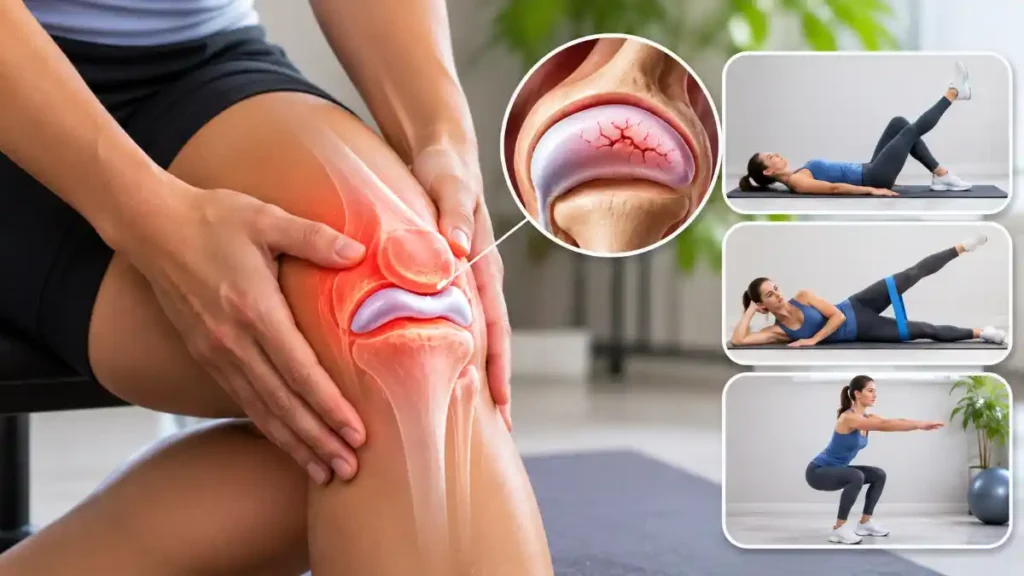
Chondromalacia occurs due to degradation of articular cartilage. It most commonly occurs within the patella in the knee joint. Symptoms may include pain, stiffness, and a grating feeling in the knee joint. Pain can be made worse when walking up and down stairs, squatting, and sitting for long periods with bent knees. However, people may have cartilage changes with no symptoms.
Healthy cartilage within the joint allows for smooth movement. Degradation of cartilage in the knee joint may cause pain. However,r in some people, pain may not be caused by the degree of damage. Management is generally aimed at relieving symptoms, strengthening muscles and reducing strain on the joint.
What is Chondromalacia?
Chondromalacia describes changes in articular cartilage. This is the smooth cartilage found on the ends of bones within joints. Whilst it can occur in any joint in the body, it is most commonly discussed in relation to the cartilage under the patella.
Changes can range from mild softening of cartilage to complete damage. The severity of damage is categorised in grades of chondromalacia. More severe changes in cartilage do not always lead to more severe symptoms.
| Feature | Information |
| Location | Under patella |
| Symptoms | Pain, stiffness, and tenderness in the knee. May have a grating sensation. |
| Causes | Injury, overuse, patellar misalignment, and degeneration. |
| Investigations | Clinical examination. Appropriate imaging. |
| Management | Avoiding activities causing symptoms, physiotherapy, and symptom management. |
| Prognosis | Symptoms may improve. Damaged cartilage has limited capacity to repair. |
Symptoms
Symptoms can vary between individuals. Some people may have intermittent pain in the knee. Others may have changes in cartilage with no symptoms.
Common symptoms include:
- Pain in the front/behind of the knee.
- Pain when walking up and down stairs.
- Pain when squatting, kneeling,g or getting out of chairs.
- Stiffness and/or pain following prolonged sitting.
- Tenderness at the front of the knee.
- Crepitation (cracking/grating/crunching) with movement.
These symptoms can be seen in many other knee problems. The presence of crepitus may not confirm cartilage damage. Pain levels do not necessarily correlate to the level of cartilage damage.
Causes
There are a number of potential causes of chondromalacia. Injury, overuse, patella misalignment, and degeneration can all lead to chondromalacia.
Possible causes include:
- Overuse: Repeated activity (running, jumping, deep knee flexion) can make symptoms worse.
- Previous injury: Trauma, dislocation of the patella, or previous cartilage injury may contribute.
- Misalignment of the patella: Misalignment of the patella in the trochlear groove may cause uneven pressure on the joint.
- Biomechanics: Weakness or abnormal movement patterns and lower limb alignment can affect the distribution of load on the knee.
- Degeneration: Gradual wearing away of the cartilage in the joint.
Not all cases will be caused by these factors. Repeated activities such as running and squatting may make symptoms worse in the knee, but do not necessarily lead to cartilage damage.
Grades of Chondromalacia (1-4)
Chondromalacia is often graded according to the Outerbridge classification.
NCBI
| Grade | Changes | Interpretation |
| 1 | Swelling/softening (surface intact). | Mild changes. |
| 2 | Fissuring/fragmentation in a small area of the surface. | Early surface damage. |
| 3 | Widespread fissuring/fragmentation. | Severe partial thickness damage. |
| 4 | Complete cartilage loss to expose the bone underneath. | Severe cartilage damage. |
Note: This is a general summary of grading. Grading of cartilage damage on MRI scans may differ slightly. Factors such as cartilage thickness may be considered, as well as depth of lesion.
Grading of cartilage damage does not necessarily relate to severity of symptoms or the need for surgery. Overall symptoms, clinical examination findings, impact of symptoms on daily life and other knee conditions will be considered by doctors when deciding on a treatment approach.
Investigations
Symptoms and clinical examination will be performed. Questions on history of injury, what activities make symptoms worse, any swelling, and how symptoms are impacting movement in daily life may be asked. During clinical examination, alignment, range of movement, and functional movements may be assessed.
If required, investigations may be performed to determine the cause of the issue. Investigations include:
- X-ray: Shows bone structures, alignment of joints, and some degenerative changes. Cannot directly show softening of cartilage.
- MRI: Shows detailed images of cartilage and surrounding structures to determine thinning, fissuring,g and chondral lesions.
- Arthroscopy: Can allow direct visualisation of cartilage by the surgeon. This is not routinely performed for simple anterior knee pain.
Always take investigation results in conjunction with symptoms and clinical findings. People can display cartilage changes on MRI but have minimal pain in the knee.
Differential Diagnoses
Whilst chondromalacia describes changes to cartilage, patellofemoral pain syndrome describes pain in the front/behind of the knee. As outlined in the patellofemoral pain syndrome overview, both conditions may be present together. However, they are separate diagnoses.
AAOS
Other conditions affecting the knee include patellar tendinopathy (injury to the tendon joining the patella to the tibia), injury to the menisci (fibrocartilage helping to cushion the knee) and osteoarthritis (wider changes in the joint including degenerative cartilage changes and changes in bone underneath). Just because an individual has chondromalacia, it does not mean that they have osteoarthritis.
Management and Exercises
Non-surgical management is typically trialled first to relieve symptoms and improve function. The optimal treatment will depend on symptoms, severity of cartilage damage, activity, and any other factors affecting the joint.
Non-surgical Management
Common management options include:
- Avoiding aggravating activities: Reduce activities causing pain, and continue comfortable movements.
- Ice packs: Applying a towel-wrapped ice pack for short durations can help reduce symptoms.
- Painkillers: If appropriate, over-the-counter painkillers can help. Speak to a healthcare professional to determine if they are suitable.
- Physiotherapy: Strengthening exercises can improve support around the joint and improve control of movement.
- Supportive devices: In certain cases, taping or certain insoles may help. Bracing may not be consistently helpful in all people.
Injections or surgery may only be considered in select cases. Certain procedures may be beneficial for carefully selected people with certain types of cartilage damage. However, in general, surgical management is not routinely recommended in people with chondromalacia.
Exercises
Exercise regimens generally aim to strengthen the quadriceps and hip muscles. Gradually increasing intensity is common. Guidance for hip- and knee-focused exercise therapy recommends this approach for patellofemoral pain. The evidence for this largely comes from patients with patellofemoral pain rather than confirmed cartilage damage.
DOI
These exercises may help relieve symptoms and improve function; however, regeneration of damaged cartilage has not been proven.
Examples include:
- Straight leg raises: Strengthen the quadriceps, with minimal knee flexion.
- Lateral leg raises: Strengthen hip muscles to improve movement control of the lower limb.
- Controlled step-ups: Increase strength and confidence with daily movements.
- Altered squats: Improve tolerance to knee flexion in a manageable range.
Tailor exercises to the individual’s symptoms and abilities. Increase repetitions and resistance gradually as tolerated. If symptoms worsen, or increase in pain/swelling during exercise, reduce intensity of exercise. If unsure, speak to a healthcare professional.
Recovery, Prognosis and When to See a Healthcare Professional
With appropriate management, symptoms of chondromalacia can improve. The time taken to improve varies. Some people find significant improvement in a few weeks/months, whilst others may have to make ongoing adaptations to manage intermittent symptoms.
Articular cartilage has limited natural healing ability. Just because pain has improved and function has increased, it does not necessarily mean that cartilage damage has fully recovered.
Generally, it is reasonable to walk if symptoms are not significantly aggravated. Running and squatting may not necessarily be completely avoided; however, more intense activity may need to be built up gradually.
Cartilage damage may occur alongside osteoarthritis or may, over time,e contribute to degenerative changes. However, not all people with chondromalacia will develop osteoarthritis.
If you are experiencing ongoing knee pain, recurrent swelling, feelings of instability, or locking and catching in your knee, then see a health care professional. If you experience severe pain following injury, are unable to put weight through your leg, or have a warm, swollen knee with a fever,r then seek urgent medical advice. These symptoms are concerning signs in relation to knee pain and should not be assumed to be related to simple cartilage damage.
Read also: Chondromalacia
Frequently Asked Questions
Does Grade 3 Chondromalacia Require Surgery?
Not necessarily. Grade 3 indicates substantial cartilage damage, but surgery is not always required. Treatment depends on pain severity, daily activity limitations, the location and size of the cartilage defect, and the response to nonsurgical care. Many patients begin with physical therapy, strengthening exercises, and activity modifications.
Can Chondromalacia Heal Completely?
Chondromalacia symptoms may improve significantly with proper rehabilitation and activity management. However, articular cartilage has a limited ability to repair itself naturally. Pain relief and improved knee function do not necessarily mean the damaged cartilage has fully regenerated.
Is Walking Good for Chondromalacia?
Walking is generally suitable for people with chondromalacia when it does not significantly worsen pain or swelling. Shorter walks on level surfaces may be more comfortable initially. Gradually increasing walking distance can help maintain mobility and physical activity. If symptoms persist or worsen, reduce the activity and consult a healthcare professional.
What Exercises Should You Avoid With Chondromalacia?
There is no universal list of exercises everyone with chondromalacia must avoid. Deep squats, repetitive jumping, running downhill, and other activities involving substantial knee loading may aggravate symptoms in some people. Temporarily modifying painful movements while strengthening the quadriceps and hip muscles can help improve tolerance. Exercise selection should depend on individual symptoms and rehabilitation needs.
Can Chondromalacia Lead to Knee Osteoarthritis?
Chondromalacia can coexist with osteoarthritis, and certain cartilage injuries may contribute to degenerative joint changes over time. However, having chondromalacia does not mean osteoarthritis will inevitably develop. Long-term outcomes depend on several factors, including the extent of cartilage damage, previous injuries, joint health, and individual circumstances.