
The Sixth Sense Decoded: How Shyamalan Hid a Ghost Story in Plain Sight
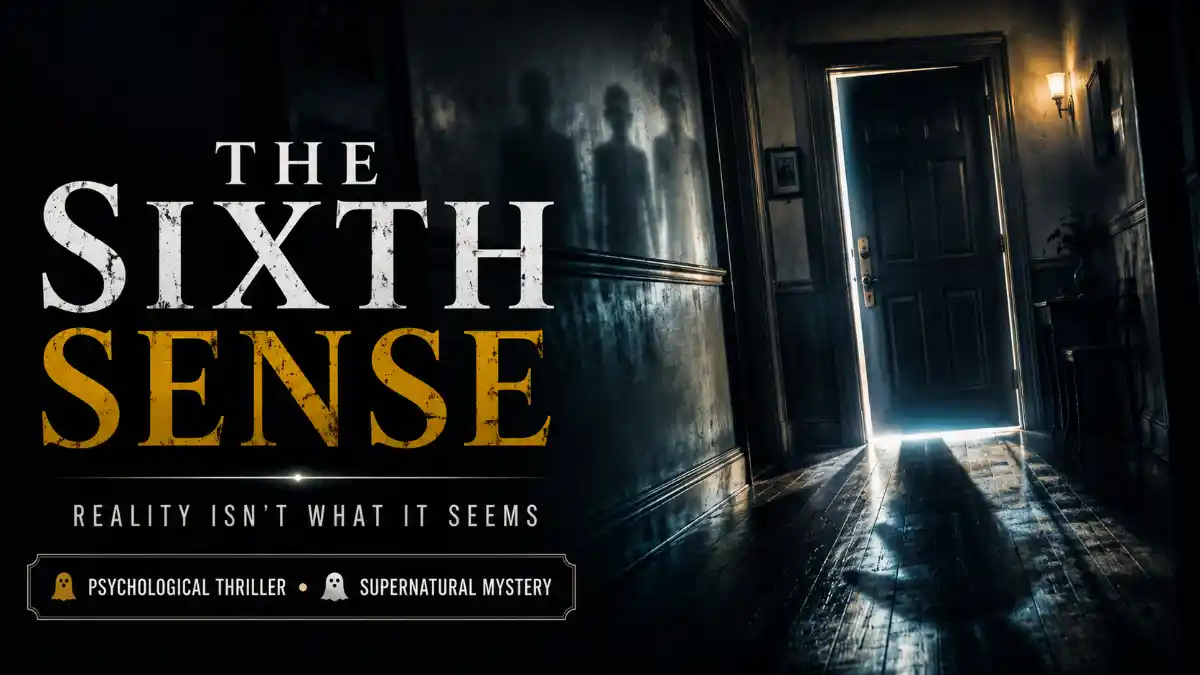
Some films ask you to suspend disbelief. The Sixth Sense asks you to reconsider everything you thought you understood about the two hours you just watched. Released in 1999, M. Night Shyamalan’s breakout film turned a modest story about a troubled boy and his psychologist into a cultural event, largely because its final scene doesn’t just surprise you – it rewrites the meaning of nearly every scene that came before it.
Spoiler warning: this article explains the complete plot, twist, and ending of The Sixth Sense.
This piece walks through how that trick actually works: the setup, the unfolding mystery, the reveal itself, the scene-level evidence hiding in plain sight, and why a film built entirely around one secret still holds up once that secret is out.
At a Glance
| Category | Detail |
| Director / Writer | M. Night Shyamalan |
| Lead performers | Bruce Willis, Haley Joel Osment, Toni Collette, Olivia Williams |
| Setting | Philadelphia |
| Genre classification | Psychological thriller with supernatural elements |
| Theatrical release | August 6, 1999 |
| Running time | 107 minutes (1 hour 47 minutes) |
| Production budget | $40 million |
| Worldwide earnings | $672.8 million |
| Academy Award nominations | Six, including Best Picture |
The Setup: A Psychologist Chasing Redemption
Dr. Malcolm Crowe isn’t introduced as a man in crisis – he’s introduced as a man being honored for his work, celebrating with his wife Anna. That celebration is interrupted by Vincent Grey, a former patient who forces his way into their home, blames Malcolm for failing him years earlier, and shoots him before turning the gun on himself.
It’s easy to treat this scene as a prologue, a bit of backstory to explain why Malcolm takes his next case so personally. In reality, it’s the single event the entire film is built around, even though the audience won’t understand its full weight until the closing minutes. This opening also sets the emotional stakes that carry through every later scene in The Sixth Sense: a man trying to atone for a failure he can’t undo.
Cole Sear’s Impossible Secret
The film picks up the following fall with Malcolm taking on Cole Sear, a nine-year-old who bears an uncomfortable resemblance to Vincent – not physically, but in the same simmering fear Malcolm failed to interpret the first time correctly. Cole is withdrawn at school, hides injuries he won’t explain, and flinches at things no one else in the room seems to notice.
When Cole finally breaks his silence, what he tells Malcolm isn’t a metaphor or a symptom to be diagnosed: he sees dead people, and none of them know they’re dead. It’s a claim that could easily play as delusion, except Malcolm has heard something eerily similar before – buried in an old recording of a session with Vincent, where a voice speaks in Spanish when Vincent was supposed to be alone in the room, suggesting Vincent had the same ability years earlier.
How the Story Unfolds
Once Malcolm accepts that Cole is telling the truth, his advice shifts from treatment to guidance: try to communicate with the ghosts and help them, rather than fear them. That single piece of advice sets up the film’s most concrete proof that Cole’s ability serves a purpose. Guided by the spirit of a girl named Kyra Collins, Cole retrieves a videotape that exposes her mother as the cause of her death by poisoning – evidence that spares Kyra’s younger sister from the same fate.
That success gives Cole the confidence to do something far harder: tell his own mother the truth. He proves it by recounting details from Lynn’s childhood that he could only have learned from a relative who had already died. It’s a quiet scene, but it closes the emotional gap between mother and son just before the story pivots toward its final act, and it’s arguably the moment Cole stops being defined by fear and starts being defined by what his ability allows him to do for people he loves.
The Sixth Sense Ending Explained: Was Malcolm Dead the Whole Time?
Yes. Vincent’s gunshot kills Malcolm during the film’s opening scene. Malcolm doesn’t realize this and spends the rest of the story believing he’s continuing his work and his marriage as normal. Cole can see and speak with him because Cole’s ability lets him perceive the dead. Malcolm only discovers the truth near the end, when a dropped wedding ring and his own unhealed gunshot wound force him to confront what actually happened that night.
In sequence, the reveal unfolds like this: Vincent shoots Malcolm, Malcolm dies from the wound, Malcolm unknowingly continues his routine as a ghost through the following fall, and Cole’s guidance eventually leads Malcolm to recognize and resolve what’s keeping him tethered to the living world.
As Malcolm and Cole prepare to part ways, Cole suggests that Malcolm try speaking to Anna while she’s asleep, so she might hear him on some level. Malcolm returns home to find Anna watching their wedding video. As she drifts toward sleep, she asks aloud why he left her. Her wedding ring slips from her fingers and rolls to the floor; Malcolm looks down and sees that his own hand is bare.
Recalling Cole’s explanation that the dead “only see what they want to see,” Malcolm checks his side and finds the wound from Vincent’s gunshot still there. His final words to Anna aren’t an explanation; they’re a release: he tells her she was never second to anything in his life. Her face relaxes, and Malcolm’s spirit departs in a flash of light.
Read More: The Sixth Sense
Did Cole Know Malcolm Was Dead?
Confirmed by the plot: Cole can see and speak with Malcolm specifically because Malcolm is dead, consistent with Cole’s stated ability to perceive people in that condition.
Not confirmed: The film does not explicitly state when, or whether, Cole recognized from the start of their sessions that Malcolm himself didn’t know he was dead.
Common interpretation: Cole’s explanation that ghosts “don’t know they’re dead” is delivered in a scene where he is speaking to Malcolm about his ability in general terms. Some viewers read this as an indirect acknowledgment of Malcolm’s own condition, but this remains an interpretation of the scene rather than something the dialogue confirms outright.
Why Couldn’t Malcolm Open the Basement Door?
Several times in the film, Malcolm is shown pulling on the door to his basement office, unable to get it open, followed by a cut to him already working inside. Near the end of the film, as Malcolm retraces his final night, the camera pulls back to reveal that the door has been blocked from the other side by a small table stacked with heavy books, and shows no sign of having been opened in some time.
The film doesn’t state in dialogue who placed the obstruction there, though it’s a reasonable inference – given that Anna lives in the house – that she moved Malcolm’s belongings into storage after his death. What the scene does establish directly is that Malcolm never notices the blockage until this moment, consistent with Cole’s earlier description of the dead perceiving only what they expect or want to see.
Why Doesn’t Anyone Else Talk to Malcolm?
Cole is the only character shown directly initiating a conversation with Malcolm and receiving a response. In other scenes, such as the anniversary dinner with Anna, Malcolm sits across from his wife, but it’s Anna who reaches for the check before he can touch it, and the scene never requires her to acknowledge anything he says or does. The editing consistently avoids placing Malcolm in a situation where another living character would need to respond to him directly – a structural choice that only becomes conspicuous once the ending explains why.
The Rules for Ghosts in The Sixth Sense
Cole’s explanation of his ability effectively sets the internal logic the film follows:
- Ghosts often don’t know they’re dead – stated directly by Cole.
- They perceive reality selectively, shaped by what they need or want to see – stated directly by Cole.
- Cole can see and hear them, though other living characters in the film aren’t shown doing so – shown directly.
- Some ghosts remain tied to the living world because of unresolved business – inferred from Kyra’s and Malcolm’s storylines.
- Helping a ghost resolve that unfinished business appears to allow them to move on – inferred from Kyra’s and Malcolm’s storylines.
The first three points are stated or shown directly. The last two are demonstrated through what happens to Kyra and Malcolm rather than spelled out as explicit rules in dialogue.
What Does the Color Red Mean in the Film?
Observed: Red appears sparingly across specific, identifiable moments: the door of the church where Cole seeks out Malcolm, the red balloon that floats up the stairwell during Cole’s birthday party, the doorknob on Malcolm’s locked basement door, and the shawl wrapped around Anna as she falls asleep during the film’s final scene.
Interpretation: These recurring appearances are widely read as a visual pattern connecting specific objects and moments to the story’s supernatural elements. The film itself never explains the color’s meaning through dialogue, so this reading – while consistent and well-supported by repetition – remains a critical interpretation rather than a stated fact within the story.
Scene-by-Scene Clues That Malcolm Was Dead
| Scene | First-Watch Interpretation | What You Notice After the Twist |
| Anniversary dinner | Anna is distant because the marriage is struggling | She takes the check before Malcolm can touch it and never responds to anything he says |
| Wedding video scene | Malcolm simply isn’t wearing his ring that day | Confirms he’s no longer among the living |
| Malcolm’s therapy sessions | Cole is just an unusually engaged patient | Cole is the only character shown directly speaking with and receiving responses from Malcolm |
| Malcolm’s wardrobe | Ordinary continuity from scene to scene | The same coat and layers appear throughout, items he wore the night he died |
| Basement office door | A recurring inconvenience, never explained on screen | Revealed to be blocked by a table stacked with books; Malcolm never notices it until his final realization |
| Cole’s ghost explanation | A general description of his ability | Delivered in a scene addressed to Malcolm; some viewers read it as an indirect acknowledgment |
| Malcolm’s gunshot wound | Never directly addressed after the opening | Confirms he died from Vincent’s attack rather than recovering |
| Color red in select scenes | Occasional set dressing or costume choice | Recurs specifically around Cole’s supernatural encounters |
| Malcolm’s continued daily routine | A man processing a difficult year | The routine of a spirit unaware that his life had already ended |
Read More: The Sixth Sense
Individually, several of these details are easy to miss or dismiss as coincidence. Together, they form a second version of the story that only becomes visible once the ending recontextualizes what the audience has already seen.
What The Sixth Sense Ending Really Means
Beneath its ghost-story mechanics, the ending resolves two intertwined arcs of grief and communication. Malcolm’s guilt over Vincent drives his commitment to Cole, and it’s only by helping Cole accept his ability that Malcolm can accept his own death. Anna, meanwhile, has spent the film mourning a husband she doesn’t consciously know is gone – Malcolm’s final words to her, spoken while she sleeps, allow him to express what he needs to say before his spirit departs.
Cole’s arc mirrors this same idea from a different angle: his fear throughout the film comes not from the ghosts themselves but from not being believed. Once Malcolm and then Lynn accept his ability, that isolation lifts. This emotional throughline, more than the mechanics of the twist itself, is why the film continues to resonate with viewers who already know exactly how it ends. It’s also why The Sixth Sense holds up as a film about connection first and a ghost story second.
Why the Twist Isn’t a Plot Hole
A common objection is that Malcolm’s ability to interact so convincingly with the living world should have been impossible if no one but Cole could perceive him. The film’s answer isn’t a fully worked-out supernatural physics system; it’s Cole’s rule that the dead perceive selectively and see mainly what they want to see. The story is told from Malcolm’s subjective point of view, so the audience experiences his routine as normal right alongside him. The basement-door scene is the clearest illustration of this design: Malcolm is shown repeatedly failing to open a door that has, in fact, been obstructed for some time, without ever registering the obstruction. The film leaves the exact mechanics of how a ghost perceives and moves through the physical world somewhat impressionistic by design, rather than resolving every logistical question a viewer might raise.
Character Guide
Malcolm Crowe (Bruce Willis) – A child psychologist whose search for professional redemption turns out to be inseparable from his own unresolved death.
Cole Sear (Haley Joel Osment) – A boy whose ability to perceive the dead becomes the mechanism through which several characters, including Malcolm, find resolution.
Lynn Sear (Toni Collette) – Cole’s mother, whose growing trust in her son mirrors Malcolm’s own arc of learning to believe what he can’t fully explain.
Anna Crowe (Olivia Williams) – Malcolm’s wife, grieving a husband she doesn’t consciously realize she’s lost.
Vincent Grey (Donnie Wahlberg) – The former patient whose violent breakdown sets the entire plot into motion, and whose earlier, unsupported experience of the same ability foreshadows Cole’s own.
Kyra Collins (Mischa Barton) – A young ghost whose case demonstrates that Cole’s gift can protect the living, not just frighten him.
Osment and Collette both received Academy Award nominations for Best Supporting Actor and Best Supporting Actress, respectively, for their performances in The Sixth Sense. Osment’s line about seeing dead people is ranked No. 44 on AFI’s list of the 100 greatest movie quotes in American cinema, a recognition that speaks to how central that single moment became to the film’s identity.
Frequently Asked Questions
Why does the film work even after you know the ending?
Because the twist isn’t the film’s only source of tension – it’s layered on top of character drama involving grief, guilt, and trust, all of which remain compelling regardless of whether the audience already knows Malcolm’s fate. Repeat viewers often say the film becomes more emotional, not less, once the ending is known.
What is Cole Sear’s relationship to Vincent Grey?
The two never meet, but Cole functions as a kind of successor to Vincent in the story – another child with the same supernatural ability, given a chance at the support and belief that Vincent apparently never received. Their parallel struggles are part of what gives Malcolm’s redemption arc its emotional weight.
Why is the wedding ring scene considered the key turning point?
It’s the exact moment Malcolm’s own perception breaks down: noticing the ring is missing from his hand forces him to question an assumption he’s held throughout the film, triggering the final realization that reframes everything he’s experienced since the opening scene.
Is the ending of The Sixth Sense considered ambiguous in any way?
The central twist is confirmed and explicit, but several smaller details – including whether Anna consciously senses Malcolm and the precise meaning of the red motif – are left open to viewer interpretation rather than stated directly in the film.
Did The Sixth Sense win any major awards?
It received six Academy Award nominations, including Best Picture, but did not win in any category. It received the Nebula Award for Best Script, voted on by members of the Science Fiction and Fantasy Writers of America, an award more commonly associated with science fiction and fantasy literature than mainstream film.





2 thoughts on “The Sixth Sense Decoded: How Shyamalan Hid a Ghost Story in Plain Sight”