Affordable Dental Implants: Costs, Financing, and Ways to Save
Affordable dental implants in the USA start with understanding the cost of a complete replacement tooth, not just the implant post. A single-tooth implant with an abutment and crown may cost approximately 3,760–5,733, according to a published 2026 dental cost guide. Actual prices depend on location, treatment complexity, and the services included. Dental school clinics, insurance benefits, discount plans, and financing may help make treatment more manageable. Traditional bridges and removable dentures are also worth considering, depending on your budget and dental needs.
Before choosing a provider, ask for an itemized treatment plan that covers any necessary extractions, imaging, bone grafting, temporary teeth,h and follow-up care. An advertised price may cover only part of the treatment, so compare the total cost before making a decision.
How Much Do Dental Implants Cost in the USA?
The total cost depends on how many teeth need replacing, the type of restoration, and whether additional procedures are necessary. The following published 2026 estimates offer a starting point for budgeting. They are not standardized national prices or guaranteed quotes.
| Treatment | Estimated US cost | What to clarify |
| Single-tooth implant | 3,760–5,733 | Whether the post, abutment, and crown are included |
| Implant-supported bridge | 4,000–16,000 | Number of missing teeth, implants and bridge design |
| Implant-retained denture | 2,000–13,300 per arch | Whether the denture is removable and which components are included |
| All-on-4 full-arch treatment | 11,600–27,500 per arch | Whether temporary and final prostheses, surgery and preparatory treatment are included |
| Full-mouth implant restoration | 38,600–90,000 | Whether both arches and all required procedures are covered |
These figures come from published cost guides that may define treatment packages differently. Local prices can fall outside these ranges, and some estimates exclude preparatory procedures or other fees. Compare the proposed treatment and included services rather than relying on the headline price alone.
What does the advertised price include?
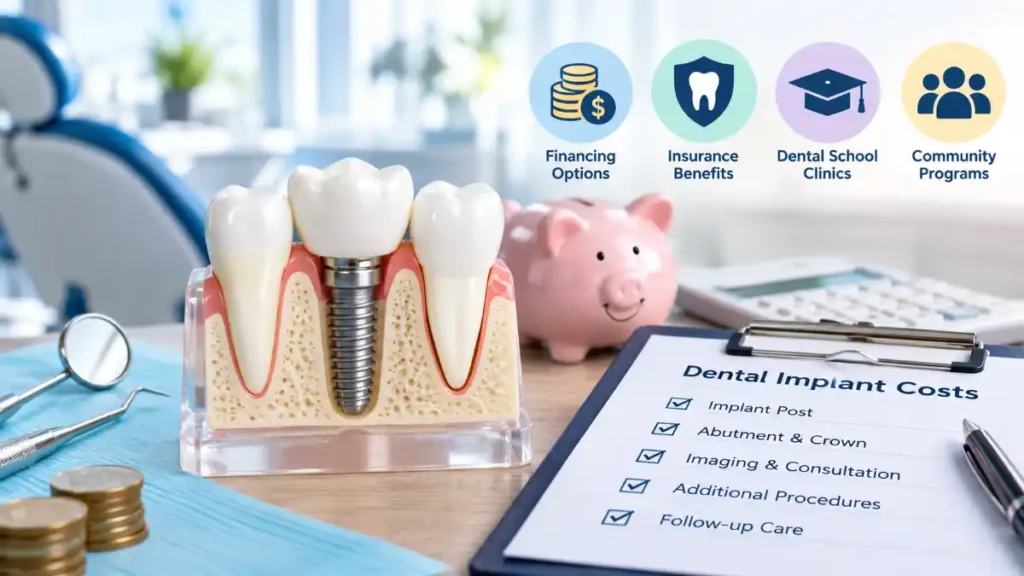
A complete implant restoration may involve several separate costs:
- Implant post: The component surgically placed in the jawbone.
- Abutment and crown: The connector between the implant and the visible replacement tooth, plus the crown itself.
- Imaging and consultation: Examinations and scans used to plan treatment.
- Additional procedures: Extractions, bone grafting or a sinus lift, when needed.
- Other charges: Temporary teeth, anesthesia, follow-up appointments and adjustments.
Not every patient needs every procedure. Ask your dentist to identify which services are included in the quote, which are optional, and which could add to the final bill.
Where Can You Find Affordable Dental Implants?
Several options may help reduce your out-of-pocket expenses. Availability, eligibility,y and treatment costs vary, so confirm the details before scheduling treatment.
1. University dental school clinics
Dental schools may offer treatment at reduced fees through supervised student clinics or faculty-led programs. However, not every school provides implant surgery and restorations, and treatment may involve longer waiting times or additional eligibility requirements.
Contact nearby dental schools to ask whether they accept implant cases, what the complete treatment would cost, st and who supervises the procedure.
2. Community dental programs
Community health centers and local dental assistance programs may offer lower-cost services to eligible patients, particularly those with limited income or no insurance. Some clinics focus on preventive, basic, or urgent dental care and may not provide implants.
Ask about income requirements, available treatments, referral options, and whether implant-related procedures are covered.
3. Dental insurance and discount plans
Some dental insurance policies cover part of implant treatment, while others exclude implants or restrict benefits. Annual maximums, deductibles, waiting periods, and coinsurance can all affect your final bill.
Dental discount plans may offer reduced fees through participating dentists, but they generally do not pay claims like insurance. Before enrolling, confirm that your dentist participates and that the specific implant procedures qualify for discounts. Include membership fees when comparing your options.
4. Verify dental assistance and grant offers
Be cautious of advertisements promising guaranteed free dental implants through government grants. According to USAGov’s guidance on government grants and scams, the government does not provide free money or grants to individuals for personal expenses, although legitimate assistance programs may be available through other organizations.
Before sharing financial information or paying an application fee, independently verify the organization, eligibility requirements, funding arrangements,s and participating providers. Be especially wary of unsolicited offers that promise guaranteed approval or demand upfront fees.
How Can You Pay for Dental Implants?
If paying the full amount upfront is difficult, several options may help you manage the expense.
- Dental implant financing: Some dental practices and third-party lenders offer monthly payment plans. Compare the annual percentage rate (APR), fees, repayment period, od and total amount payable. Promotional offers may include deferred interest, which can become costly if the balance is not paid according to the agreement.
- Health Savings Accounts (HSAs): Eligible patients with qualifying accounts may use HSA funds for qualified dental expenses, subject to applicable rules.
- Flexible Spending Accounts (FSAs): Eligible dental expenses may be paid using FSA funds, subject to employer plan rules, contribution limits, and applicable deadlines.
- Insurance coordination: Ask your insurer whether any treatment components are covered and whether preauthorization or a waiting period applies.
The IRS guidance on medical and dental expenses explains which expenses may qualify for tax purposes. HSA and FSA eligibility can depend on the type of expense, account rules, and other applicable requirements, so confirm the details with your plan administrator.
To estimate your out-of-pocket cost, start with the itemized treatment total. Subtract confirmed insurance benefits and applicable discounts, then account for deductibles, coinsurance, excluded procedures,s and any financing charges. Confirm the figures with your insurer and provider before committing, since coverage estimates may differ from final payments.
If you are considering dental implants without insurance, compare the self-pay price with the total cost of any insurance or discount plan you might purchase. Check exclusions, waiting periods, annual limits, ts and membership fees before assuming that enrolling will reduce your bill.
A monthly payment that fits your budget is not necessarily the cheapest option. Compare the total repayment amount and discuss a clinically appropriate treatment schedule that fits your financial circumstances.
Dental Implants vs. Bridges and Dentures
Dental implants are not the right choice for everyone. Traditional bridges and removable dentures may offer more affordable alternatives, depending on the number of missing teeth and your oral health.
| Option | Main advantages | Important considerations |
| Dental implants | Stable support for a replacement tooth or prosthesis | Surgery, higher upfront costs, and possible additional procedures |
| Traditional dental bridge | Fixed replacement without implant surgery | Usually relies on neighboring teeth for support |
| Removable dentures | Often lower initial cost and can replace multiple teeth | May require adjustments, maintenance, or replacement over time |
The best option depends on your remaining teeth, jawbone condition, overall health, preferences, and budget. Compare the initial price as well as expected maintenance and future repair costs. The American Dental Association provides additional information about bridges and how they replace missing teeth. Ask your dentist to explain the benefits and limitations of each clinically appropriate option before deciding.
How to Choose an Affordable Implant Dentist
The cheapest advertised treatment is not necessarily the best value. Use these steps to compare providers:
- Check credentials. Verify the dentist’s license with the relevant state dental board. Ask about experience with your specific procedure and who will perform the surgical and restorative stages.
- Request an itemized estimate. Confirm the cost of the implant post, abutment, crown or prosthesis, imaging, extractions, grafting, temporary teeth,h and follow-up care.
- Compare consultations. When practical, obtain estimates from at least two providers. Compare the proposed treatment, materials, included services, es and reasons for any price differences.
- Ask about complications and maintenance. Find out who handles adjustments, repairs, and complications, and whether these services carry additional fees.
- Review financing terms. Understand the interest rate, fees, repayment obligations, and promotional conditions before signing an agreement.
A qualified provider should explain your treatment options clearly and give you enough information to make an informed decision. If a quote is substantially lower than others, ask what is excluded and why the price differs before committing.
Read also: Affordable Dental Implants
Frequently Asked Questions
How much do affordable dental implants cost for one tooth?
A single-tooth implant with a post, abutment,t and crown may cost approximately 3,760–5,733 based on published 2026 estimates. Your actual price will depend on location, treatment complexity, ty and whether additional procedures are needed.
Can you get dental implants with no insurance?
Yes. You can pay for treatment out of pocket, ask about self-pay rates, compare dental school clinics, and investigate eligible assistance programs. Financing may spread payments over time, but compare the total cost and repayment terms before choosing a plan.
Are dental implants covered by dental insurance?
Coverage varies by policy. Some plans cover part of implant treatment, while others exclude implants or impose limits, waiting periods, and annual maximums. Ask your insurer for a written estimate of benefits before starting treatment.
Are dental implants better than dentures or bridges?
Not in every situation. Implants can provide stable support for replacement teeth, but they involve surgery and often cost more upfront. Bridges and removable dentures may be suitable alternatives depending on your oral health, treatment goals, and budget. A dentist can help you compare the options.
How can I avoid dental implant scams?
Be cautious of guaranteed free-implant offers, pressure to pay immediately,y and unexplained upfront fees. Verify the provider’s credentials, request an itemized treatment plan, and confirm the terms of any financing or assistance program before sharing sensitive information or making a payment.