Blue Spirulina: Benefits, Nutrition, Uses, and Side Effects
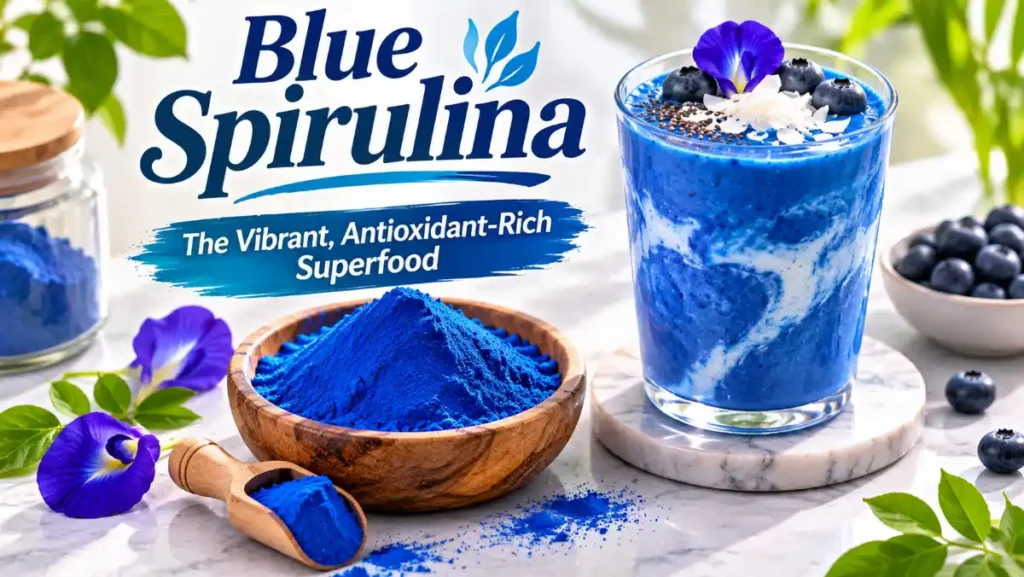
Blue Spirulina is a bright blue substance that is extracted from spirulina – a blue-green alga and cyanobacterium. In contrast to green Spirulina, blue spirulina is not composed of the whole spirulina alga, but is made up of pigments and related substances. It is often used in smoothies, food, and in nutritional products. Although studies have shown that phycocyanin is an antioxidant, the health benefits of blue spirulina still need to be validated in humans.
Blue spirulina is usually produced from Arthrospira platensis (also known as Limnospira platensis). The bright blue colour of the substance is due to the presence of C-phycocyanin. This is a naturally occurring water-soluble pigment protein.
| Feature | Description |
| Source | Type of Spirulina: Cyanobacteria |
| Colour | Bright blue |
| Main component | C-phycocyanin |
| Use | Food additive and nutritional product |
| Nutritional content | Variable |
| Caffeine | Naturally caffeine-free (unless combined with other products) |
| Scientific evidence | Limited |
Blue Spirulina and Green Spirulina
Both blue and green spirulina are typically from similar cyanobacterial species. Whereas green spirulina is made from sun-dried Spirulina biomass, blue spirulina is created by extracting the Spirulina to obtain substances high in phycocyanin.
| Feature | Blue Spirulina | Green Spirulina |
| Production | Extractive | Sun drying |
| Colour | Bright blue | Dark green/blue green |
| Pigments | Mainly phycocyanin | Chlorophyll, phycocyanin and carotenoids |
| Protein | Variable | Generally high in protein (on a dry weight basis) |
| Nutrients | Variable | Broad range of nutrients |
| Fibre | Often low | Greater fibre content |
| Flavour | Usually less pungent | Pungent, similar to algae |
| Use | Food additive | Food, drinks and desserts; nutritional products and smoothies |
Neither product is inherently superior to the other. Green spirulina will usually retain more of the original Spirulina nutrients. However, blue spirulina is highly effective at providing a vivid blue colour and does not have the strong flavour of green spirulina.
Potential Health Benefits of Blue Spirulina
Most health benefits ascribed to blue spirulina relate to phycocyanin. Investigations have been carried out into the antioxidant properties of phycocyanin and its potential influence on areas such as inflammation and immunity.
Nevertheless, findings relating to Spirulina, isolated C-phycocyanin, and Spirulina extracts may not always apply to blue spirulina powders.
| Potential Benefit | Evidence | Research Limitation |
| Antioxidant | Yes – in laboratory studies | Health benefit in humans is unknown |
| Anti-inflammatory | Laboratory and animal studies suggest this could be the case | Human data is currently lacking |
| Immunity | Pre-clinical studies suggest this may be possible | Human clinical benefits have not been demonstrated |
| Cardiovascular health | Human studies on Spirulina have investigated blood pressure and cholesterol levels | Benefits cannot be automatically ascribed to blue spirulina |
| Neurological health | Laboratory studies suggest neuroprotective properties | Benefits for the human brain have not been demonstrated |
| Skin health | Initial investigation into antioxidant properties | No proven skin benefits, including acne treatment and anti-ageing, from blue spirulina in the diet |
| Exercise recovery | Potential antioxidant and anti-inflammatory properties | Clinical data for blue spirulina extracts is currently insufficient |
| Weight control | Limited human data on blue spirulina | No proven weight loss effect from blue spirulina alone |
Currently, there is no good-quality clinical data to support that blue spirulina in smoothies has a positive impact on areas such as chronic inflammation, disease prevention, memory and fat burning. As outlined above, however, it is most commonly utilised as a natural blue food colouring agent.
Nutritional Information for Blue Spirulina
As with many products, the nutritional content of a blue spirulina powder will depend on the method of production, levels of phycocyanin, and the amount consumed. Even though phycocyanin is a protein, this does not always indicate that blue spirulina is a good source of protein. Furthermore, the iron, vitamin, mineral, and carbohydrate content can also be very different from that of green Spirulina.
Always refer to the nutritional information on a product to compare quantities and ascertain the protein, phycocyanin and additional components present.
For a related comparison of dietary protein sources, see the guide to protein powder.
Using Blue Spirulina
Blue spirulina is especially suitable for cold items. Studies show that the colour of phycocyanin can be influenced by temperature, light and pH. To possibly help maintain a strong blue hue, blue spirulina can be incorporated into cold or ambient products.
Items commonly made with blue spirulina include smoothies and bowls, yoghurt, overnight oats, chia seed pudding, ice lollies, lemonade and dessert toppings.
On 6 th February 2026, the FDA published an order to widen the application of Spirulina extract as a food colouring. However, on 20 th March 2026, it postponed enforcement of this decision indefinitely whilst further assessing the raised concerns about it. Current approvals continue to stand. Again, FDA authorisation for colouring does not necessarily mean that Spirulina has therapeutic value.
FDA+2
Simple Blue Spirulina Recipes
Blue Spirulina Smoothie Bowl
Blue Spirulina smoothie bowl: Blend a frozen banana, 1/2 cup of frozen mango, 1/2 cup plain yoghurt, and some milk. Then blend in blue spirulina. Top with fresh berries and/or coconut flakes.
Blue Spirulina Yogurt Bowl
Blue Spirulina yogurt bowl: Combine blue spirulina with 1/2 cup of plain yoghurt. Top with fresh blueberries, granola, and chia seeds.
Blue Chia Seed Pudding
Blue chia seed pudding: Whisk together 2 tablespoons of chia seeds, 1/2 cup of milk, and blue spirulina. Leave to stand in the fridge overnight. Serve with fresh fruit.
Please adhere to the cooking guidance provided for the blue spirulina product selected. Note that the phycocyanin content can differ between blue spirulina powders.
For another smoothie and beverage ingredient, explore pineapple juice benefits.
Side Effects and Safety of Blue Spirulina
Whilst blue spirulina is used for food, the safety of blue spirulina supplements will also depend upon the products’ formulation and purity. Alongside general Spirulina, there have been reports of certain side effects. However, again, there is relatively little dedicated scientific research on the safety of blue spirulina.
Potential side effects and safety considerations include:
- Stomach upsets (including nausea and distension).
- Allergic responses for allergy-prone people.
- Consumption of harmful substances, e.g., microcystins and/or heavy metals, if products have not been sufficiently analysed.
- Effects of extended and/or high-level blue spirulina supplement use remain unclear.
A small randomised, placebo-controlled clinical study assessed the short-term safety of a specific phycocyanin-enhanced product. Nevertheless, this does not determine the long-term safety of all available blue spirulina supplements.
Those who are either pregnant or nursing, young people, and those who are on medication or have existing health issues should discuss blue spirulina supplement usage with a medical practitioner before commencement.
What Dosage of Blue Spirulina Should Be Taken?
Generally, there is no standard intake of blue spirulina for specific health purposes. When using blue spirulina in food or drink, it is advisable to adhere to the manufacturer’s suggested quantity for consumption.
Furthermore, blue spirulina supplement products may provide highly differing levels of phycocyanin. Therefore, it is important not to take more than the advised dosage for supplements without first seeking advice from a medical expert.
Selecting Quality Blue Spirulina
Whilst considering blue spirulina, it is important to assess products based on more than just colour and purported health advantages. Consider:
- Content – Confirm that the product comprises Spirulina extract high in phycocyanin and not green Spirulina powder.
- Phycocyanin levels – Where stated, identify the phycocyanin content.
- Additives – Investigate what supplementary ingredients are included, e., bulking agents, sweeteners, and stabilisers.
- Analysis – Determine whether the product has been independently analysed for heavy metal and microcystin content.
- Batch analysis – Obtain a certificate of analysis (COA) for the specific batch. This should detail analysis results.
- Usage and storage – Choose a product with defined guidance regarding its storage, preparation and consumption.
- Value for money – Assess the unit price rather than simply the overall cost of the item.
Note that neither enhanced colour nor increased phycocyanin levels automatically equate to greater health advantage.
For another naturally blue food and beverage ingredient, see butterfly pea flower and its uses, colour-changing properties, and safety considerations.
Frequently Asked Questions
What is blue spirulina?
Blue spirulina is an extract made from spirulina cyanobacteria. Its bright blue color comes from phycocyanin, a naturally occurring pigment-protein. It is not a separate species of algae.
What are the benefits of blue spirulina?
Blue spirulina provides natural food coloring and contains phycocyanin, which has demonstrated antioxidant activity in experimental studies. Its potential anti-inflammatory and other health benefits still require stronger human research.
Is blue spirulina better than green spirulina?
It depends on your purpose. Green spirulina generally retains a broader range of nutrients, while blue spirulina is better suited to creating bright blue foods and drinks with a milder flavor.
Can you take blue spirulina every day?
Using blue spirulina regularly in food may be appropriate when you follow the product’s serving instructions. However, the long-term safety of daily concentrated supplementation has not been adequately established.
What are the side effects of blue spirulina?
Possible side effects include nausea, digestive discomfort, and allergic reactions. Contamination is another concern with inadequately tested products, although the frequency of adverse effects specific to blue spirulina remains uncertain.