
Pineapple Juice Benefits: Nutrition, Digestion, and Side Effects
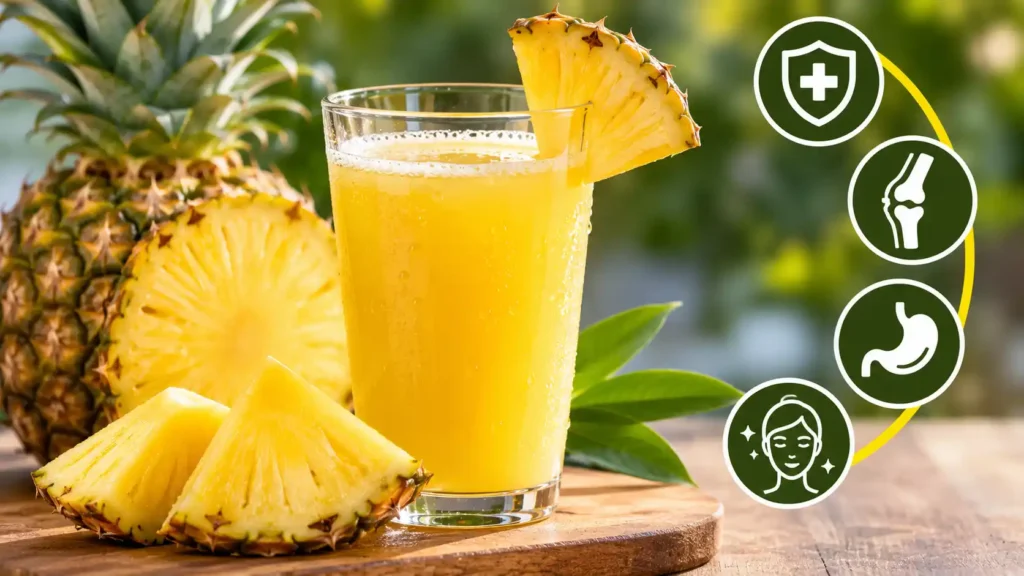
The many nutritional benefits of pineapple juice include support for normal immune system function, collagen production, antioxidant activity, and metabolism. Pineapple juice is a source of Vitamin C, manganese, naturally occurring carbohydrates, and water. When consumed in moderation, pineapple juice can be part of a healthy diet. Bromelain is an enzyme found in pineapple that aids in the breakdown of proteins. However, at this time, there is no evidence that consuming regular pineapple juice will aid in the improvement of digestion or reduce inflammation.
Unsweetened pineapple juice (one cup) provides about 130 calories and 25 grams of natural sugars with minimal dietary fiber. The consumption of unsweetened pineapple juice may provide a beneficial supply of vitamins/minerals; however, increasing the amount consumed does not guarantee increased health benefits. Additionally, the nutritional content of unsweetened pineapple juice will vary based on how much is consumed, how it was processed, and if any additional ingredients were added.
What Are the Health Pineapple Juice Benefits?
Pineapple juice contains a number of vitamins, minerals, fluids, and natural chemicals found in plants. These have the potential to provide numerous health benefits to the individual who drinks it. Many of these components of pineapple juice can help support some well-known bodily functions. Others are currently under investigation.
| Potential Benefit | Nutrient or Compound | Evidence and Limitations |
| Supports immune function | Vitamin C | This is a good way to maintain your body’s immune system at its normal levels. It will help protect you from infection, but there is no guarantee that it will. |
| Supports collagen production | Vitamin C | Essential for collagen formation and normal skin maintenance. |
| Provides antioxidant support | Vitamin C | Helps protect cells from oxidative damage. |
| Supports metabolism | Manganese | The role of this nutrient is to allow enzymes that are responsible for energy metabolism and other cellular functions to operate as expected. |
| Contributes to hydration | Water | Supplies fluids that contribute to daily hydration needs. |
| Provides dietary energy | Carbohydrates | Natural sugars provide readily available energy. |
| Supports iron absorption | Vitamin C | Helps the body absorb nonheme iron from plant foods. |
| May assist protein digestion | Bromelain | It breaks down proteins. There is no evidence that ordinary juices have health benefits related to digestion. |
| May have anti-inflammatory potential | Bromelain | Inflammation has been studied using the supplement form; however, the research on supplements does not support the same results with juice. |
These are not 9 different types of treatment, nor do they provide you with an assurance of improved health. Many of the same benefits are provided by the same nutrient, especially Vitamin C, which is involved in many aspects of maintaining good health.
Pineapple Juice Nutrition Facts
Pineapple juice contains carbohydrates, vitamins, and minerals; however, there are differences in the levels of these nutrients due to processing and preparation methods.
This is a list of the nutrition information for each serving of canned, unsweetened pineapple juice with added ascorbic acid (vitamin C), which is about 1 cup (or approximately 237 milliliters) of canned, unsweetened pineapple juice with added ascorbic acid (vitamin C). The nutrition facts were obtained from a canned, unsweetened pineapple juice with added ascorbic acid (vitamin C) nutrition database.
University Hospitals
| Nutrient | Amount Per Cup |
| Calories | 133 |
| Carbohydrates | 32.2 g |
| Total sugars | 25 g |
| Protein | 0.9 g |
| Total fat | 0.3 g |
| Dietary fiber | 0.5 g |
| Vitamin C | 109.5 mg |
| Manganese | 1.26 mg |
| Potassium | 325 mg |
Vitamin C is required for normal immune function, collagen production, and antioxidant protection. According to the National Institutes of Health (NIH) guidelines regarding Vitamin C, it can help the body utilize the iron present in plant-based foods.
Vitamin C
Manganese is also a significant nutrient contained within pineapple juice. This particular nutrient provides support for enzymes to perform critical metabolic functions, such as those related to the breakdown of carbohydrates and fats. The NIH (National Institutes of Health) has provided information regarding how manganese functions to help ensure that enzymes operate properly. In contrast, potassium assists with both muscular and neural activities.
Vitamin C levels can vary greatly among products. For instance, juices that contain added ascorbic acid will likely have higher levels of vitamin C than those that do not. Additionally, the amount of vitamin C available from fresh, canned, bottled, and concentrated juices can differ.
“Unsweetened” does not mean “sugar-free.” Pineapple juice contains natural sugars from the pineapple, so even if there are no additional sugars added, these natural sugars contribute to your total carbohydrate consumption.
Does Pineapple Juice Help Digestion and Reduce Inflammation?
Pineapple has bromelain, which is a collection of enzymes that can decompose protein molecules into simpler units. Bromelain is found within the pineapple fruit as well as in its stem. Because of the potential health benefits associated with bromelain (such as digestion improvement and inflammation reduction), it has drawn much attention from researchers.
In addition to this, the concentration of active bromelain found in pineapple juice varies greatly due to the type of processing used (i.e., if it involves heating) and how much of the enzyme was lost during that process.
While bromelain has the ability to digest protein, it does not mean that by consuming pineapple juice you will experience relief from your digestive problems. There is very little documented evidence of pineapple juice providing a reliable solution for bloating, constipation, or indigestion.
Similarly, caution should be used with respect to inflammation. Studies using concentrated bromelain supplements do not demonstrate that consuming pineapple juice will alleviate joint inflammation, muscle aches and pains, or other inflammatory-related symptoms. The National Center for Complementary and Integrative Health (NCCIH) has provided guidelines for bromelain which describe the limits of available evidence for many suggested applications.
NCCIH
Although pineapple juice is an option to consume during a healthy diet, it should not replace health care.
Is Pineapple Juice Good for Immunity and Skin?
Pineapple juice is able to help support a normal immune system if it provides significant amounts of Vitamin C. Vitamin C supports the proper functioning of your immune system cells and also provides support for the antioxidant defense mechanisms in your body.
Pineapple juice is not a cure for colds, flu, or other infections. It provides nutritional value but no medicinal benefits.
The benefits of pineapple juice for skin can also be primarily attributed to vitamin C. Your body requires vitamin C in order to generate collagen, which is a protein that assists with maintaining skin structure and allows for normal tissue repair.
The idea that pineapple juice alone can help with acne, fade dark spots, reduce wrinkles, and make your skin look younger/brighter has yet to be backed by science. There are multiple variables that affect how healthy your skin is; these include what you eat, how much time you spend in the sun, and what you do each day to take care of your skin.
Can You Drink Pineapple Juice Every Day?
You can consume small quantities of 100% pineapple juice as part of your overall healthy eating plan, and you do not have to consume it on a daily basis to receive sufficient Vitamin C or other nutrients.
A good option for those who like pineapple juice but need to control their sugar and calories is a single, small, 4-ounce (about 120 milliliters) portion. This is just one possible example, and there are many variables that determine the best portion size for each person. These variables include how much total carbohydrates you take in daily, your overall fruit intake, and what other types of foods you eat.
A single full glass of water will contain about twenty-five (25) grams of natural sugar. Therefore, if you are consuming multiple large glasses of water per day on a consistent basis, then you may be adding significant amounts of sugar, carbohydrates, and calories to your daily food intake.
If you’re living with diabetes, then there are special considerations for both the amount of carbohydrates in the juice and how they affect your blood sugar.
Pineapple juice is not a “fat-burning” or “detox” beverage. Although pineapple juice has many health benefits, it will not help you lose weight.
Pineapple Juice Side Effects and Precautions
Drinking pineapple juice usually doesn’t cause any problems. However, if you drink too much of it or have a sensitivity to it, you may experience negative effects.
- Acid reflux: The high level of acid contained within the juice may cause people with acid reflux to experience worse symptoms of reflux and/or develop heartburn.
- Frequent use of acidic juices can cause the gradual erosion of dental enamel.
- Blood sugar issues: large amounts of food contain many carbs, regardless of whether you have added sugars to the food.
- The mouth may experience discomfort due to acid levels or an individual’s level of sensitivity to foods. This discomfort will likely take the form of burning or other types of uncomfortable sensations.
- If you are allergic to pineapples, then do not drink pineapple juice.
- Digestive Issues: Too much can lead to an upset stomach in certain individuals.
If you regularly consume pineapple juice, drinking it at meal times instead of repeatedly sipping it during the day can help decrease the amount of time that your teeth are exposed to acidic substances. In addition to recommending that individuals rinse their mouths with water after consuming acidic beverages, the American Dental Association provides recommendations for preventing and treating dental erosion.
American Dental Association
The possible side effects of taking high-dose supplements of concentrated bromelain should not automatically be expected to apply to typical daily consumption of pineapple juice.
Pineapple Juice vs. Whole Pineapple
While both pineapple juice and whole pineapple contain many of the same vitamins and minerals, they have different nutritional profiles. The whole pineapple has a higher content of dietary fiber than pineapple juice and typically makes you feel fuller.
| Feature | Pineapple Juice | Whole Pineapple |
| Vitamin C | Present; varies with processing and fortification | Naturally present |
| Manganese | Good source | Good source |
| Fiber | Approximately 0.5 g per cup | Approximately 2.2 g per cup |
| Total sugar | Approximately 25 g per cup | Approximately 14.4 g per cup |
| Fullness | Generally less filling | Often more satisfying because of fiber and chewing |
| Convenience | Ready to drink | Requires cutting or purchasing prepared fruit |
Figures here compare one cup of canned unsweetened pineapple juice containing added ascorbic acid against one cup of raw pineapple pieces. The whole fruit values represent nutritional data from fresh pineapple.
For a daily choice, buying whole pineapples will give you more fiber and a more filling treat. While juice can be an easy way to get your daily intake of vitamins, you are likely to ingest much higher levels of sugar in a shorter period of time from drinking versus eating.
How to Choose and Drink Pineapple Juice
Look for labels on products that say “100% pineapple juice” rather than those saying “pineapple flavored” or “fruit cocktail.” Read through the ingredients list, the size of each portion (serving), and the nutritional information. Pay close attention to the total amount of sugar and the added sugar in the product. Products with no added sugar can still contain large quantities of naturally occurring sugar.
Freshly made pineapple juice contains variable amounts of enzymes compared to heat-processed juice. However, the quality of your pineapple juice will be determined by how you prepare it and store it. When making juice at home, use clean utensils; immediately place the juice in the refrigerator; and practice safe food handling with the pineapple.
If pineapple juice has a strong flavor (either sweet or acidic), you can reduce the intensity of the flavor by adding water. Adding water will also help you to lower your intake of pineapple juice each time you use a glass.
If you would prefer a meal that is more substantial than a snack, try using fresh pineapples rather than canned ones. You will find that you are able to consume more dietary fiber with each bite, and you can enjoy the same great taste of the fruit, plus all the vitamins and minerals that come along with it.
Read also: Pineapple Juice Benefits
Frequently Asked Questions
What are the main health benefits of pineapple juice?
Pineapple juice provides vitamin C, manganese, fluids, and carbohydrates. These support normal immune function, collagen production, antioxidant activity, and metabolism. However, its nutritional benefits shouldn’t be confused with proven effects against specific diseases.
Is it good to drink pineapple juice every day?
Drinking moderate amounts of 100% pineapple juice daily can fit into a balanced diet, but it’s not necessary. Keep portions reasonable, especially if you’re monitoring sugar intake. Whole pineapple is usually a better choice when you want more fiber.
Does pineapple juice help with digestion?
Pineapple contains bromelain, an enzyme that breaks down proteins. However, active bromelain levels vary between juices, and there’s not enough clinical evidence to show that drinking pineapple juice reliably treats bloating, constipation, or other digestive problems.
Is pineapple juice good for your skin?
It can provide vitamin C, which your body needs to produce collagen and maintain healthy skin. That doesn’t mean drinking pineapple juice will clear acne, fade pigmentation, or reduce wrinkles. Those cosmetic effects haven’t been established.
What are the side effects of drinking pineapple juice?
Some people experience heartburn, mouth irritation, or stomach discomfort. Drinking large amounts also increases sugar intake, while frequent exposure to its acidity can contribute to dental enamel erosion. Anyone allergic to pineapple should avoid it.




2 thoughts on “Pineapple Juice Benefits: Nutrition, Digestion, and Side Effects”