
AC Joint: Pain, Injuries, Treatment, and Recovery
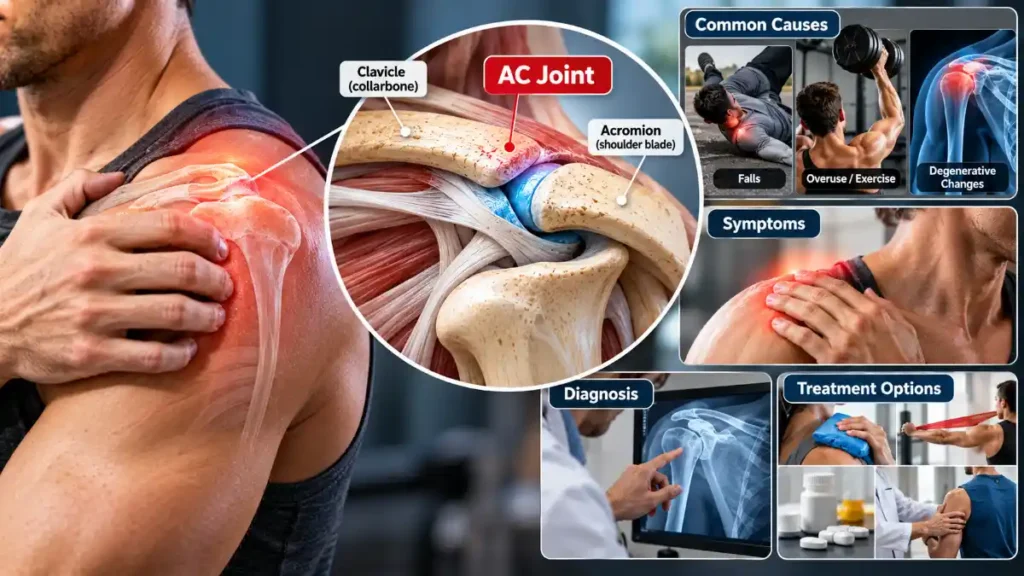
The acromioclavicular (AC) joint connects the collarbone (clavicle) to the acromion, a bony part of the shoulder blade. It helps the shoulder blade move and stay stable as you reach, lift, and use your arm. Pain at the top of the shoulder can result from a ligament sprain or separation after a fall, arthritis, or repeated loading during weightlifting. These conditions can feel similar, but their severity and treatment needs differ.
Common symptoms include tenderness directly over the joint, pain when reaching across the chest, and discomfort during pressing or overhead movements. Swelling, bruising, or a visible bump may occur after an injury. Symptoms alone cannot identify the exact cause, so a clinician may need to examine the shoulder and order X-rays when a fracture, separation, or arthritic change is suspected.
What Is the AC Joint?
The joint sits at the outer end of the collarbone, where it meets the acromion. Ligaments hold the bones together, while nearby coracoclavicular ligaments provide additional support. Although this joint moves only slightly, it helps the shoulder blade rotate as the arm rises.
It is different from the glenohumeral joint, the shoulder’s main ball-and-socket joint. This distinction matters because pain in different areas of the shoulder can have different causes and may require different assessments.
What Causes AC Joint Pain?
Sprain or Shoulder Separation
A sprain occurs when the supporting ligaments stretch or tear. An AC joint separation is a ligament injury that can allow the collarbone and shoulder blade to shift out of their usual alignment. It often follows a fall directly onto the shoulder or a forceful impact during sports.
Symptoms may include sudden pain, tenderness, swelling, bruising, and difficulty raising the arm. A more significant separation can create a visible bump near the collarbone, but appearance alone cannot reliably establish injury severity. Treatment depends on the extent of ligament damage and displacement.
Arthritis
Arthritis develops as cartilage in the joint wears down. It may occur with age or after an earlier injury. Pain often builds gradually and may come with stiffness or tenderness. Reaching across the chest, doing push-ups, or pressing a weight overhead can aggravate symptoms.
An X-ray may show arthritic changes, but these findings do not always explain a person’s pain. Clinicians consider imaging alongside symptoms, examination findings, and limitations in daily activities.
Repetitive Stress and Weightlifting
Repeated pressing or overhead exercise can irritate the joint, especially when training loads or frequency exceed what the shoulder can tolerate. Bench presses, dips, and push-ups may aggravate existing pain; they do not automatically cause arthritis or a separation.
Persistent pain in weightlifters can sometimes result from distal clavicular osteolysis, a condition involving bone changes at the outer end of the collarbone. It is sometimes called weightlifter’s shoulder. Ongoing pain should be assessed rather than assumed to be ordinary soreness.
What Are the Symptoms of an AC Joint Injury?
Symptoms depend on the cause, but may include:
- Pain and tenderness at the top of the shoulder.
- Discomfort when reaching across the chest or lifting the arm overhead.
- Swelling or bruising after a fall or direct impact.
- A bump near the collarbone after some separations.
- Stiffness or difficulty with dressing, carrying objects, or exercise.
A sudden onset after trauma may suggest an injury, while gradual pain during repeated activity may point to irritation or degeneration. Neither pattern confirms a diagnosis, and other shoulder problems can cause similar symptoms.
How Are AC Joint Problems Diagnosed?
A clinician will ask how the pain began, where it is located, which movements aggravate it, and whether there has been a fall or a change in training. The physical examination may assess tenderness, swelling, alignment, range of motion, strength, and function. Movement tests can help identify the likely source of pain, but no single test is conclusive.
X-rays may be needed when a fracture, separation, displacement, or arthritis is suspected. They can show bone alignment and structural changes. MRI or other imaging may be considered if the diagnosis remains unclear or additional soft-tissue damage is suspected. Not everyone needs advanced imaging; the decision depends on the examination and whether the result would change care.
How Is AC Joint Pain Treated?
Treatment depends on the diagnosis, severity, and effect on daily activities. Many mild injuries and cases of irritation can initially be managed without surgery.
Conservative Treatment
Temporarily avoid or modify movements that trigger pain. After an acute injury, applying ice wrapped in a cloth for short periods may help with pain and swelling; do not place ice directly on the skin. Suitable pain-relief medication may help, but the safest choice depends on medical history and other medicines. Ask a clinician or pharmacist if you are unsure what is appropriate.
Physical therapy can help restore comfortable movement, strength, and shoulder control. For lifting-related pain, reducing the weight, range of motion, or frequency of aggravating exercises may be more useful than continuing through pain. Return to training gradually as symptoms and function improve.
Injections and Surgery
A clinician may consider an injection when symptoms persist despite appropriate nonsurgical care. Its suitability and expected benefit depend on the underlying condition. Surgery may be considered for selected severe separations or ongoing pain and functional limitations that have not improved with conservative treatment. It is not necessary for every separation or case of arthritis, and recovery after surgery requires rehabilitation.
How Long Does Recovery Take?
Recovery varies with the type and severity of the problem, treatment, and activity demands. A mild sprain may improve sooner than a severe separation, while arthritis or repetitive-stress conditions may require longer-term adjustments.
Return to lifting, sports, and overhead work should be gradual. Comfortable movement, improving strength, and the ability to perform relevant tasks without significant pain are useful milestones. More serious injuries may require guidance or clearance from a clinician or physical therapist. If pain returns as activity increases, reduce the load and seek advice if symptoms persist or worsen.
When Should You Seek Medical Attention?
Seek prompt medical evaluation for severe pain after a fall or impact, visible shoulder deformity, suspected fracture, or difficulty moving the arm. New numbness or weakness after an injury also needs urgent assessment. A cold or unusually pale hand after shoulder trauma warrants emergency evaluation.
Do not try to push a displaced collarbone back into place. Arrange an assessment if pain persists, worsens, or repeatedly interferes with daily activities, even if there was no major accident. Early evaluation can help identify the cause and guide appropriate care.
Frequently Asked Questions
Where is the AC joint located?
It sits at the top of the shoulder, where the collarbone meets the acromion, part of the shoulder blade.
What does AC joint pain feel like?
It often causes tenderness at the top of the shoulder and pain when reaching across the chest, pressing weights, or raising the arm overhead.
What is the difference between a sprain and a separation?
A sprain means the supporting ligaments have stretched or torn. A separation involves ligament damage that may alter the alignment of the collarbone and shoulder blade.
Can weightlifting cause AC joint pain?
Repeated pressing and overhead exercises can aggravate the joint. Some weightlifters develop distal clavicular osteolysis, so persistent pain should be assessed.
Can AC joint pain heal without surgery?
Many mild sprains and some separations improve with activity modification and rehabilitation. Severe injuries or persistent symptoms may need additional treatment.
What exercises should I avoid with AC joint pain?
Temporarily modify movements that reproduce pain, such as bench presses, dips, push-ups, or overhead presses. The right adjustments depend on the diagnosis and recovery progress.
How is an AC joint injury diagnosed?
A clinician reviews the injury history and examines shoulder movement and tenderness. X-rays may be ordered if a fracture, separation, or arthritic change is suspected.
How long does an AC joint injury take to heal?
Recovery depends on injury severity, the condition, treatment, and activity demands. There is no single timeline that applies to every case.
When should I see a doctor for AC joint pain?
Seek prompt care for severe pain after trauma, visible deformity, suspected fracture, or difficulty moving the arm. New numbness or weakness after injury needs urgent assessment.