
Fulani Braids: Ultimate Guide to Beautiful Styles, Care & Avoiding Damage
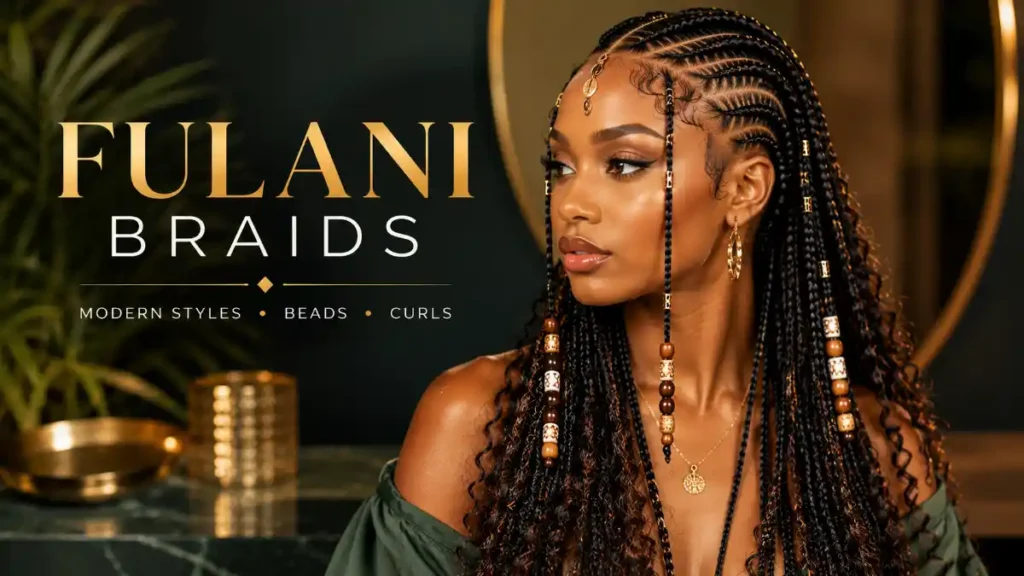
If you’re considering Fulani braids for the first time, there is more to choosing the style than showing your braider a photo. You need to think about braid size, parting, beads, length, extensions, installation technique, scalp comfort, maintenance, and how long you actually want to keep the style. This guide explains what Fulani braids are, where they come from, popular modern variations, how to prepare, what to expect at an appointment, and how to protect your natural hair while wearing them.
What Are Fulani Braids?
Fulani braids are a West African hairstyle associated with the Fulani, also known as Fula or Fulɓe, people. Modern versions commonly combine cornrow-style braiding with individual braids or loose lengths, often incorporating a center braid, face-framing sections, beads, shells, cuffs, or other decorative details.
The exact layout can vary considerably. Some versions closely follow traditional-inspired patterns, while contemporary salon styles may use different parting designs, longer extensions, curly ends, or additional decorative elements.
One important distinction is that Fulani braids describe a style family rather than one rigid pattern. Two people can both have a recognizable Fulani-inspired look while using different braid sizes, directions, accessories, lengths, and finishes.
The hairstyle also has cultural significance beyond its modern fashion appeal. Braiding traditions among African communities have historically communicated elements of identity, heritage, beauty, social position, and life stage. Because of that history, it is more accurate to describe Fulani-inspired hairstyles as part of a living cultural tradition rather than simply a recent beauty trend.
What Makes Fulani Braids Different?
The defining feature is usually the combination of detailed scalp braiding with longer braids or loose sections. A center braid, side-directed cornrows, and face-framing pieces are common visual elements, although not every modern interpretation uses all of them.
Compared with a standard box-braid installation, the front and crown area usually receives more attention to directional parting and pattern design. Compared with simple cornrows, the style often incorporates individual braids, loose ends, beads, or other decorative details.
That flexibility is one reason the style works for so many different looks. You can keep the design relatively simple or make it highly detailed without losing the recognizable character of the hairstyle.
Read More: Fulani Braids
Popular Fulani Braids Styles
Choosing a variation before your appointment makes communication with your braider much easier. Instead of asking for “Fulani braids” alone, decide what you want the finished hairstyle to look like.
Classic Beaded Fulani Braids
This is one of the most recognizable approaches. Cornrow sections are combined with longer braids and decorative beads. The overall appearance can be understated or highly ornamental depending on the number, size, and placement of the accessories.
If you want a traditional-inspired appearance, discuss the braid pattern and accessory placement with your braider rather than assuming that every beaded style follows one standard design.
Fulani Braids With Beads
Beads can completely change the visual balance of a hairstyle. A few strategically placed beads create a subtle accent, while beads throughout the face-framing sections create a much more decorative finish.
Before installation, decide whether you want:
- Beads throughout the hairstyle
- Beads only on face-framing braids
- Neutral wooden or natural-looking beads
- Metallic-looking accessories
- Cowrie-shell-inspired decoration
- Minimal accessories with one or two statement sections
Remember that accessories add weight. If your hairline or scalp is sensitive, keeping heavier decoration away from already-tensioned areas may be more comfortable.
Boho Fulani Braids
Boho versions combine the structured braided foundation with loose, curly, wavy, or textured pieces. The result is softer and more undone than a fully sleek installation.
This option can be particularly appealing if you want the structure of braids without an entirely uniform finish. However, loose curly sections generally require more careful handling because they can tangle more easily.
Fulani Braids With Curls
Curly ends create movement and soften the overall appearance. The curls can be concentrated at the ends of individual braids or incorporated into sections throughout the hairstyle.
Ask your braider what type of extension hair will be used for the curly finish and how it should be maintained. Curly synthetic hair can behave differently from straight braiding hair, especially during washing and sleeping.
Small Fulani Braids
Smaller sections allow for intricate patterns and detailed parting. They can create a refined, highly structured appearance, but they usually require more installation time.
Small braids are not automatically better for your hair. The size should be appropriate for the amount and strength of your natural hair, particularly around the hairline.
Medium Fulani Braids
Medium sections are a practical middle ground for many people. They provide enough room for decorative patterns while generally requiring less installation time than very small sections.
For a first appointment, medium-sized sections can also make it easier to understand how your scalp responds to the style before trying a more intricate installation.
Jumbo Fulani Braids
Jumbo sections create a bold appearance and can reduce installation time compared with smaller, more intricate patterns. Because each section may carry more extension hair, however, the weight and tension still need to be considered.
Jumbo does not automatically mean lower maintenance or safer. The overall weight, braid length, attachment technique, and tension matter.
Read More: Fulani Braids
How to Choose the Right Fulani Braids for You
The best design is not necessarily the most complicated one. Start with your lifestyle and natural hair rather than choosing a style solely because it looks good in a photograph.
Consider these five factors before booking:
Hair density: Very fine or fragile hair may need lighter sections and less extension weight.
Desired length: Longer braids generally require more extension hair and can add weight.
Scalp sensitivity: If your scalp reacts poorly to tight hairstyles, communicate that before installation.
Daily routine: A highly decorated style may require more care than a simpler installation.
Desired appearance: Decide whether you prefer sleek, traditional-inspired, minimal, curly, boho, or highly accessorized styling.
A reference photo is especially useful because words such as “medium,” “long,” or “beaded” can mean different things to different braiders.
Knotless vs. Knotted Fulani Braids
Knotless and knotted techniques describe how extension hair is attached, not whether the finished hairstyle is truly Fulani in appearance.
With a knotted method, extension hair is anchored using a visible or concealed knot at the beginning of the braid. Knotless techniques gradually feed extension hair into the natural hair, creating a flatter beginning.
Knotless installations are often chosen for their flatter appearance and potentially lower concentration of tension at the root. However, knotless does not automatically make a hairstyle risk-free. Poor sectioning, excessive extension weight, or overly tight braiding can still place stress on the hair.
The most important question is not simply “knotless or knotted?” It is whether the technique, section size, extension weight, and tension are appropriate for your hair.
How to Prepare for Your Fulani Braids Appointment
Good preparation can make the appointment easier and help your braider work with clean, manageable sections.
Before your appointment:
- Follow your normal cleansing routine so the scalp and hair are reasonably clean.
- Detangle carefully rather than arriving with severe matting.
- Tell your braider about previous problems with tight braids, extensions, or scalp discomfort.
- Bring a clear reference photo.
- Decide your preferred length, size, color, and accessory placement beforehand.
- Ask whether extension hair is included in the quoted service.
- Confirm whether washing, blow-drying, trimming, or additional styling costs extra.
- Avoid requesting an excessively tight finish simply because you want the style to last longer.
If you have an existing scalp problem, unexplained hair loss, broken areas, or significant tenderness, consider addressing that issue before installing a long-lasting braided style.
Read More: Fulani Braids
What Happens During the Appointment?
A typical appointment begins with preparation of the natural hair. Depending on the stylist and the condition of your hair, this can include cleansing, conditioning, detangling, and stretching the hair.
The braider then divides the hair into sections and creates the desired pattern. Extension hair may be added as each braid is formed. The front and crown usually require careful parting because those areas determine much of the visual character of the final design.
Installation time varies significantly. A simple, larger style may take considerably less time than a small, highly detailed design with long extensions and extensive accessories. Hair density, length, pattern complexity, braider experience, and whether the hair needs extensive preparation can all affect the appointment.
Don’t judge the quality of an installation by speed alone. Clean parting, controlled tension, appropriate extension weight, and comfortable attachment are more important than finishing as quickly as possible.
Are Fulani Braids Safe for Your Natural Hair?
They can be worn as a protective style, but no braided hairstyle is automatically protective simply because the natural hair is tucked away.
The biggest concerns are excessive tension, extension weight, repeated pulling, and prolonged wear. Tight braids can contribute to traction alopecia, a form of hair loss caused by repeated or prolonged tension on the hair. The condition can initially involve symptoms such as soreness, itching, redness, broken hairs, or thinning around areas exposed to pulling. Continued excessive tension can result in permanent follicle damage.
Pain is not something you should simply accept as part of getting your hair braided. The American Academy of Dermatology specifically advises reducing tension and avoiding hairstyles that pull on the scalp; if extensions or braids hurt or feel too tight, the affected areas should be loosened.
Signs Your Braids May Be Too Tight
Pay particular attention to:
- Sharp or throbbing pain
- A persistent headache after installation
- Strong pulling around the temples
- Redness or irritation
- Raised bumps around tightly braided areas
- Significant tenderness
- Broken hairs around the hairline
- Increasing thinning or recession
If a braid is painfully tight immediately after installation, tell your braider rather than assuming it will improve once you get used to it.
If you notice ongoing hair loss or scalp changes, a dermatologist can help determine whether the problem is traction-related or caused by another condition.
How to Care for Fulani Braids
Good aftercare is mostly about keeping the scalp reasonably clean, minimizing friction, and avoiding additional tension.
Keep the Scalp Clean
Braided hair still needs scalp care. You do not need to completely avoid washing simply because you are wearing extensions. Dermatology guidance notes that hair can be shampooed while braided, and regular cleansing can help maintain scalp hygiene.
Use a cleansing method appropriate for your scalp and allow the hair to dry thoroughly afterward. Avoid leaving the scalp or extensions damp for extended periods.
Protect the Style While Sleeping
A satin or silk scarf, bonnet, or pillowcase can reduce friction and help limit unnecessary frizz. The goal is not to make the hairstyle completely maintenance-free; it is to reduce rubbing and manipulation while you sleep.
Be Careful With Heavy Products
Excessive oil and product buildup can make the scalp feel dirty or uncomfortable and may make the extensions heavier. Use products sparingly and focus on what your scalp and hair actually need.
Avoid Additional Tension
Repeatedly pulling the braids into tight ponytails, buns, or high styles can add stress to the same areas already carrying the weight of the installation. Dermatology guidance recommends avoiding continuously tight braided or pulled hairstyles because repeated tension can contribute to breakage and traction-related hair loss.
How Long Do Fulani Braids Last?
There is no universal expiration date for the hairstyle. Longevity depends on braid size, natural hair growth, extension length, installation quality, scalp condition, daily activity, and maintenance.
Rather than keeping a style until a predetermined number of weeks has passed, pay attention to its condition.
Signs that it may be time for removal include:
- Significant new growth
- Loose or slipping braid bases
- Persistent scalp irritation
- Excessive tangling
- Matted natural hair near the roots
- Increasing weight or discomfort
- Noticeable breakage
- A style that can no longer be maintained comfortably
A fresh-looking style is not worth extending if your scalp or natural hair is telling you that it needs to come out.
Read More: Fulani Braids
How to Remove Fulani Braids Without Excessive Breakage
Removal deserves as much attention as installation.
Start slowly and work through one section at a time. If extension hair has been sealed or tangled into the natural hair, take extra care around the ends. Avoid aggressively pulling apart knots because accumulated shed hair can make the removal process look more dramatic than normal.
After removing the extensions, gently separate the natural hair, detangle gradually, cleanse the scalp, and condition the hair. Give yourself time rather than trying to finish the entire process as quickly as possible.
It is also normal to see shed hair during removal. Hair naturally sheds every day, and some of those hairs remain trapped inside a braided style until the extensions are removed.
Should You Take a Break Between Installs?
There is no single recovery period that applies to everyone. The more important question is whether your scalp and natural hair are showing signs of stress.
If you experienced pain, breakage, thinning, or significant tenderness during the previous installation, immediately putting your hair into another tight style is not a good idea. A lower-tension period can allow you to assess the condition of your scalp and hair.
If you have ongoing thinning, pain, or other concerning changes, professional evaluation is more appropriate than simply changing braid styles.
What Should You Ask Your Braider Before Booking?
A short consultation can prevent many problems later. Ask:
- What braid size would you recommend for my hair density?
- How much extension hair will be added?
- Are beads or other accessories included?
- Is the quoted price based on my requested length?
- How long should I expect the appointment to take?
- How should I prepare my hair?
- What products should I use afterward?
- How should I wash the style?
- What should I do if a section feels too tight?
- What is your recommendation for removing the style?
These questions are more useful than choosing a braider based solely on the lowest price.
Frequently Asked Questions
What are Fulani braids?
Fulani braids are a West African hairstyle associated with the Fulani people. Modern versions commonly combine cornrow-style patterns with individual braids, face-framing sections, a center braid, and optional decorative elements such as beads or shells.
Are Fulani braids the same as tribal braids?
The terms are sometimes used interchangeably in modern salon marketing, but they are not necessarily identical. Fulani braids specifically refer to a style associated with Fulani hair-braiding traditions, while “tribal braids” is a broader modern label that can describe several African-inspired braid patterns.
Can I wear Fulani braids without beads?
Yes. Beads are a popular feature, but modern Fulani-inspired hairstyles can be created with minimal or no decorative accessories. The braid pattern, parting, and combination of cornrows and individual braids can still create the look.
Are Fulani braids good for women with fine hair?
They can be possible, but the design should be adapted to the hair’s density and strength. Smaller sections, excessive length, or heavy accessories can increase the load placed on individual areas. A skilled braider should assess the natural hair before deciding on section size and extension weight.
Can Fulani braids cause hair loss?
Tight or repeatedly tensioned braids can contribute to traction alopecia. Risk is associated with excessive or prolonged pulling rather than the name of the hairstyle itself. Pain, persistent irritation, broken hairs, and thinning should be taken seriously.
How do I know if my braids are too tight?
Sharp pain, throbbing, significant tenderness, headaches, redness, or visible pulling around the hairline are warning signs. Getting your hair braided should not require you to tolerate significant pain. If a section is too tight, ask the stylist to loosen or redo it.
Can I wash Fulani braids?
Yes. Wearing braids does not mean the scalp must never be washed. A suitable cleansing routine can help manage sweat, oil, and buildup. The key is to cleanse carefully and make sure the hair and scalp dry properly afterward.
What are the best Fulani braids hairstyles for a softer look?
Boho variations, curly ends, loose face-framing braids, and less densely decorated designs can create a softer appearance. Discuss the desired finish with your braider and bring a reference image showing the exact texture you want.
How should I sleep with Fulani braids?
Use a satin or silk bonnet, scarf, or pillowcase to reduce friction. Avoid sleeping with the braids pulled tightly into a ponytail or bun, particularly if the hairline already feels sensitive.
When should I remove my Fulani braids?
Remove them when the style becomes difficult to maintain comfortably, or you notice persistent irritation, excessive tangling, breakage, or significant new growth. Do not keep a style installed simply to reach a predetermined number of weeks if your scalp or natural hair is showing signs of stress.






1 thought on “Fulani Braids: Ultimate Guide to Beautiful Styles, Care & Avoiding Damage”