Pain in Lower Right Abdomen Near Hip Bone in Females: Causes and Warning Signs
Pain in Lower Right Abdomen Near Hip Bone in Females, including ovarian cysts, ovulation, appendicitis, digestive issues, urinary tract infections, and muscle strains. Some conditions are associated with short-term pain, while others, such as ovarian torsion and ectopic pregnancies, will require an emergency room visit.
The pain might appear as sharp, dull, cramping, or ongoing. Your location in your menstrual cycle, whether there is a possibility that you may be pregnant, and other associated symptoms may provide some assistance in finding the reason for the pain. However, just knowing where the pain is located does not indicate why the pain exists.
When Is Pain in Lower Right Abdomen Near Hip Bone in Females an Emergency?
Seek emergency medical care if you experience:
Sudden, severe, or rapidly worsening abdominal pain.
Dizziness, fainting, or extreme weakness.
Heavy vaginal bleeding.
Shoulder-tip pain, especially if pregnancy is possible.
Severe abdominal pain accompanied by vomiting.
Difficulty breathing or confusion.
Severe abdominal tenderness or swelling.
The NHS pelvic pain guide identifies severe or worsening pelvic pain as a reason to seek emergency care.
If you have developed a new, continuing right-sided pain, fever, unusual vaginal discharge, or abdominal pain while you are pregnant, make an appointment for a same-day medical evaluation. You should also seek medical care for any recurring symptoms that do not require immediate emergency treatment.
What Organs Are Near the Right Hip Bone in Females?
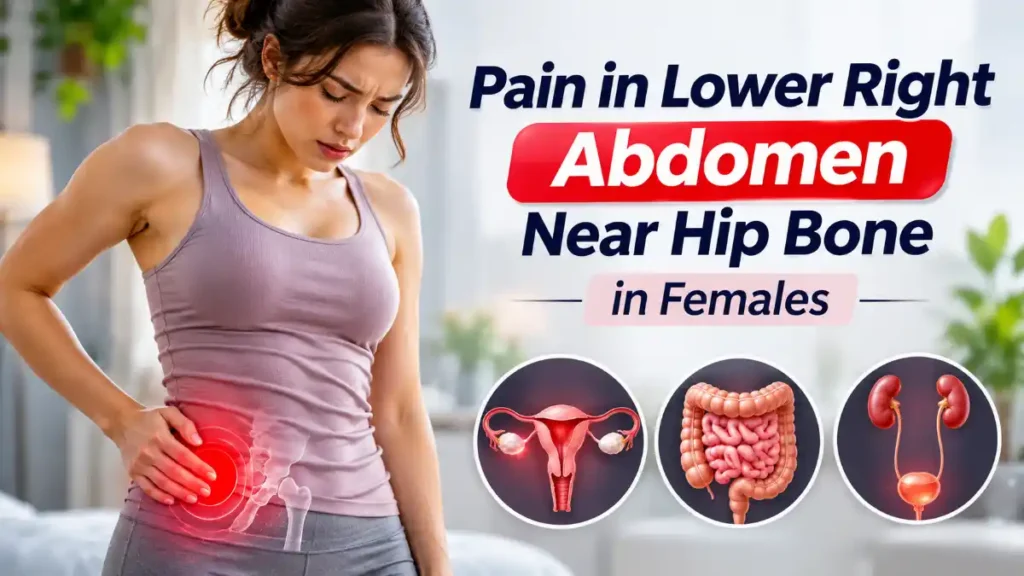
The region around the right hip bone includes some of the lower right quadrant of the abdomen, as well as the pelvic area. There are many different organs and surrounding structures that can cause discomfort in this location:
Appendix.
Right ovary and fallopian tube.
Portions of the small and large intestines.
Right ureter and nearby bladder.
Abdominal muscles, ligaments, and pelvic structures.
The discomfort may appear to be located in the hip; however, other areas such as the abdomen and reproductive organs can also produce discomfort in the same location.
Gynecological Causes of Lower Right Abdominal Pain in Females
Ovarian Cysts
An ovarian cyst is a sac containing fluid that forms either on the surface of the ovary or inside the ovary. Most will disappear by themselves and do not create any symptoms. However, if there is a cyst on the right side of the female reproductive system (the right ovary), it can lead to a dull aching pain, pressure in the pelvis, bloating, and/or pain during sex.
When a cyst bursts, the person may experience severe pain suddenly. When there is severe pain that is combined with feeling weak or dizzy, this may indicate that there is bleeding inside the body, which needs to be evaluated immediately by a doctor in an emergency room setting.
Ovarian Torsion
Ovarian torsion is a condition where the ovary rotates on its supporting structures, thereby cutting off the blood flow to the ovary.
The most common symptom is a sudden onset of pain on one side of your pelvis that can be accompanied by nausea and vomiting. If the ovary begins to twist and untwist, this discomfort may come and go.
Ovarian torsion is an emergency that requires immediate surgery. In order to preserve the ovary’s ability to function properly, prompt intervention is required.
Ovulation Pain
The term mittelschmerz is used to refer to the pain that occurs when an ovary releases an egg. Generally speaking, this process takes place about 14 days prior to the start of your next menstrual cycle; however, there are many variables involved in determining the exact time of ovulation.
According to the NHS guidelines on ovulation pain, the pain associated with ovulation can range from a dull ache to a sharp twinge and can last for a short time (minutes) or up to two days.
Do not assume that the severe pain you are experiencing is due to ovulation if it differs from the normal pain associated with your menstrual cycle.
Endometriosis
Endometriosis is an area of growth that resembles the lining of your womb, but it is located in areas other than the inside of your womb. This condition can produce chronic right-sided pelvic pain that typically gets worse during menses.
Symptoms also include painful menstrual cycles, discomfort when engaged in sexual intercourse, painful bowel movements, and difficulty getting pregnant. Pain associated with endometriosis can occur at times other than menstruation.
Pelvic Inflammatory Disease (PID)
PID, which stands for pelvic inflammatory disease, is a bacterial infection of the female reproductive system. The symptoms associated with PID include pain in the lower portion of the abdomen, abnormal vaginal discharge, a high body temperature (fever), discomfort or pain during sexual activity, and bleeding from the vagina at times other than when you are having your period.
Mild symptoms can occur in some women. According to the CDC, early treatment is critical to decreasing the likelihood of complications such as infertility and chronic pelvic pain.
Other Causes of Pain Near the Right Hip Bone
Appendicitis
When the appendix becomes inflamed, it is known as appendicitis. Most people describe their first symptoms as being located in the area of the belly button and then moving to the right side of the lower abdomen.
In addition, you may experience nausea, loss of appetite, a temperature (fever), or an increase in the severity of your pain with movement or coughing.
Not all individuals develop common symptoms associated with appendicitis. If a patient is suspected of having appendicitis, they will need immediate medical attention at a hospital for diagnosis and treatment,t since if left untreated, ed the appendix may burst.
Constipation and Trapped Gas
Constipation and trapped gas in the intestines can cause pressure, cramps, and bloating in the area of your right hip bone.
Crohn’s Disease and Irritable Bowel Syndrome (IBS) are two examples of other types of inflammatory bowel diseases that can lead to chronic abdominal pain and altered bowel function.
However, if you have chronic pain in just one region of your body, it is not always caused by an issue with digestion.
Kidney Stones
When a kidney stone travels down the right ureter, the individual will experience severe pain, which radiates from the back or side to the lower abdomen and groin.
The pain is typically felt in cycles and could be accompanied by other symptoms such as nausea, vomiting, or blood in the urine. If you have fever or chills along with symptoms indicating possible kidney stones, you need to seek immediate medical attention.
Urinary Tract Infections (UTIs)
A UTI can lead to a low-level ache in the lower abdomen, a burning feeling during urination, an increased frequency of urination, and an abrupt desire to urinate.
The most common location of pain from bladder infection is typically centered within the middle of the pelvis; however, the pain caused by a bladder infection may also radiate to other surrounding areas. Additionally, symptoms such as fever, chills, and/or pain in the upper back (flank) could indicate a possible kidney infection, which will require immediate medical attention.
Muscle Strain and Hernia
Heavy lifting, strenuous physical activity, and/or rapid movement of your body can put stress on the muscles that make up your abdominal area and/or hips. If you have a hernia, you may experience localized pain and possibly see a visible protrusion in that region.
Sudden severe pain, vomiting, no bowel movements or passage of gas, and/or a firm and tender mass that doesn’t disappear require immediate emergency medical care.
Sharp vs. Dull Pain in the Lower Right Abdomen in Females
By being aware of what type of pain you are experiencing, as well as the accompanying symptoms, you will be able to more clearly communicate about your discomfort with a health care provider.
| Type of pain | Possible causes | Associated symptoms |
| Sharp or stabbing | Ovarian torsion, cyst rupture, appendicitis | Nausea, tenderness |
| Dull or aching | Ovarian cyst, endometriosis, constipation | Bloating, pelvic pressure |
| Intermittent | Kidney stones, ovulation, ovarian torsion | Wave-like discomfort |
| Persistent or worsening | Appendicitis, PID | Fever, tenderness |
| Cramping | Menstrual cramps, digestive disorders | Bowel or menstrual changes |
| Movement-related | Muscle strain, hernia, appendicitis | Discomfort during activity |
| Pain with vaginal bleeding | Ectopic pregnancy, reproductive conditions | Spotting, missed period |
The pain patterns described above may overlap, making it difficult to determine whether a person has one condition or another. Pain that is mild or intermittent (comes and goes) can also be an indicator of a more serious medical issue.
Appendicitis vs. Ovarian Pain: How Can You Tell the Difference?
In most instances, appendicitis will first present itself as discomfort in the upper left quadrant of the abdomen (the area around your belly button), which can then shift down to the lower right quadrant of the abdomen. Pain associated with an ovary will usually begin in either the lower left quadrant or lower right quadrant of the pelvis, and often correlates with changes to a woman’s menstrual cycle.
Both can cause severe and sudden pain, vomiting, nausea, and tenderness of the abdomen. It will be necessary to perform a medical examination as well as some imaging techniques so that the cause of the problem can be identified.
Lower Right Abdominal Pain During Pregnancy
Discomfort in the abdominal area during pregnancy can be caused by the body’s normal responses to physical changes, as well as by conditions which require immediate medical attention.
Ectopic Pregnancy
Ectopic pregnancy is a condition where the fertilized egg has implanted itself outside of the woman’s womb. Most of the time it will be found in one of her fallopian tubes.
Common symptoms of an ectopic pregnancy are as follows: pain on one side of your abdomen; some bleeding from your vagina (spotting); and a missed period.
Seek immediate medical attention if you suspect you could be pregnant and experience pain on one side of your body. Severe pain that occurs suddenly, pain in the shoulder area, and loss of consciousness (fainting) require emergency services due to the potential for internal bleeding.
Round Ligament Pain
As the baby grows inside of you (the uterus) as part of your pregnancy, so do the ligaments that support it. These ligaments will stretch as a result of the growth. This stretching can lead to quick, sharp pains around either your hips or groins. These types of pains usually occur when you cough, stand up from sitting, or change from one position to another.
In addition to ligament stretching, other potential sources of abdominal pain include constipation, urinary tract infections, miscarriage, and appendicitis. All persistent abdominal pains during pregnancy require immediate evaluation; they should not simply be attributed to the stretching of ligaments.
Lower Right Abdominal Pain After Menopause
Women can continue to suffer from ovarian cysts, digestive disorders, urinary infections, and many other pelvic problems even after they have gone through menopause.
You need to seek help for your persistent pelvic pain, unexplained bloating, and/or feeling full after eating very little food. A post-menopausal woman who has had a bleed (even a light spot) from her vagina needs to get this checked by a physician to find out what is causing it and to make sure it’s not something more serious, such as cancer.
How Is Lower Right Abdominal Pain Diagnosed?
The time of onset of the pain, its progression (i.e., whether or not it has progressed), and the date of your last menstrual cycle should be reported to your doctor. Also, inform him/her about any other symptoms such as bleeding, fever, urinary symptoms, or changes in bowel habits.
The American Academy of Family Physicians states that diagnostic methods could include:
Pregnancy Test: It detects the pregnancy hormone (hCG), but it will not tell you where the pregnancy is located.
Blood tests: Check for signs of infection, inflammation, or blood loss.
Urine tests: Help investigate urinary infections and kidney stones.
Evaluate possible reproductive disorders and infections with a pelvic exam and STI screening.
Transvaginal ultrasound: Used to examine the uterus and ovaries to determine where the baby is developing within the mother.
Doppler ultrasound: Evaluates blood flow.
CT scan or MRI: Helps investigate selected abdominal and pelvic conditions.
A normal ultrasound or normal Doppler blood flow does not mean that you are free from having an ovarian torsion. Additional testing may be necessary if your symptoms indicate that there is something very wrong with your health.
Treatment Options for Lower Right Abdominal Pain
The appropriate treatment depends on what is causing the pain.
| Condition | Common treatment approaches |
| Appendicitis | Surgery or antibiotics in selected cases |
| Ovarian torsion | Emergency surgery |
| Ovarian cyst | Monitoring or surgery |
| Ectopic pregnancy | Specialist-directed medication, surgery, or carefully selected monitoring |
| Endometriosis | Pain management, hormonal therapy, or surgery |
| PID and UTIs | Prescribed antibiotics |
| Kidney stones | Pain management or stone-removal procedures |
| Constipation | Dietary changes or appropriate medication |
| Muscle strain | Activity modification and rehabilitation |
If your stomach hurts and you can’t figure out why, or if the pain keeps getting worse, don’t try to use home treatments.
Conclusion
Women with pain around their right hip bone can experience symptoms due to problems in either the reproductive system, digestive system, urinary system, or muscle tissue surrounding those systems. While other symptoms associated with the pain may provide a hint as to what is causing the problem, it will be necessary for a doctor to assess the situation to determine the exact cause of the problem.
If you experience a rapid onset of severe pain, worsening discomfort, or an increase in abdominal pain while there is a possibility that you may be pregnant, you should always seek immediate medical attention.
Read also: Pain in Lower Right Abdomen Near Hip Bone in Females
Frequently Asked Questions
Why does my lower right abdomen hurt when I walk?
Pain while walking may be related to muscle strain, a hernia, appendicitis, or pelvic inflammation. Seek prompt medical evaluation if the discomfort is new or getting worse.
Can constipation cause pain near the right hip bone?
Yes. Constipation can cause localized cramping, pressure, and bloating. However, persistent right-sided discomfort may have another underlying cause.
Can an ovarian cyst feel like appendicitis?
Yes. Both can produce right-sided abdominal pain and nausea. A medical examination and imaging may be needed to distinguish between the two conditions.
Can you have appendicitis without a fever?
Yes. Fever may be absent, especially during the early stages. If you suspect appendicitis, seek urgent medical attention rather than waiting for a fever to develop.
Why does my lower right abdominal pain come and go?
Intermittent pain may result from ovulation, kidney stones, digestive disorders, or intermittent ovarian torsion. Temporary relief does not necessarily mean the underlying condition is harmless.