
Diet Coke vs Coke Zero: Taste, Ingredients, Caffeine, and Health Differences
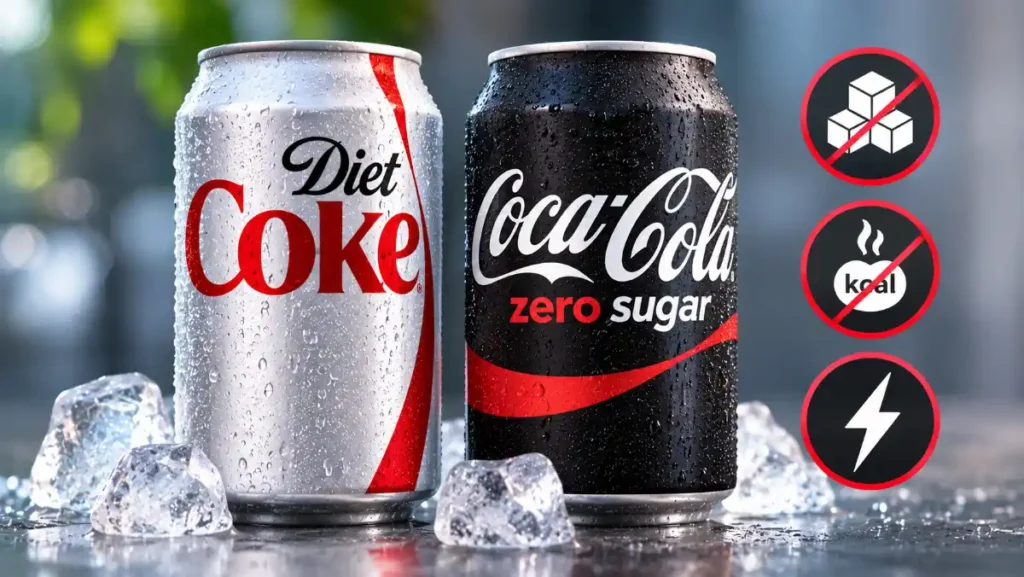
Diet Coke and Coke Zero Sugar are both calorie-free, sugar-free colas, but they differ in taste, ingredients, and caffeine content. Diet Coke has a lighter, distinctive cola flavor and contains 46 mg of caffeine per 12-ounce can. Coke Zero Sugar is designed to taste closer to original Coca-Cola and contains 34 mg of caffeine. They also use different sweetener blends, although neither drink has a proven overall health advantage.
If you’re deciding between them, taste and caffeine content are the most practical differences. Both can help you cut back on sugar and calories when replacing regular soda, but that doesn’t automatically make either one a healthier choice.
Diet Coke vs Coke Zero: Key Differences at a Glance
Here’s how the standard US versions compare based on a 12-fl-oz (355-mL) serving, using the official product information for Diet Coke and Coca-Cola Zero Sugar.
| Feature | Diet Coke | Coca-Cola Zero Sugar |
| Taste | Lighter, distinctive cola flavor | Closer to original Coca-Cola |
| Calories | 0 | 0 |
| Sugar | 0 g | 0 g |
| Carbohydrates | 0 g | 0 g |
| Sodium | 40 mg | 40 mg |
| Caffeine | 46 mg | 34 mg |
| Sweeteners | Aspartame | Aspartame, acesulfame potassium, stevia extract |
| Notable ingredient difference | Contains citric acid | Contains potassium citrate |
| Caffeine-free option | Available | Available |
These figures apply to standard US formulations. Ingredients and nutritional values may differ in other countries, so check the label if you’re buying either drink outside the United States.
Diet Coke vs Coke Zero Taste: Which Tastes More Like Regular Coke?
Flavor is the most noticeable difference between Diet Coke and Coke Zero.
Diet Coke has its own distinctive recipe, giving it a lighter cola taste rather than trying to closely imitate regular Coca-Cola. It’s a good option for people who enjoy the familiar Diet Coke flavor.
Coke Zero Sugar is formulated to taste more like Coca-Cola Original Taste. If you enjoy regular Coke but want to avoid its sugar and calories, Coke Zero may be the closer match.
Of course, taste is personal. Some people notice differences in sweetness, aftertaste, or crispness, but those impressions aren’t universal. The drinks use different ingredients, and their exact flavor recipes are proprietary, making it difficult to pinpoint which ingredients produce particular taste differences.
Neither beverage is simply regular Coca-Cola with the sugar removed. Each has a distinct formulation developed to deliver a different flavor experience.
Diet Coke vs Coke Zero Ingredients and Sweeteners
Both drinks contain carbonated water, caramel color, phosphoric acid, aspartame, potassium benzoate, natural flavors, and caffeine.
The main differences lie in their sweetener blends and certain additional ingredients:
- Diet Coke: Uses aspartame as its sweetener and contains citric acid.
- Coke Zero Sugar: Contains aspartame, acesulfame potassium (Ace-K), and stevia extract. Its formula also includes potassium citrate.
These differences help distinguish the two recipes, although the exact role each ingredient plays in their flavor isn’t publicly established.
Coke Zero lists more sweetening ingredients, but that doesn’t necessarily mean it contains more sweetener overall or poses a greater health risk. The ingredient lists don’t reveal the precise quantities used.
Diet Coke vs Coke Zero Caffeine and Nutrition Facts
A standard 12-ounce can of Diet Coke contains 46 mg of caffeine, while Coke Zero Sugar contains 34 mg. That means Diet Coke provides 12 mg more caffeine per can.
For most healthy adults, the difference is modest. Still, it could matter if you’re sensitive to caffeine, regularly drink several cans, or want to avoid caffeine close to bedtime.
Nutritionally, the two drinks are almost identical. Both have zero calories, sugar, and carbohydrates, along with 40 mg of sodium per 12-ounce serving. Neither provides meaningful amounts of protein, fiber, or essential nutrients.
Caffeine-free versions of both drinks are also available in the US, although you may not find them in every store.
Is Diet Coke Healthier Than Coke Zero?
Neither Diet Coke nor Coke Zero has a clearly established overall health advantage. Their basic nutritional profiles are nearly identical, and the differences in their sweeteners and caffeine content don’t make one universally healthier.
What matters more is how often you drink them, your individual health needs, and what you’re replacing in your diet.
Artificial Sweeteners and Safety
Both beverages contain aspartame. Coke Zero Sugar also includes acesulfame potassium and stevia extract.
The FDA considers approved sweeteners such as aspartame and acesulfame potassium safe when consumed within established limits. According to the FDA’s guidance on aspartame and other sweeteners, the acceptable daily intake (ADI) limits are:
- Aspartame: 50 mg per kilogram of body weight per day.
- Acesulfame potassium: 15 mg per kilogram of body weight per day.
These limits represent amounts considered safe for daily consumption over a lifetime. They aren’t recommended amounts that people should aim to consume.
In 2023, the International Agency for Research on Cancer classified aspartame as possibly carcinogenic to humans based on limited evidence. At the same time, a separate international expert committee reaffirmed its existing acceptable daily intake of 40 mg per kilogram of body weight.
The classification identifies a possible hazard; it doesn’t establish that drinking Diet Coke or Coke Zero causes cancer.
Important: Both drinks contain aspartame, which provides phenylalanine. People with phenylketonuria (PKU) must avoid or restrict this substance according to their medical dietary guidance.
Weight Management and Blood Sugar
Replacing regular sugary soda with Diet Coke or Coke Zero can reduce your intake of added sugar and calories, particularly if you drink soda frequently.
That doesn’t mean switching to diet soda will automatically lead to weight loss. Long-term results depend on your overall eating habits, and research on non-sugar sweeteners and sustained weight management remains mixed.
The World Health Organization’s guidance on non-sugar sweeteners conditionally recommends against relying on them for long-term weight control. This recommendation doesn’t apply to people with pre-existing diabetes and doesn’t mean approved sweeteners are inherently unsafe.
For blood sugar management, either drink can be an alternative to regular soda when the goal is to avoid a large sugar intake. Their sweeteners generally don’t raise blood glucose in the same immediate way as sugar, although individual dietary needs still matter.
Dental Health and Caffeine Sensitivity
Being sugar-free doesn’t mean these drinks are harmless to your teeth. Both are acidic, and frequent exposure to acidic beverages can gradually wear away tooth enamel.
The American Dental Association’s guidance on nutrition and oral health identifies frequent consumption of acidic drinks as a risk factor for dental erosion. Sipping soda throughout the day can prolong that exposure.
Caffeine is another consideration, especially if it affects your sleep or makes you feel restless. Diet Coke contains slightly more caffeine, but how much you drink and your personal tolerance are more important than the 12 mg difference between the two.
For everyday hydration and dental health, plain water remains the better choice.
Diet Coke or Coke Zero: Which Should You Choose?
Choose Diet Coke if you enjoy a lighter, distinctive cola flavor and don’t mind a little more caffeine.
Choose Coke Zero Sugar if you prefer a drink that tastes closer to regular Coca-Cola without its sugar and calories.
Diet Coke debuted in the US in 1982, followed by Coke Zero in 2005. The Coca-Cola Zero Sugar name and reformulated drink reached the US market in 2017. Both remain available because they appeal to different taste preferences.
From a health perspective, neither has a clear overall advantage. The better choice depends on which flavor you enjoy, how much caffeine you want, and how often you drink soda.
Read also: Diet Coke vs Coke Zero
Frequently Asked Questions
Can People With Diabetes Drink Diet Coke or Coke Zero?
People with diabetes can generally drink either beverage because both contain zero sugar and carbohydrates. Their sweeteners typically have little immediate effect on blood glucose, making them an alternative to regular sugary soda.
However, individual dietary needs and blood sugar responses can vary. Neither drink should be used to treat low blood sugar, which requires fast-acting carbohydrates.