
Dental Bonding: Procedure, Cost, Results, and How Long It Lasts
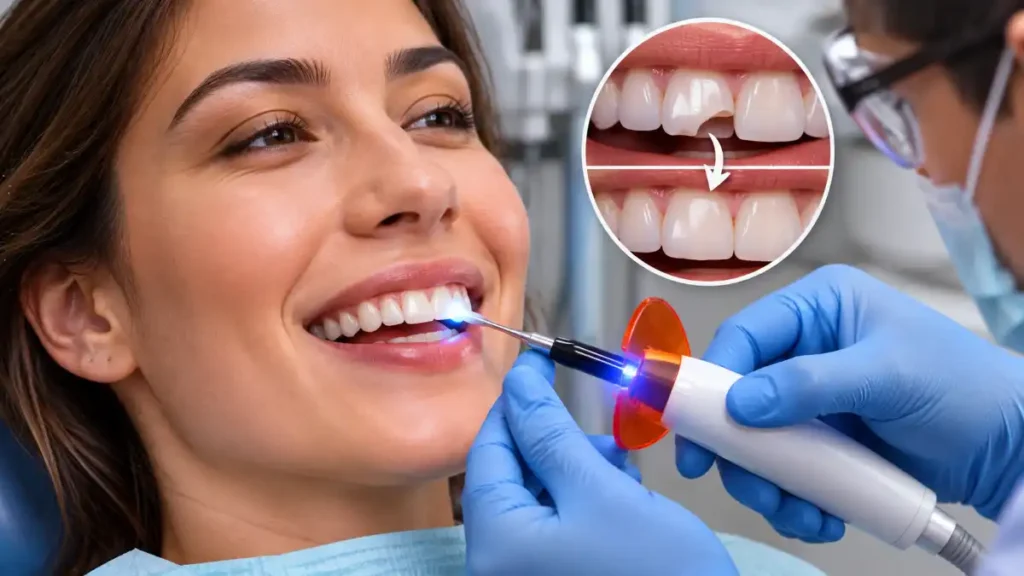
Dental bonding is a cosmetic or restorative procedure that uses tooth-colored composite resin to repair chipped teeth, conceal minor cracks or discoloration, close small gaps, and reshape uneven teeth. The procedure typically takes 30–60 minutes per tooth and costs around 100–500 per tooth in the United States. Bonding generally lasts 3–10 years, depending on where it’s applied, your biting habits, and how well you care for your teeth.
Unlike porcelain veneers, dental bonding usually requires little or no removal of natural enamel. This makes it a relatively conservative option for minor cosmetic improvements. However, teeth with extensive damage, deep cracks, or significant alignment problems may need a different treatment.
What Is Dental Bonding?
Dental bonding involves applying a moldable composite resin directly to a tooth’s surface. The dentist shapes the material, hardens it using a special curing light, and polishes it until it blends naturally with the surrounding enamel.
Bonding has two main uses:
- Cosmetic bonding: Improves the appearance of teeth by repairing small chips, closing gaps, smoothing uneven edges, reshaping teeth, or covering certain types of discoloration.
- Restorative bonding: Uses composite resin to replace missing or damaged tooth structure, including areas affected by decay.
People with healthy teeth and gums who want to correct relatively minor imperfections are often good candidates. However, untreated cavities, gum disease, extensive damage, or bite problems may need attention first. Deep or painful cracks also require a dental examination, as bonding alone may not provide enough support.
| Dental bonding overview | Typical details |
| Material | Tooth-colored composite resin |
| Purpose | Minor cosmetic improvements and tooth repairs |
| Procedure time | 30–60 minutes per tooth |
| US cost | Approximately 100–500 per tooth |
| Lifespan | Approximately 3–10 years |
| Anesthesia | Usually unnecessary for simple cosmetic bonding |
| Limitations | Can stain, chip, or wear over time |
How Does the Dental Bonding Procedure Work?
The dental bonding procedure is usually completed in one appointment. Although the exact process depends on the tooth being treated, most procedures follow these steps:
- Examination: Your dentist checks your teeth, gums, and bite to determine whether bonding is suitable.
- Shade selection: The dentist chooses a composite resin color that closely matches your natural teeth.
- Tooth preparation: For cosmetic bonding, the tooth surface is usually lightly roughened and conditioned to help the resin adhere. Treating decay may require drilling or additional preparation.
- Resin application: The composite material is applied, shaped, and smoothed to achieve the desired appearance.
- Light curing: A special dental light hardens the resin and bonds it to the tooth.
- Final adjustments: The dentist checks your bite, makes any necessary refinements, and polishes the restoration.
Does Dental Bonding Hurt?
Dental bonding is generally painless when used for minor cosmetic corrections because the procedure usually doesn’t involve drilling into sensitive areas of the tooth. Local anesthesia is often unnecessary, although your dentist may recommend it when removing decay or working near sensitive tooth structures.
You can usually return to your normal activities immediately afterward. Some people experience temporary sensitivity, especially when the tooth has required additional preparation.
Dental Bonding Before and After: What Results Can You Expect?
Dental bonding before and after results can be quite noticeable, particularly when treating small imperfections in the front teeth.
For instance, a chipped front tooth can be restored to a smoother, more even shape. Bonding may also reduce the appearance of a small gap or make a shorter tooth look more balanced alongside neighboring teeth.
How natural the finished tooth looks depends on its original condition, the resin shade, its position, and the dentist’s technique. Well-matched bonding can blend closely with natural enamel, although it may not fully conceal severe discoloration or correct substantial alignment problems.
When choosing a cosmetic dentist, ask to see genuine before-and-after photographs of patients who had similar concerns. These can help you understand the dentist’s approach, but another patient’s results won’t necessarily predict yours.
How Much Does Dental Bonding Cost?
Dental bonding cost in the United States commonly falls between $100 and $500 per tooth, although more complicated repairs can cost considerably more. These figures are published estimates, not fixed prices.
Your actual cost will depend on the dental practice’s location, the dentist’s fees, how many teeth need treatment, and the extent of the repair or reshaping involved. Published dental bonding cost estimates also show why it’s important to get a personalized quote rather than relying on a single advertised price.
Does Insurance Cover Dental Bonding?
Dental insurance usually doesn’t cover bonding performed purely to improve appearance. However, if bonding is necessary to repair damage or restore a decayed tooth, your plan may cover part of the expense.
Coverage depends on your policy, the reason for treatment, and any applicable limits or exclusions. Before proceeding, request a written estimate from your dentist and confirm your benefits with your insurer.
It’s also worth considering long-term costs. Bonded teeth may eventually need polishing, small repairs, or replacement, adding to the overall expense.
How Long Does Dental Bonding Last?
Dental bonding typically lasts 3–10 years before it needs touching up, repairing, or replacing. Some restorations last longer, while others wear out sooner, depending on their location and the pressure they experience.
Bonding on a front tooth, for example, may chip if you regularly bite hard objects. Grinding or clenching your teeth can also put additional stress on the resin.
Over time, composite material may develop stains, especially with frequent exposure to coffee, tea, tobacco, or other strongly colored substances.
Good oral hygiene and regular dental checkups can help you maintain the restoration and identify minor problems before they become more troublesome.
Dental Bonding vs. Veneers vs. Crowns: Which Is Better?
Dental bonding, porcelain veneers, and dental crowns serve different purposes. The right option depends on your tooth’s condition, the changes you want, and how much you’re comfortable spending.
| Feature | Dental bonding | Porcelain veneers | Dental crowns |
| Best for | Minor chips, gaps, and shape corrections | Broader cosmetic improvements | Extensive damage or weakened teeth |
| Tooth preparation | Usually minimal | Usually requires enamel removal | Requires substantial reshaping |
| Cost | Generally lowest | Higher initial cost | Varies by material and complexity |
| Durability | Typically 3–10 years | Generally longer-lasting | Generally longer-lasting |
| Stain resistance | More prone to staining | Highly stain-resistant | Depends on material |
| Repairability | Often repaired directly | May require repair or replacement | May require repair or replacement |
| Appointments | Usually one | Usually multiple | Usually multiple, although same-day options exist |
Bonding generally has a lower initial cost than porcelain veneers, which are estimated at approximately 900–2,000 per tooth in some published US pricing guides. Porcelain veneers, however, tend to resist stains and wear better than composite resin.
Traditional porcelain veneers cover the front surfaces of teeth and usually require removing some enamel. Crowns cover more of the tooth and are often recommended when significant damage or weakness calls for greater structural protection.
For a small chip or modest change in tooth shape, bonding may provide a good balance of affordability and tooth preservation. Larger cosmetic changes or heavily damaged teeth may be better suited to veneers, crowns, or another recommended treatment.
Dental Bonding Aftercare, Risks, and Limitations
Bonded teeth don’t need an elaborate maintenance routine. However, a few everyday habits can help keep the resin in good condition.
- Follow good brushing and oral hygiene practices, including brushing twice daily with fluoride toothpaste and cleaning between your teeth every day.
- Avoid biting your nails, chewing ice, or using your teeth to open packaging.
- Reduce frequent exposure to staining drinks and tobacco.
- Ask your dentist whether a night guard would help if you grind or clench your teeth.
- Attend regular dental checkups and professional cleanings.
Bonding is generally safe, but the composite resin can chip, wear down, or come loose. Occasionally, patients experience temporary sensitivity or notice that their bite feels uncomfortable after treatment.
If a bonded tooth develops a sharp edge, persistent sensitivity, or an unusual feeling when you bite, contact your dentist for an assessment.
It’s also important to understand that bonding isn’t always completely reversible. Although cosmetic bonding often leaves natural enamel largely untouched, some procedures require minor tooth preparation.
Another consideration is tooth color. Professional teeth whitening treatments generally don’t change the shade of existing composite restorations. If you plan to whiten your teeth, discuss the timing with your dentist before having bonding placed.
Frequently Asked Questions
Can Dental Bonding Close Gaps Between Teeth?
Yes. Dental bonding can close small gaps by adding composite resin to the sides of neighboring teeth. It’s often suitable for minor spaces, but larger gaps or significant alignment problems may require orthodontic treatment instead.
Can Bonded Teeth Be Whitened?
Whitening treatments generally won’t lighten existing composite resin the way they lighten natural tooth enamel. If you’d like whiter teeth, discuss whitening before bonding so your dentist can choose a resin shade that matches your intended tooth color. Existing bonding may need replacement if there’s a noticeable color difference afterward.
Can Dental Bonding Fall Off or Be Repaired?
Yes. Bonding can chip, loosen, or occasionally detach, particularly when exposed to heavy biting pressure. Fortunately, many damaged restorations can be repaired by adding or replacing composite resin. Your dentist will assess the tooth before deciding whether a repair or full replacement is needed.
Is Dental Bonding Worth It?
Dental bonding can be a worthwhile option if you want to correct minor imperfections without spending as much as you might on porcelain veneers. It also usually preserves more natural tooth structure.
The trade-off is durability. Composite resin can stain or chip and may need maintenance over time. Whether bonding is right for you depends on your dental health, cosmetic expectations, bite, and budget. A dental examination can help you make an informed decision.