Dandruff vs Dry Scalp: How to Tell the Difference and Treat Each
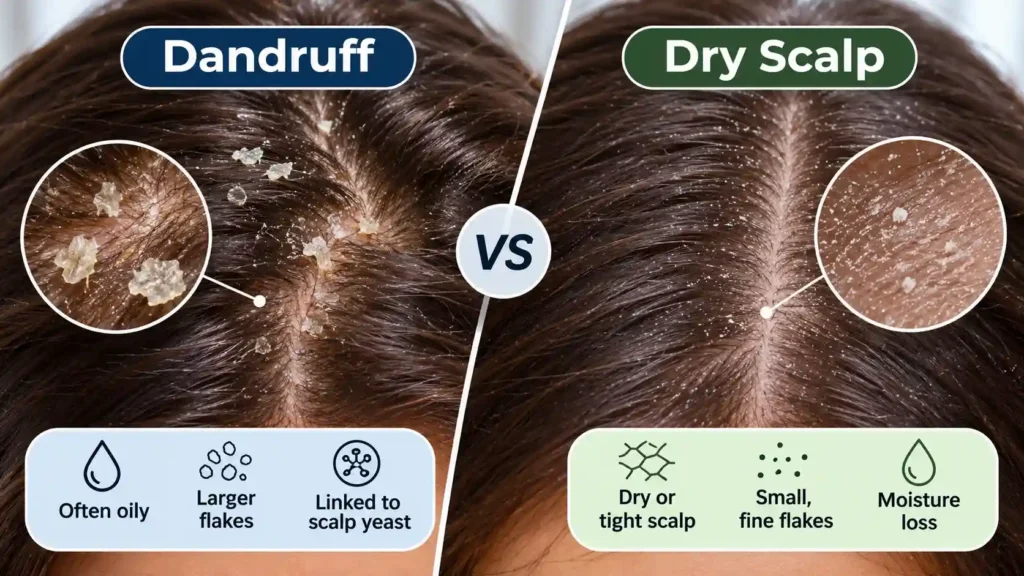
While both dandruff and dry scalp cause itching and flaking, there are several differences between how these two conditions develop. Dandruff is often a result of seborrheic dermatitis, which involves the production of oil from the scalp, the growth of naturally occurring Malassezia yeast on the scalp, and an individual’s immune response to these factors. On the other hand, dry scalp typically results from either loss of moisture in the skin or damage to the skin’s protective barrier due to irritation. Understanding the difference can assist you in selecting the correct type of shampoo or other treatment for your particular condition.
Mayo Clinic
Your flake size and appearance, along with your scalp feeling and what sets off your symptoms, may give you some idea of which type of dandruff you have. However, since there are so many common symptoms, it is hard to tell the difference between these types based on only one feature.
Dandruff vs Dry Scalp: Key Differences
In addition to both being characterized by the presence of flaky skin, there are other differences in terms of how they present themselves as well as the manner in which they can be treated. These differences can be seen in the following table: dandruff vs dry scalp.
| Feature | Dandruff | Dry Scalp |
| Main cause | Seborrheic dermatitis-related scaling and inflammation | Moisture loss or skin-barrier irritation |
| Flake size | Often larger or clumped | Usually small and fine |
| Flake appearance | White or yellowish; sometimes greasy | Typically white and powdery |
| Scalp condition | May be oily, irritated, or inflamed | Often dry, tight, or rough |
| Itching | Common | Common |
| Redness or discoloration | Possible | Possible with irritation |
| Common triggers | Scalp oils, individual susceptibility, inflammatory responses | Cold weather, low humidity, harsh products |
| Treatment | Medicated anti-dandruff shampoo | Gentle cleansing and moisturizing scalp care |
| Recurrence | Often recurring | May improve once the underlying cause is addressed |
These differences provide clues, not definitive evidence. Dandruff may result in fine white flakes with no apparent excessive oil production; however, a dry scalp can become irritated or inflamed.
How to Tell If You Have Dandruff or Dry Scalp
Pay attention to other things besides just how the flakes look on your scalp. Think about how your scalp feels during the day, if you are experiencing dryness on other parts of your body, and if you experienced the flaking when you switched to a different brand of shampoo or conditioner.
The following signs can help you narrow down the possibilities:
- The consistency of the flakes can help you determine what kind of issue you might be dealing with. For example, if your flakes are oily or lumpy, it could indicate dandruff. Conversely, if your flakes are small and dusty, this is likely due to dry skin.
- Scalp Tightness: If your scalp feels tight or rough after washing your hair with shampoo, it could be a sign that you have a dry scalp.
- Oiliness: If you have recurring flakes on an oily scalp, this could indicate that you are suffering from dandruff. However, even if you are suffering from dandruff, it may not be apparent that your scalp is oily.
- Skin irritation: Both of these conditions will lead to an inflammatory response. Depending on the individual’s skin color, the affected areas of skin can appear to be red, purple, brown, or darker than the surrounding skin.
- Flaking of the scalp that occurs when you start to use a different shampoo, hair dye, or other hair care products could be due to an irritant reaction or contact dermatitis.
- Elsewhere on your body (i.e., dry skin on your hands/face/etc.) could mean you are having a loss of moisture to your scalp as well. Seborrheic dermatitis is a common condition that can cause flaking of skin in areas such as your eyebrows, ears, and/or sides of your nose.
While these signs may indicate that there are patterns in your behavior, they do not confirm a diagnosis. Unusual or persistent symptoms should always be evaluated by a healthcare professional.
What Causes Dandruff and Dry Scalp?
What Causes Dandruff?
Seborrheic dermatitis can be limited to the scalp, and it has been found that many people with this condition have mild forms of seborrheic dermatitis, which they may also refer to as dandruff.
The Malassezia yeast is a natural inhabitant of human skin and has an interaction with the oil produced by the scalp. When people have a predisposition to have their skin react to the yeast’s presence, the reaction will cause inflammation and an increased cell turnover rate on the scalp. The dead cells are then shed off, collecting together to form the flakes that we associate with dandruff.
While washing your hair infrequently can make the appearance of flakes more obvious, it is not simply a matter of how frequently you wash your hair. There are other processes that contribute to the development of dandruff. Poor hygiene alone is not responsible for the development of dandruff, and dandruff cannot be transmitted from person to person.
What Causes Dry Scalp?
A dry scalp is a condition that results from a loss of moisture in the skin of your head, or an impairment of the protective layer that covers it.
Cold weather, low humidity, harsh shampoos, and other irritating hair care products can be causes. Washing your hair frequently with a harsh shampoo and using hot water can remove natural protective oils from your scalp, leaving it dry and itchy.
Some individuals will have dry skin on other areas of their body. On the other hand, if you have chronic dryness on your scalp or scalp irritation, it could be caused by either eczema or contact dermatitis instead of simply losing too much water from your cells.
Dandruff vs Dry Scalp Treatment: Which Shampoo Works Best?
The decision of which type of shampoo (medicated vs. non-medicated) is most effective for treating either dandruff or dry scalp will depend on what is causing your symptoms. Shampoo products formulated to treat dandruff are designed to reduce the number of scales on the scalp, whereas simple dryness may respond more positively to a regimen that includes both gentle cleansing and moisturizing treatments.
Best Shampoo Ingredients for Dandruff
There are many different types of ingredients that can assist you in controlling your dandruff; however, each type will have a slightly different effect on how it targets the yeast that is responsible for causing dandruff, as well as helping to break down the dead skin cells that build up on your scalp.
| Active Ingredient | What It Does | When It May Help |
| Ketoconazole | Antifungal ingredient that targets Malassezia | Dandruff and seborrheic dermatitis |
| Selenium sulfide | Helps control yeast activity and scaling | Recurring dandruff and oily scaling |
| Salicylic acid | Loosens and removes accumulated scales | Persistent or thicker scalp flakes |
When you are using a medicated shampoo, make sure that you put the shampoo on your head, and then read the package directions. Some types of medicated shampoos require that you leave the product in contact with your skin for a certain amount of time prior to washing off. The suggested amount of time that the product should stay in contact with your skin and how often you need to wash your hair depends on which type of product you choose.
Ketoconazole treatments typically show some type of positive response to dandruff within 2-4 weeks. Different ingredients can take various amounts of time to work.
NHS
Even though dandruff is treated successfully, it may come back. Therefore, you may need to use a maintenance shampoo occasionally.
In order to avoid over-drying, focus the use of medicated shampoos on your scalp and not on your long hair if you have curly or coily hair.
Best Shampoo and Scalp Care for Dryness
If your scalp is just dry, then use a mild shampoo to wash it so that you don’t feel like your skin has been stripped of its natural oils, nor do you experience a tight sensation after washing.
In addition to washing with lukewarm water, avoid products that are known to irritate, and vary the number of times you shampoo depending on what your scalp does in response.
A non-scented moisturizer for the scalp can assist with decreasing the amount of dryness on your scalp. Avoid products that are very abrasive in their ability to exfoliate and only use medicated shampoos when necessary. If your skin is sensitive, it may be best to avoid these types of products.
aad.org
Moisturizers can help relieve the discomfort of a dry scalp; however, they will not necessarily reduce the swelling caused by dandruff.
How to Prevent Flaking and Scalp Irritation
Some simple changes to your daily hair care routine will allow you to minimize skin irritation and the typical things that can cause problems with your scalp.
- Wash your hair based on the amount of oil on your scalp, the type of hair you have (fine/coarse), how active you are, and what types of products work best for your hair.
- Rinse shampoo thoroughly so residue doesn’t remain on your scalp.
- Avoid vigorous scratching, abrasive scalp scrubs, and harsh homemade treatments.
- Stop using hair styling products that create a burning sensation, itchiness, or irritation with each use.
- Choose comfortably warm water instead of very hot water when washing your hair.
Washing your hair less frequently does not necessarily solve all of your problems. For example, individuals who have dandruff would benefit from washing their hair regularly to reduce both oil production and scale build-up. However, if you have a dry or sensitive scalp, you may require a gentler cleansing method.
Dermatologist-recommended dandruff care for individuals with curly or coily hair includes modifying shampooing schedules as well as minimizing the area of application of medicated shampoos on the scalp so that they do not cause excessive drying out of the hair.
aad.org
When to See a Dermatologist
Sometimes when your skin is peeling off, it doesn’t necessarily mean that you have either dandruff or a very dry scalp. Other types of skin conditions like Psoriasis, Eczema, Allergic Contact Dermatitis, and Fungal Infections also produce similar symptoms to those caused by dandruff and dry scalps; however, each condition requires its own form of treatment.
A person should consider visiting a dermatologist if they are experiencing very itchy skin, a painful rash/inflammation, scaly/crusty areas on their skin, fluid-filled lesions/blisters (oozing), raised/thick scaly plaques/lesions, damaged/broken hairs, or areas of thinning/loss of hair.
In addition to this, if you’ve been treating your hair/scalp for weeks and still have issues, it is recommended that you consult a professional. They will be able to tell you if what you are experiencing is simply standard dandruff/dryness, or something else.
aad.org
The ability to recognize if a flaky scalp is an indication of another skin problem can prevent you from continually purchasing different types of shampoos without addressing the root of the issue.
Frequently Asked Questions
How can I tell if I have dandruff or dry scalp?
Look at your flakes and how your scalp feels. Greasy, recurring flakes may suggest dandruff, while fine flakes accompanied by tightness, especially after washing, may point to dryness. Because these symptoms overlap, a dermatologist can help if you’re unsure or the problem persists.
Can you have dandruff and a dry scalp at the same time?
Yes. You can have dandruff while also experiencing scalp dryness. Cold weather, harsh cleansers, and some medicated shampoos may cause dryness or irritation even when dandruff is present.
Does dandruff shampoo make dry scalp worse?
Sometimes. Certain medicated shampoos can leave the scalp feeling drier or more irritated, particularly when used too frequently or when dandruff isn’t the underlying issue. Follow the product directions, and stop using a shampoo if it causes significant irritation.
Can dandruff cause hair loss?
Uncomplicated dandruff doesn’t typically cause permanent hair loss. However, frequent scratching or inflammation associated with seborrheic dermatitis may contribute to temporary shedding or hair breakage. If you notice patchy hair loss, broken hairs, or significant shedding, see a dermatologist to rule out other scalp conditions.
What is the fastest way to relieve a dry, flaky scalp?
Start by addressing the likely cause. If dryness is responsible, switch to a gentle shampoo, avoid irritating products, and consider a suitable scalp moisturizer. If you have dandruff, a medicated shampoo may be more effective, although noticeable improvement often takes several weeks.