
Best Meditation Apps: 8 Options Compared for Sleep, Stress, and Mindfulness
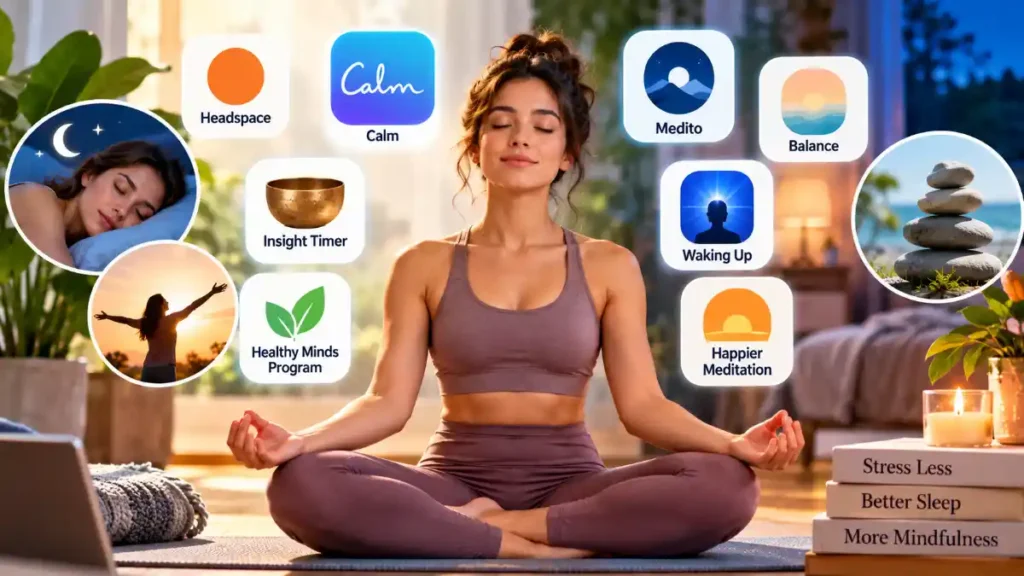
The best meditation apps depend on what you want to achieve. Headspace is a great starting point for beginners who prefer structured lessons, while Calm is particularly appealing for sleep stories and relaxation. Insight Timer offers a huge collection of free guided meditations, and Medito and Healthy Minds Program provide completely free alternatives. If you want personalized sessions, Balance is worth exploring. Waking Up and Happier Meditation are also strong choices for people interested in developing a deeper mindfulness practice.
All eight apps offer guided meditation, but the experience can be quite different depending on which one you choose. Some focus on teaching beginners, others offer calming bedtime audio, and a few provide enough free content to make a subscription unnecessary. Comparing their features, costs, and limitations can help you find an app that fits your routine and budget.
Best Meditation Apps Compared
| Meditation App | Best For | Standout Features | Free Access | US Subscription Price | Main Drawback |
| Headspace | Beginners | Guided courses, breathing exercises, sleep content | Time-limited free trial | $12.99/month or $69.99/year | Most content requires payment |
| Calm | Sleep and relaxation | Sleep Stories, calming music, guided meditation | Limited free content; trial available | Around $14.99/month or $69.99/year | Premium content requires a subscription |
| Insight Timer | Free guided meditation | Large meditation library, customizable timer, sleep tracks | Extensive free library | $9.99/month or $59.99/year | Large library can feel overwhelming |
| Balance | Personalized meditation | Adaptive sessions, breathing exercises, sleep guidance | Trial available | $11.99/month or $69.99/year | Continued access requires payment |
| Healthy Minds Program | Free structured mindfulness | Guided practices, wellbeing lessons, progress-based learning | Completely free | Free | Fewer entertainment-focused features |
| Medito | Completely free meditation | Beginner courses, sleep stories, meditation timer | Completely free | Free | Fewer premium-style features |
| Waking Up | Deeper meditation practice | Guided courses, mindfulness theory, contemplative lessons | Introductory trial; scholarships available | $19.99/month or $129.99/year | Higher standard subscription cost |
| Happier Meditation | Practical mindfulness | Instructor-led lessons, beginner courses, guided sessions | Limited free content; annual-plan trial | $14.99/month or $99.99/year | Most courses require a subscription |
Pricing checked October 26, 2026. These are published or advertised US rates, not guaranteed checkout prices. Calm’s listed monthly price is an approximate example, and its subscription rates can differ between its website, app stores, and promotional offers. Taxes, billing platforms, and regional availability may also affect the final cost.
Which Meditation App Is Best for Your Needs?
1. Headspace: Best Meditation App for Beginners
Headspace takes a step-by-step approach to meditation, making it easier to get started if you’ve never practiced before. Its guided courses introduce breathing, attention, and mindfulness techniques gradually, so you don’t have to figure everything out on your own.
Short sessions are especially helpful when you’re trying to build a daily habit but aren’t ready to spend 20 or 30 minutes meditating.
Beyond its beginner programs, Headspace offers guided meditations for stress, focus, sleep, and other everyday needs. Its organized courses are a good fit if you prefer following a clear learning path instead of browsing through hundreds of recordings.
The main drawback is cost. Although you can explore the app through a free trial, continued access to most courses requires a subscription.
2. Calm: Best Meditation App for Sleep
Calm is a particularly good choice if winding down at bedtime is your main priority. Its Sleep Stories combine gentle narration with relaxing themes, giving you something soothing to listen to as you prepare for bed.
You’ll also find guided meditations, calming music, breathing exercises, and soundscapes designed for relaxation. These features make Calm useful beyond bedtime, especially when you want a quiet break during a stressful day.
Both Calm and Headspace offer meditation and sleep content, but Calm puts more emphasis on relaxation-focused audio experiences.
Most of its library requires a Premium subscription, so exploring the available free content or trial is sensible before paying. Calm also notes that subscription pricing varies by location and purchase platform, making it worth checking the final price before subscribing.
3. Insight Timer: Best Free Guided Meditation App
Insight Timer is an excellent option if you want plenty of meditation choices without immediately committing to a subscription.
Its free meditation library includes more than 300,000 guided practices, sleep tracks, breathing exercises, music recordings, and mindfulness sessions. There’s also a customizable timer for anyone who prefers meditating without spoken instructions.
One of Insight Timer’s biggest advantages is variety. You can explore different instructors, meditation techniques, and session lengths until you find something that feels comfortable.
The optional MemberPlus subscription adds premium courses, offline downloads, and other listening features.
That wide selection has one downside: finding the right session can take some browsing. If you’d rather follow a structured beginner program, Headspace or Healthy Minds Program may feel easier to navigate.
4. Medito and Healthy Minds Program: Best Completely Free Meditation Apps
You don’t necessarily need a paid subscription to learn meditation. Medito and Healthy Minds Program both offer guided practices without charging for access.
Medito keeps things straightforward with beginner courses, breathing exercises, sleep stories, and a meditation timer. Developed by a nonprofit organization, the Medito app is completely free, with no advertisements, paywalls, or mandatory account registration.
That makes it a particularly convenient choice if you want to start meditating without entering payment information or worrying about a trial ending.
Healthy Minds Program takes a somewhat different approach. Alongside guided meditation, it provides educational lessons exploring awareness, connection, insight, and purpose. The free Healthy Minds Program app is designed around a structured framework that combines mindfulness practice with wellbeing education.
Medito makes more sense if you mainly want simple, accessible meditation and relaxation exercises. Healthy Minds Program may be preferable if you enjoy learning why you’re practicing different techniques.
Neither focuses as heavily on entertainment-style sleep content or commercial personalization features as some paid alternatives. For basic mindfulness practice, though, both offer substantial value without subscription fees.
5. Balance: Best for Personalized Meditation
Balance approaches meditation differently by adapting its guided sessions to your preferences, experience, and goals.
Rather than expecting everyone to follow the same program, it uses your responses to help shape the sessions you receive. Its content covers relaxation, concentration, stress management, and sleep.
This is where Balance differs from Headspace. Headspace emphasizes progressing through organized lessons, while Balance focuses more on adjusting the experience to suit the individual.
If you’ve tried meditation apps before but struggled to find sessions that feel relevant, this personalized approach could be appealing.
Balance offers an introductory trial, but you’ll generally need a paid subscription to continue using its full library afterward.
6. Waking Up: Best for Deeper Meditation Practice
Waking Up is worth considering if you’re interested in more than occasional relaxation exercises.
Alongside guided meditation, it explores awareness, attention, and contemplative philosophy. The lessons encourage you to understand what’s happening during meditation rather than simply following instructions to relax.
This makes Waking Up different from apps centered primarily on bedtime stories or quick breathing sessions. Its content is better suited to people who want to study mindfulness and develop a sustained practice.
The standard subscription is relatively expensive, particularly if you only meditate occasionally. However, Waking Up also offers a scholarship program that provides free membership to people who cannot afford the subscription, subject to its current application process.
7. Happier Meditation: Best for Practical Mindfulness
Happier Meditation takes a practical approach to mindfulness, focusing on techniques you can apply to everyday situations.
Its guided lessons cover familiar challenges such as distraction, stress, and maintaining a regular practice. Instead of making meditation feel overly complicated, the instruction emphasizes approachable techniques and realistic expectations.
That teaching style may appeal to beginners who want clear explanations without spending much time exploring meditation philosophy.
You can access a selection of content for free, but most of the instructional library requires a subscription. Eligible new subscribers can try the annual plan for seven days, while the monthly plan begins billing immediately.
Free vs. Paid Meditation Apps: Is a Subscription Worth It?
A free meditation app can be enough to build a consistent mindfulness habit. Medito and Healthy Minds Program provide structured lessons without subscription fees, while Insight Timer gives you a large collection of recordings to explore.
Paying becomes more worthwhile when you regularly use features that aren’t included in free versions. These might include personalized programs, exclusive courses, downloadable sessions, or specialized sleep audio.
Before subscribing, it’s worth taking advantage of the available trials. Headspace offers seven days with its monthly plan and 14 days with its annual plan. Calm advertises a seven-day Premium trial, while Insight Timer and Happier Meditation offer introductory trials on eligible plans. Offers and eligibility can change.
Think about how often you’ll realistically use the app, too. An annual subscription may cost less over a full year, but it usually means paying upfront. A monthly plan gives you more flexibility if you’re still experimenting with different approaches.
Remember that many subscriptions renew automatically. Check the renewal date, cancellation instructions, and refund terms before starting a trial. Depending on where you subscribed, you may need to cancel through the app store or the provider’s website.
How to Choose the Right Meditation App
Start by thinking about what you actually want from meditation. An app with thousands of recordings isn’t necessarily better than one with a handful of lessons you’ll consistently use.
- For beginners: Look for short guided sessions and structured lessons. Headspace and Healthy Minds Program are both sensible starting points.
- For everyday stress and anxiety symptoms: Gentle guided meditations, body scans, and breathing practices may be helpful. Insight Timer, Headspace, and Calm offer relevant exercises.
- For sleep: Calm is worth considering for its Sleep Stories, while Medito provides free bedtime meditation content.
- For focus: Headspace offers guided attention exercises, while Balance can tailor sessions to your preferences.
- For deeper learning: Waking Up is well suited to exploring mindfulness concepts alongside regular practice.
- For a limited budget: Try Medito, Healthy Minds Program, or Insight Timer before spending money on a subscription.
All eight apps are available for iOS and Android, although device requirements and features may differ. Check that your phone meets the minimum operating system requirements before downloading.
The everyday experience matters just as much as the feature list. Choose an app with session lengths that fit your schedule, instructions you can follow comfortably, and a teaching style you enjoy. Progress tracking can be useful, but it shouldn’t make meditation feel like another task you have to complete.
If you often meditate while traveling, check whether your preferred sessions are available offline.
Privacy is another consideration. Wellness apps may collect usage information and other personal data, so review their privacy policies and available account controls before sharing sensitive information.
Can Meditation Apps Help With Stress, Anxiety, and Sleep?
Meditation apps may help some people manage everyday stress, become more aware of their thoughts, and establish a calmer bedtime routine.
Research into mindfulness suggests that certain practices can improve anxiety symptoms and aspects of sleep quality, although the results aren’t consistent for everyone. The National Center for Complementary and Integrative Health’s review of meditation research explains both the potential benefits and the limitations of current evidence.
It’s also important to distinguish research on mindfulness-based interventions from research on individual commercial apps. An app offering guided meditation doesn’t automatically provide the same benefits observed in a clinical study.
For persistent anxiety, chronic insomnia, or other mental health concerns, meditation apps are best used as supportive tools rather than replacements for professional assessment or established treatment.
Read also: Best Meditation Apps
Frequently Asked Questions
Is Headspace or Calm better for beginners?
Headspace is usually the better starting point if you want to learn meditation through structured, beginner-friendly courses. Calm may suit you better if you’re mainly interested in relaxation exercises, sleep stories, and calming bedtime audio. Both offer guided meditation, so your preferred teaching style and goals should guide the decision.
Can meditation apps work without an internet connection?
Yes, some meditation apps allow offline listening, although the feature may require a paid subscription. Insight Timer, for example, includes downloadable sessions with MemberPlus. If you plan to meditate while traveling or without reliable internet, check which recordings you can save and whether offline access is included in your chosen plan.