Ball Joint Problems: Hip and Shoulder Pain, Injuries, and Treatment
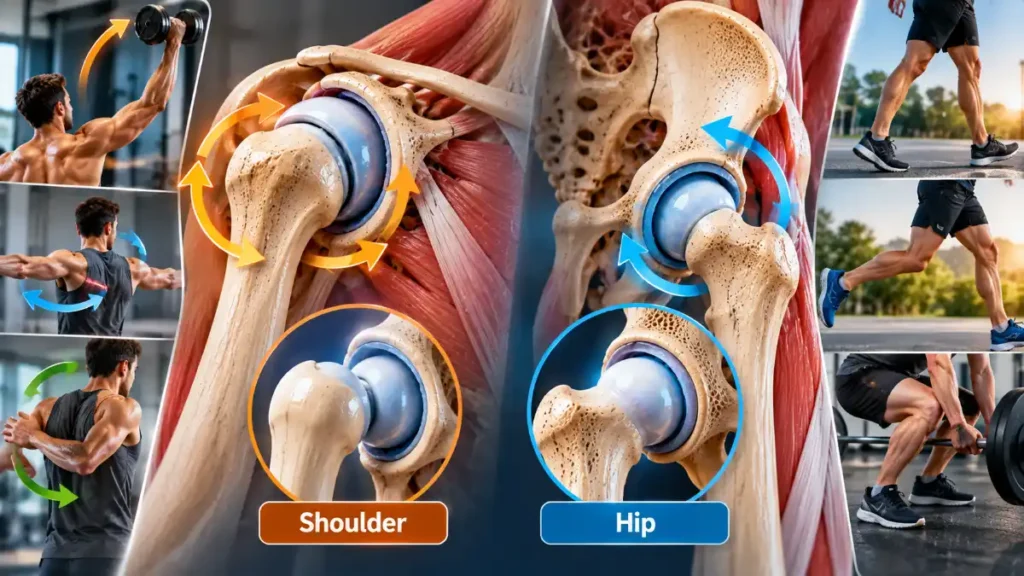
Ball joint problems in the human body commonly affect the hip or shoulder, causing pain, stiffness, weakness, restricted movement, or instability. Both are ball-and-socket joints, where the rounded end of one bone fits into a socket formed by another. Common conditions include osteoarthritis, dislocations, labral tears, and injuries to surrounding muscles and tendons. Identifying the cause matters because treatment varies depending on the condition, its severity, and its effect on everyday activities.
Hip problems often cause pain in the groin, stiffness, or difficulty walking. Shoulder problems may cause pain when lifting the arm, weakness, or a feeling that the joint might slip out of place. Symptoms alone cannot confirm a diagnosis. A visibly deformed joint after trauma, severe injury, inability to bear weight, or a hot, swollen joint accompanied by fever requires urgent medical assessment.
What Is a Ball-and-Socket Joint?
A ball-and-socket joint allows movement in several directions, including rotation. Smooth cartilage covers the ends of the bones, reducing friction during movement. Ligaments, muscles, tendons, and other joint structures help maintain stability and control movement.
The hip and shoulder are the two main ball-and-socket joints in the human body. In the hip, the head of the thighbone fits into a deep socket in the pelvis. This structure provides stability for standing and walking. The shoulder has a relatively shallow socket, allowing greater freedom of arm movement but making the joint more susceptible to instability.
These structural differences help explain why hip and shoulder conditions can produce different symptoms and require different treatments.
Common Ball Joint Problems
Conditions affecting these joints may involve cartilage, bone, the labrum, or surrounding soft tissues. Although symptoms sometimes overlap, the underlying problem determines which treatments are appropriate.
Hip Joint Problems
Hip osteoarthritis develops when the cartilage covering the joint gradually deteriorates. As the protective surface wears down, movement may become painful and stiff. Common symptoms include groin pain, difficulty putting on shoes, and discomfort when walking, standing, or getting up from a chair. Symptoms often develop gradually, although their progression varies.
Hip dislocation occurs when the head of the thighbone moves out of the pelvic socket. It usually follows significant trauma, such as a serious collision or fall. The injury can damage surrounding tissues and may affect blood vessels or nerves. Severe pain, an abnormal leg position, and difficulty moving the leg are possible signs. A suspected hip dislocation is a medical emergency. Never attempt to reposition the joint yourself.
Hip labral tears involve damage to the labrum, a ring of cartilage surrounding the hip socket. The labrum helps deepen the socket and contributes to joint stability. A tear may cause groin pain, clicking, catching, or discomfort during certain movements. These symptoms can also occur with other hip conditions, so an examination may be needed to identify the cause.
Shoulder Joint Problems
Shoulder joint instability occurs when the upper arm bone moves partly or completely out of its socket. Trauma, previous dislocations, and damage to stabilizing structures can contribute to the problem. Symptoms may include pain, weakness, reduced control, or a sensation that the shoulder is slipping.
Shoulder labral tears affect the cartilage rim surrounding the shoulder socket. They may result from an injury, repetitive overhead activity, or other stresses on the joint. Pain, clicking, catching, and instability are possible symptoms, but these signs do not establish that a tear is present.
Rotator cuff problems affect the muscles and tendons that help lift and rotate the arm and stabilize the shoulder. Tendon irritation, degeneration, or a tear may cause pain during overhead movements, weakness, or discomfort at night. Unlike a labral tear, a rotator cuff injury affects the surrounding muscle-and-tendon system rather than the cartilage rim of the socket.
Symptoms of Ball Joint Pain
The location, timing, and severity of symptoms can help a healthcare professional narrow down the possible causes. However, no single symptom reliably identifies every joint condition.
| Symptom | Possible hip-related problem | Possible shoulder-related problem |
| Pain | Groin, hip, or sometimes thigh | Shoulder or upper arm |
| Stiffness | Difficulty walking or rotating the hip | Difficulty reaching overhead or rotating the arm |
| Weakness | Reduced ability to move or support the leg | Difficulty lifting or controlling the arm |
| Instability | May occur with certain injuries | Feeling that the shoulder may slip or dislocate |
| Clicking or catching | May occur with a labral tear or other hip condition | May occur with a labral or other shoulder problem |
Ball joint pain can also originate in tissues outside the joint itself. For example, rotator cuff injuries can cause shoulder pain even when the joint surfaces are not the primary source. Persistent, worsening, or recurring symptoms deserve medical assessment, particularly when they interfere with everyday activities.
How Are Ball-and-Socket Joint Problems Diagnosed?
Diagnosis usually begins with a medical history and physical examination. A healthcare professional may ask when the pain started, whether an injury occurred, which movements aggravate symptoms, and whether weakness, swelling, or instability is present. The examination may assess tenderness, strength, range of motion, walking ability, and joint stability.
X-rays help evaluate bones, joint alignment, fractures, and signs of osteoarthritis. However, they do not show every tendon, labral, or cartilage injury. MRI may be appropriate when a suspected soft-tissue injury requires further investigation. Ultrasound can help assess certain rotator cuff conditions, while CT may be useful for selected bone injuries.
Not everyone needs advanced imaging. The appropriate test depends on the suspected condition, examination findings, injury severity, and whether the result is likely to change treatment.
Treatment Options for Ball Joint Problems
Treatment depends on the diagnosis, severity of symptoms, and a person’s overall health. A plan for osteoarthritis may differ substantially from treatment for a dislocation or significant tendon injury.
Conservative Treatment
For many non-emergency conditions, treatment may begin with modifying activities that aggravate symptoms. Physical therapy can help improve strength, flexibility, joint control, and functional movement. Exercises should be tailored to the affected joint and the underlying condition rather than selected solely according to pain location.
Appropriate pain-relief medication may help some people manage symptoms. The safest option depends on other medical conditions, current medications, and potential side effects. Injections may be considered for selected conditions when other measures provide insufficient relief, but their benefits and limitations vary.
Conservative treatment can help manage osteoarthritis and some soft-tissue injuries. However, it does not replace urgent care for a dislocation or every serious structural injury.
When Are Injections or Surgery Considered?
Medication and injections may relieve symptoms, but they do not necessarily repair damaged cartilage or restore a torn tendon. A healthcare professional should explain the expected benefits, risks, and alternatives before treatment.
Surgery may be considered for particular labral tears, persistent shoulder instability, significant rotator cuff injuries, or advanced hip arthritis that continues to cause substantial pain and functional limitations despite appropriate nonsurgical treatment. Depending on the condition, a procedure may repair damaged tissue, address instability, or replace a severely damaged joint.
A suspected dislocation requires prompt professional assessment. Treatment may involve repositioning the joint under appropriate medical supervision, followed by evaluation for fractures and nerve or blood vessel damage. The appropriate approach depends on the injury and the patient’s circumstances.
When Should You Seek Medical Care?
Seek emergency medical care after a serious injury if the hip or shoulder looks visibly deformed, pain is severe, or the limb cannot be moved or used normally. Inability to bear weight after an injury is also a warning sign. Do not attempt to force a joint back into place.
A joint that becomes hot, swollen, or red, particularly when accompanied by fever or feeling seriously unwell, needs urgent assessment because an infection may be responsible. Do not delay care while waiting for symptoms to improve.
Arrange a medical appointment for persistent or recurring pain, increasing stiffness, unexplained weakness, or difficulty performing everyday activities. Timely assessment can help identify the underlying condition and guide appropriate treatment before symptoms cause further functional limitations.
Frequently Asked Questions
What is a ball-and-socket joint in the human body?
A ball-and-socket joint allows movement in multiple directions. The hip and shoulder are the main examples: the hip provides stability for weight-bearing, while the shoulder allows a wider range of arm movement.
What causes ball joint pain in the hip or shoulder?
Possible causes include osteoarthritis, dislocations, labral tears, and injuries to surrounding muscles or tendons. A medical examination can help distinguish between these conditions.
What are the common symptoms of hip joint problems?
Symptoms may include groin pain, stiffness, reduced hip movement, and difficulty walking or standing. Sudden, severe pain following an injury requires prompt medical assessment.
What causes shoulder joint instability?
Shoulder instability can develop after a dislocation, damage to stabilizing structures, or repeated stress on the joint. Symptoms may include a slipping sensation, pain, and reduced control during arm movements.
Can arthritis affect both the hip and shoulder joints?
Yes. Osteoarthritis can affect both joints, causing pain, stiffness, and reduced movement. Symptoms and treatment options depend on the joint involved and the severity of the condition.
How are ball-and-socket joint injuries diagnosed?
Doctors review symptoms and medical history, examine movement and stability, and use imaging when appropriate. X-rays assess bones and alignment, while MRI or ultrasound may help evaluate selected soft-tissue injuries.
Can ball-and-socket joint problems improve without surgery?
Some conditions improve with activity modification, physical therapy, and appropriate medication. Others may require injections or surgery, depending on the injury, its severity, and how the patient responds to nonsurgical treatment.
When is hip or shoulder pain an emergency?
Seek emergency care for a visibly deformed joint after trauma, severe injury, or inability to bear weight after an injury. A hot, swollen joint accompanied by fever also requires urgent medical assessment.