Are Teeth Bones? Key Differences, Healing, and Dental Health
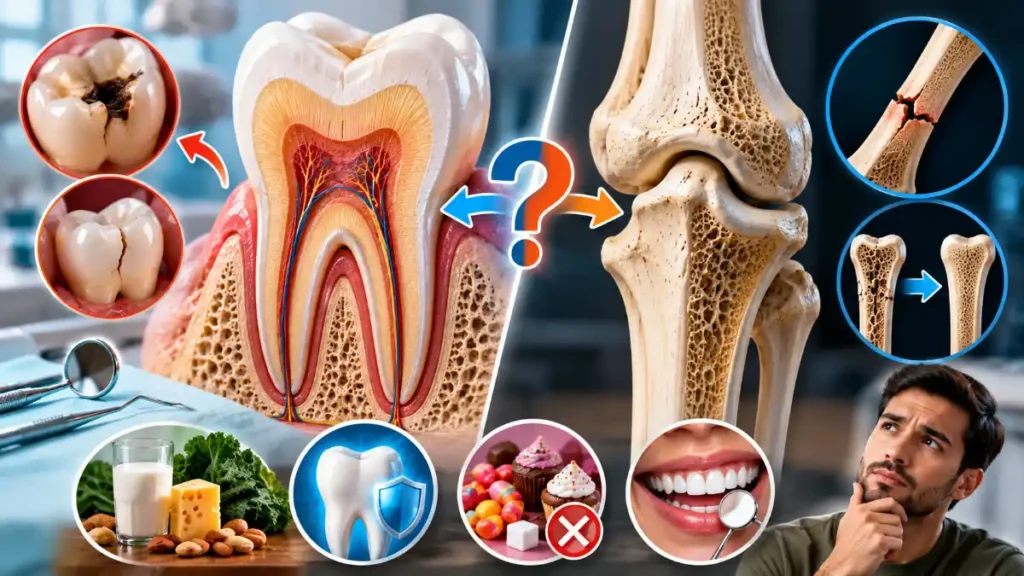
Are teeth bones? No, teeth are not bones, although both contain minerals such as calcium and phosphorus. Teeth have a hard enamel outer layer, while bones are living tissues that can remodel and repair themselves. Teeth contain specialized tissues, including enamel, dentin, and pulp, but mature enamel cannot regenerate after it is lost. This explains why early enamel damage may improve naturally, while a broken tooth or established cavity generally requires professional dental care.
Understanding the difference between teeth and bones helps explain what your body can repair and what it cannot. Nutrition, fluoride, and good oral hygiene help protect teeth, but calcium supplements cannot regrow lost enamel or repair a fractured tooth. Recognizing the difference between early mineral loss and permanent structural damage can help you make better decisions about dental care.
Are Teeth Bones? Understanding the Key Differences
Teeth and bones share important minerals, but their structures and functions differ. Bones support the body, protect internal organs, and contain living cells that maintain and remodel bone tissue. Teeth are specialized structures designed to bite, tear, and grind food.
The main difference is their ability to repair damage. Bone can replace damaged tissue as part of its natural healing process. Mature tooth enamel, however, lacks living cells capable of producing replacement enamel. This distinction explains why teeth cannot heal in exactly the same way as bones.
What Are Teeth Made Of?
Each tooth contains several specialized tissues. Enamel covers the crown and forms its hard outer surface. Beneath it lies dentin, which makes up most of the tooth. The pulp contains nerves, blood vessels, and connective tissue.
Dentin and pulp can respond to certain injuries. Cells associated with the pulp may produce protective, dentin-like material under suitable conditions. However, this response cannot fully restore a severely damaged tooth. Once enamel has physically worn away or broken off, the body cannot naturally replace it.
Why Can Bones Heal More Effectively?
Bone contains living cells that maintain its structure and participate in repair. After a fracture, the body forms new tissue around the break and gradually remodels it as healing progresses.
Teeth have a different biological arrangement. Mature enamel is highly mineralized and contains no living cells or blood vessels. Although tissues beneath enamel can respond to some injuries, they cannot rebuild missing enamel or reliably restore a fractured tooth without dental treatment.
Can Teeth Heal or Regenerate Like Bones?
If you are wondering whether teeth are bones in terms of their ability to recover from injury, the answer is no. However, not all tooth damage is permanent. Recovery depends on whether minerals have been lost from an otherwise intact surface or actual tooth structure has been destroyed.
Can Tooth Enamel Repair Itself?
Tooth enamel repair can occur through remineralization. Saliva supplies calcium and phosphate, while fluoride helps strengthen enamel and supports the reversal of some early mineral loss. This process can improve certain early lesions before a physical cavity forms.
However, remineralization is not the same as regeneration. It cannot replace enamel that has chipped off, worn away, or been destroyed by advanced decay. Early white spots may improve with appropriate care, but a hole in a tooth cannot simply grow closed.
Do Broken Teeth or Cavities Heal Naturally?
A chipped or fractured tooth does not grow a new piece of enamel. Depending on the extent of damage, a dentist may recommend bonding, a filling, a crown, or another treatment. Deeper fractures can involve the pulp and require more extensive care.
Established cavities also generally require professional treatment because remineralization cannot rebuild missing tooth structure. If you notice persistent pain, swelling, a visible crack, or a suspected cavity, arrange a dental assessment instead of waiting for the tooth to heal itself.
How Do Cavities Form, and Can Early Damage Be Reversed?
Cavities develop when acids produced by bacteria in dental plaque remove minerals from tooth enamel. These bacteria use sugars from foods and drinks to produce acids that attack the tooth surface. Frequent sugar exposure creates repeated acid attacks, increasing the likelihood that mineral loss will exceed the tooth’s natural repair processes.
Early decay may appear as a chalky white spot. If the enamel surface remains intact, fluoride, saliva, and appropriate oral care can help restore minerals or stop the damage from progressing.
Once the enamel breaks down and a cavity forms, the situation changes. A dentist generally needs to manage the damaged area and restore the tooth when appropriate. Deeper decay may reach the dentin or pulp, making treatment more complex.
The distinction matters because early enamel damage may be reversible, while a formed cavity involves structural damage. Fluoride toothpaste helps protect teeth, but no toothpaste or home remedy can reliably regrow missing enamel.
How Do Calcium, Phosphorus, and Vitamin D Affect Teeth and Bones?
Calcium and phosphorus are important components of the mineral structures in teeth and bones. Vitamin D helps the body absorb calcium and supports normal bone health. Adequate intake of these nutrients is particularly important during growth and tooth development, as well as throughout adulthood.
Calcium for teeth and bones should be understood as part of overall nutritional health, not as a treatment for existing dental damage. Meeting your nutritional needs supports normal tissue development and maintenance, but consuming extra calcium does not automatically strengthen enamel or rebuild a cavity.
Does Calcium Deficiency Cause Tooth Decay?
Inadequate calcium and vitamin D can affect skeletal health, and nutritional deficiencies during tooth development may interfere with normal dental development. However, calcium deficiency is not the primary direct cause of most cavities.
Plaque bacteria, frequent sugar exposure, inadequate oral hygiene, and insufficient fluoride protection play more direct roles in tooth decay. A person can consume adequate calcium and still develop cavities, just as taking calcium supplements does not guarantee protection against decay.
If you suspect a nutritional deficiency or have difficulty meeting your dietary needs, discuss appropriate changes or supplementation with a healthcare professional. Supplements may be useful for some people, but they cannot replace dental treatment or routine oral care.
How Can You Protect Teeth From Damage and Decay?
Because teeth cannot regenerate lost enamel naturally, prevention is more reliable than trying to repair damage after it occurs. These habits help reduce the risk of cavities and preserve existing tooth structure.
- Brush twice daily with fluoride toothpaste. Fluoride strengthens enamel and helps reverse some early mineral loss. Brush gently and clean all tooth surfaces.
- Clean between your teeth daily. Dental floss or another suitable interdental cleaner helps remove plaque from areas a toothbrush may miss.
- Limit frequent sugary snacks and drinks. Repeated sugar exposure increases the number of acid attacks on teeth. Choose water more often and avoid repeatedly sipping sugary beverages.
- Eat a balanced diet. Include appropriate sources of calcium, phosphorus, protein, and vitamin D to support general and skeletal health.
- Schedule regular dental visits. Examinations help identify early decay and other problems before they become more serious. Visit frequency should reflect your individual dental needs.
- Seek care for damaged teeth. Do not ignore persistent pain, swelling, a visible crack, or a broken tooth. Prompt assessment can help prevent further damage.
These habits cannot make teeth regenerate like bones, but they can reduce the risk of damage and help preserve your natural teeth.
Frequently Asked Questions
Are teeth considered bones?
No. Teeth and bones share mineral components, but teeth contain enamel, dentin, and pulp, while bones are living tissues that undergo continuous remodeling.
Why can bones heal but teeth cannot?
Bone contains living cells that participate in repair and remodeling. Mature enamel lacks living cells, so it cannot grow back after being physically lost.
Can teeth regenerate naturally?
Human teeth do not normally regenerate lost enamel or replace a missing permanent tooth. Early enamel mineral loss can sometimes be reversed through remineralization.
Can tooth enamel repair itself?
Enamel can regain minerals lost during early decay when conditions support remineralization. However, physically missing enamel cannot regenerate naturally.
Do cavities heal without a dentist?
Early decay that has not formed a cavity may be reversed or arrested. An established cavity generally requires professional dental treatment because lost tooth structure does not grow back.
Does calcium deficiency cause tooth decay?
Calcium deficiency can affect nutritional and skeletal health, particularly during development, but plaque bacteria and frequent sugar exposure are major causes of tooth decay.
Do calcium supplements strengthen teeth and bones?
Adequate calcium supports healthy mineralized tissues, and supplements may help people who do not meet their nutritional needs. They cannot rebuild lost enamel or repair cavities.
What is the best way to protect tooth enamel?
Brush twice daily with fluoride toothpaste, clean between your teeth daily, limit frequent sugary foods and drinks, and visit a dentist regularly.