
Kurta: History, Styles, Fit, Fabrics, and Outfit Ideas
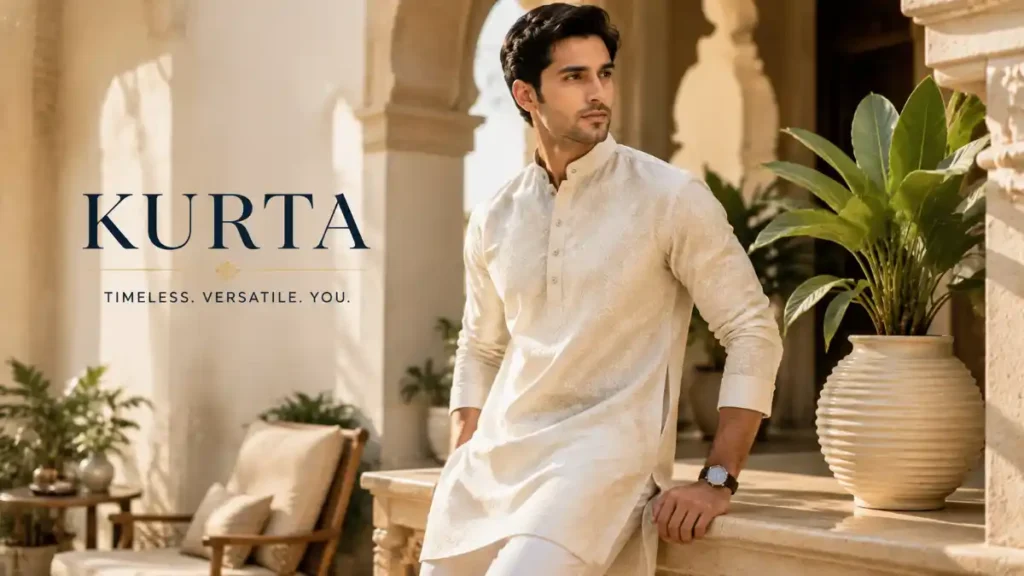
A kurta is a loose tunic-style garment worn by men and women across South Asia. Its appeal comes from its versatility: the same basic silhouette can be adapted for everyday clothing, office wear, festivals, weddings, and contemporary fusion outfits. Different fabrics, cuts, embroidery techniques, regional traditions, and styling choices give this garment a remarkably broad range of appearances.
This guide covers its history, regional traditions, popular silhouettes, fit, fabrics, embroidery, care, and practical outfit ideas for modern wardrobes.
What Is a Kurta?
A kurta is a loose shirt or tunic traditionally associated with South Asia. It can vary considerably in length, neckline, sleeves, fabric, decoration, and construction. Oxford Learner’s Dictionaries defines it as a loose shirt worn by men or women in South Asia and traces the word to Urdu and Persian kurtah.
The garment is commonly worn with different lower-body clothing depending on region, gender, occasion, and personal style. These combinations may include pyjamas, churidars, salwars, palazzos, trousers, or jeans.
That adaptability explains why the garment remains relevant in both traditional and contemporary wardrobes. A plain cotton version can work for everyday use, while silk, embroidered, or heavily embellished versions can become suitable for celebrations and formal occasions.
A Brief History
The history of this garment is more complicated than the common claim that it was simply invented during the Mughal period.
The word has Persian and Urdu connections, while the broader tradition of tunic-like clothing developed over a much longer period across Central and South Asia. Cultural exchange, regional tailoring traditions, local textile production, and courtly as well as everyday dress all influenced the forms associated with the garment.
Historical descriptions also show that its construction was not identical throughout the subcontinent. Length, looseness, closures, and decorative details could differ between regions.
The Mughal and later regional court periods were important chapters in South Asian clothing history, but treating them as the single point of origin oversimplifies a much longer development.
Understanding this history also helps explain why modern ethnic clothing can contain similar silhouettes while having very different regional names, construction methods, and decorative traditions.
Regional Traditions Across South Asia
Regional traditions demonstrate how local craftsmanship and culture can transform a broadly similar silhouette into distinctive clothing.
Lucknowi Tradition
The Lucknowi version is particularly associated with chikankari, the traditional embroidery craft of Lucknow. Chikankari is known for delicate threadwork and is widely used on garments ranging from simple everyday pieces to refined festive clothing.
Modern versions can differ in fabric, color, length, and cut. Lightweight cotton with subtle embroidery is especially suited to understated daytime dressing, while more elaborate versions can work for celebrations.
Hyderabadi Tradition
Hyderabadi clothing developed its own identity through the historic culture of Hyderabad. Traditional descriptions associate some versions with shorter proportions and distinctive neck construction, although contemporary products using the regional label can vary.
When buying one today, it is more useful to examine the actual construction, neckline, fabric, and finishing than to assume every garment follows a single historical pattern.
Bhopali Tradition
The Bhopali style is traditionally associated with a loose silhouette and pleating that creates additional volume toward the lower section. This gives it a flowing appearance that differs from a simple straight cut.
Its relaxed proportions can appeal to people who prefer movement and volume rather than a closely shaped silhouette.
Punjabi and Panjabi Styles
Regional naming is another important part of South Asian clothing culture. In Bangladesh, West Bengal, and Assam, a straight-cut garment of this broad family is commonly called a “panjabi.”
This naming difference does not necessarily mean that the clothing belongs to an entirely separate category. It illustrates how similar forms can acquire different names and cultural identities in different regions.
Sindhi Traditions
Sindhi clothing includes regional forms such as the Pehran or Pehriyan for men and Padhri for women. These garments can incorporate embroidery, appliqué, mirrorwork, and other decorative traditions associated with Sindh.
Because regional clothing contains many local variations, it is better to view these names as part of a broader cultural tradition rather than assuming there is one standardized design.
Read More: Kurta
Popular Silhouettes and Designs
Modern kurta designs extend far beyond the basic straight cut. The silhouette affects how the garment falls on the body and how formal or relaxed the final outfit appears.
Straight Cut
The straight cut has relatively little shaping through the body and creates a simple vertical profile. It is among the easiest options to wear for everyday use, office-friendly ethnic dressing, and understated festive outfits.
For men, it works with trousers, pyjamas, churidars, and jeans. For women, similar silhouettes can be paired with trousers, palazzos, leggings, or coordinated sets.
Pathani Style
Pathani clothing is associated with Pashtun and wider South Asian menswear traditions. Contemporary versions generally emphasize a relaxed yet structured appearance and are frequently paired with salwar-style bottoms.
Modern interpretations vary, so the collar, placket, fabric, and actual fit should be considered rather than relying only on the product label.
Angrakha
The Angrakha is recognizable by its overlapping asymmetrical front, which generally fastens or ties toward one side. This creates a diagonal visual line instead of the central opening seen in many conventional designs.
Contemporary Angrakha-inspired garments are particularly common in women’s festive clothing, although the historical form belongs to a much broader South Asian clothing tradition.
Anarkali
The Anarkali silhouette combines a comparatively fitted upper section with substantial flare toward the hem. It creates a flowing appearance and is widely used in festive and formal women’s clothing.
Because of its volume, this option works particularly well when the desired outfit has a dramatic and celebratory character.
A-Line
An A-line silhouette gradually widens toward the hem rather than maintaining a completely straight profile. It provides additional movement while remaining relatively simple to style.
It can be a practical choice for people who prefer more room around the lower torso without moving to the substantial flare of an Anarkali.
Layered and Cape Styles
Cape and layered designs add an outer layer or overlay to a simpler base garment. These are modern interpretations rather than one fixed historical regional style.
They can create visual depth without depending on heavy embroidery, making them useful for contemporary occasion dressing.
How to Choose the Right Fit
Finding the right fit requires more than selecting a size based on a familiar label. Shoulder width, chest or bust measurement, sleeve length, garment length, fabric drape, and intended use all affect the final appearance.
A brand’s measurement chart is usually a better starting point than assuming the same size will fit identically across different manufacturers.
| Body or Styling Consideration | Suitable Approach |
| Lean frame | Straight or lightly structured cut |
| Fuller midsection | A-line or relaxed straight cut |
| Broad shoulders | Balanced proportions and limited shoulder detailing |
| Shorter height | Shorter or knee-length proportions can create a cleaner visual line |
| Taller height | Longer proportions can work well when balanced with the rest of the outfit |
| Everyday use | Comfortable fabric with moderate ease |
| Formal dressing | More controlled fit with refined detailing |
Read More: Kurta
These are general guidelines rather than strict rules. Personal proportions and comfort should always take priority.
Check the Shoulders
If the garment has structured shoulders, the seam should sit reasonably close to the natural shoulder. Excess material around this area can make an otherwise suitable size look unnecessarily oversized.
Check the Chest or Bust
There should be enough room for comfortable movement without excessive pulling across the chest or bust. Too little ease can restrict movement, while excessive volume can make the silhouette appear unintentionally baggy.
Check the Length
Length has a major effect on the overall appearance. Shorter proportions can work particularly well with jeans or trousers, while longer versions create a more traditional appearance when paired with ethnic bottoms.
Kurta for Men: Styling Guide
A kurta for men can range from a simple cotton garment to an elaborately embroidered outfit for weddings or festivals.
For everyday use, breathable fabrics, restrained colors, and a straight or relaxed silhouette are practical choices. Festive dressing allows more room for richer colors, texture, embroidery, and decorative buttons.
Common combinations include:
- Cotton tunic with straight trousers
- Plain style with jeans for a fusion outfit
- Longer version with pyjama or churidar
- Embroidered style with coordinated ethnic bottoms
- Solid color with a contrasting waistcoat for festive occasions
Balance is important. When the upper garment contains substantial embroidery, simpler accessories and bottoms often create a cleaner overall appearance.
Kurta for Women: Styling Guide
A kurta for women offers extensive variation in silhouette, length, fabric, and decoration. Straight, A-line, Anarkali, Angrakha, layered, and fusion-inspired versions can all create different looks.
For everyday wear, cotton and lightweight fabrics can offer comfort and easy movement. Festive outfits can incorporate chikankari, zari, zardozi, gota patti, prints, textured materials, or coordinated dupattas.
Popular combinations include:
- Straight silhouette with trousers
- A-line design with palazzos
- Anarkali with a dupatta
- Chikankari piece with simple bottoms
- Short version with jeans for fusion styling
The most appropriate choice depends on the occasion, climate, desired silhouette, and personal comfort rather than a universal rule about which style is “best.”
Read More: Kurta
Choosing the Right Fabric
Fabric affects comfort, drape, appearance, maintenance, and seasonal suitability.
Cotton
Cotton is one of the most practical choices for everyday clothing, particularly in warm weather. It is available in many weights, textures, colors, and finishes.
Mulmul
Mulmul is a lightweight cotton fabric valued for its soft and airy feel. It is well suited to relaxed summer clothing where lightness is important.
Khadi
Khadi is associated with hand-spun and handwoven textile traditions. Its characteristic texture gives clothing a natural, artisanal appearance and works well for understated everyday or smart-casual outfits.
Chanderi
Chanderi textiles are known for their lightweight character and subtle sheen. Depending on the weave and fiber composition, they can work for refined daytime clothing as well as festive dressing.
Silk
Silk offers a richer appearance and is commonly chosen for weddings, celebrations, and formal occasions. Because different silk garments have different care requirements, the manufacturer’s instructions should always be followed.
Heavier Fabrics
Velvet and other heavier materials can create a more formal, structured appearance and are better suited to cooler weather.
Necklines, Sleeves, and Embellishment
Small construction details can significantly change the character of an outfit.
Round necklines generally create a simple appearance. Mandarin or band collars often look more structured, while keyhole openings can add a distinctive traditional or contemporary detail.
Full sleeves are common in traditional and formal clothing, while three-quarter and short sleeves can create a more casual appearance.
Embellishment should reflect the occasion. Chikankari offers delicate texture, zari and zardozi create metallic richness, gota patti adds decorative shine, phulkari is known for colorful floral embroidery, and mirrorwork creates a visibly festive effect.
Choosing the Right Style for an Occasion
Instead of beginning with a trend, start with the occasion, weather, and required level of formality.
| Occasion | Suitable Direction |
| Everyday wear | Cotton, simple prints, relaxed or straight cuts |
| Office or smart-casual | Solid colors, restrained detailing, clean silhouette |
| Family gathering | Chikankari, textured cotton, subtle embroidery |
| Festival | Richer colors, embroidery, coordinated ethnic bottoms |
| Wedding guest | Silk, embellished, designer, or statement pieces |
| Formal ceremony | Structured silhouette with refined detailing |
| Casual outing | Short or simple design with trousers or jeans |
Read More: Kurta
There is no universal formula. Cultural setting, comfort, climate, dress code, and personal taste should all influence the final selection.
Modern Outfit Ideas
The garment works particularly well in contemporary wardrobes because it can move between traditional and modern styling.
For a relaxed fusion outfit, combine a plain piece with jeans and clean sneakers. A structured blazer can make a simple garment look more polished without turning it into conventional formal ethnic wear.
For a traditional combination, a longer version can be worn with a pyjama or churidar. Depending on the occasion, a coordinated dupatta or waistcoat can add another layer to the outfit.
For women’s styling, a straight silhouette with wide-leg trousers creates a contemporary look, while an embroidered version with a dupatta produces a more traditional festive appearance.
A useful styling principle is to keep one element as the visual focus. If the garment has elaborate embroidery, simpler accessories can create balance. If it is plain, footwear, jewelry, a dupatta, or a statement bottom can provide contrast.
Care and Maintenance
Correct care helps preserve fabric, color, embroidery, and construction.
For cotton and other washable fabrics, follow the care label and avoid unnecessarily aggressive washing. Strongly dyed clothing may require additional attention to prevent color transfer.
Embroidered pieces need greater care because loose threads, metallic work, mirrors, sequins, and delicate stitching can be damaged by rough handling.
Silk, heavily embellished pieces, and specialty fabrics should be cleaned according to their individual instructions. When a care label recommends professional cleaning, following that guidance is safer than experimenting with home treatments.
Store decorative garments so that embroidery and embellishments do not catch on other clothing.
How to Buy a Better Kurta
Before buying, evaluate five areas: fabric, measurements, construction, detailing, and care.
Fabric: Choose according to climate and occasion rather than appearance alone.
Measurements: Compare your measurements with the seller’s size chart. A medium from one brand may not fit like a medium from another.
Construction: Look at seams, placket alignment, buttons, sleeve attachment, and finishing.
Detailing: Examine embroidery, prints, buttons, mirrors, or other decoration closely. Product descriptions should clearly communicate what is being offered.
Care: Consider whether the garment’s maintenance requirements fit your lifestyle. A delicate formal piece may not be the right choice for frequent everyday use.
Frequently Asked Questions
What is a kurta?
It is a loose tunic or shirt traditionally worn by men and women across South Asia. Its length, cut, fabric, decoration, and regional identity can vary considerably.
Did it originate during the Mughal period?
The history is more complex than a single Mughal-era origin. The word has Persian and Urdu connections, while related tunic traditions developed over a much longer period across Central and South Asia.
What is the difference between a kurta and a kurti?
The terms can overlap in everyday use. Generally, “kurti” commonly refers to shorter or contemporary women’s tunic-style clothing, while “kurta” is a broader term that can describe the traditional garment worn by men or women.
Which fabric is best for summer?
Lightweight cotton is one of the most practical options for hot weather. Mulmul and other lightweight, breathable fabrics can also work well.
Which style is suitable for weddings?
The choice depends on the dress code. Silk, embellished, textured, embroidered, or otherwise formal designs generally create a more occasion-appropriate appearance than very casual cotton pieces.
What is a Lucknowi style?
It is a regional tradition associated with Lucknow and particularly known for its connection with chikankari embroidery. Contemporary examples vary in fabric, color, length, and silhouette.
Is an A-line silhouette suitable for different body shapes?
It can provide additional room toward the hem and may suit people who prefer less shaping around the waist or lower torso. However, no single silhouette is universally ideal.
How should embroidered clothing be washed?
Always check the care label first. Delicate embroidery, metallic details, mirrors, and specialty fabrics may require gentle cleaning or professional care.
Can men wear one with jeans?
Yes. A simple or shorter design can be paired with jeans for a contemporary fusion outfit. Minimal decoration usually makes this combination easier to style casually.
What should I check before buying one?
Check the fabric, measurements, shoulder and body fit, construction quality, embroidery or embellishment, transparency where relevant, and care requirements. The seller’s measurement chart is more reliable than assuming your usual size will fit identically.



1 thought on “Kurta: History, Styles, Fit, Fabrics, and Outfit Ideas”