
Dental Cleaning: Procedure, Types, Cost, Benefits, and Aftercare
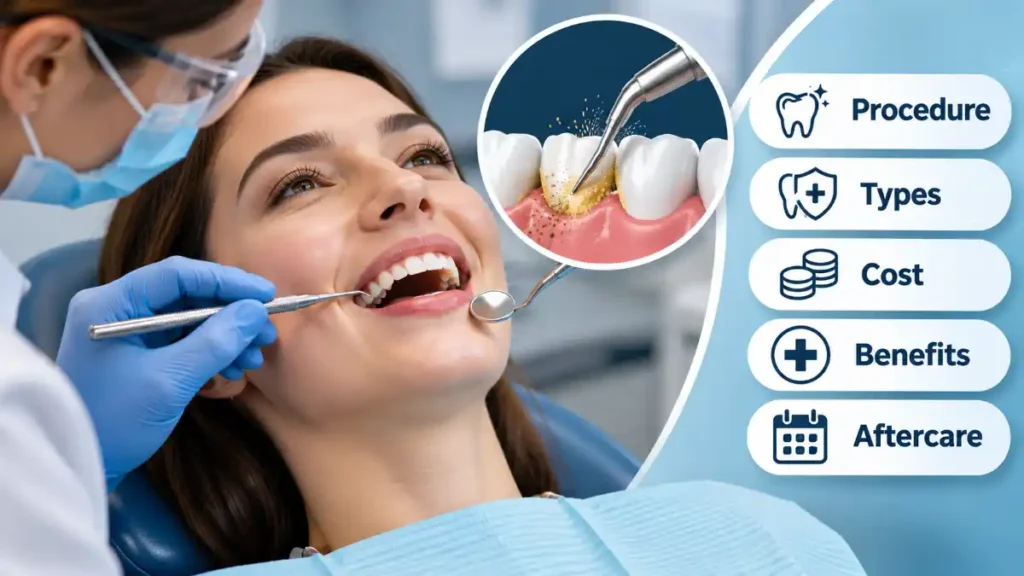
Dental cleaning is a professional preventive procedure that removes plaque, hardened tartar, and surface stains from your teeth. Performed by a dentist or dental hygienist, it helps keep your gums healthy, supports good oral hygiene, and gives your dental team a chance to spot problems early. While brushing and flossing can remove soft plaque, hardened tartar generally requires professional instruments. Most routine cleanings take 30–60 minutes and cause little discomfort.
Professional cleaning works alongside your daily brushing and flossing routine, but it doesn’t replace home care or guarantee protection against cavities and gum disease. Depending on your dental health, you may need a routine cleaning or more specialized periodontal treatment.
| Feature | What to Expect |
| Purpose | Remove plaque, tartar, and surface stains |
| Provider | Dentist or dental hygienist |
| Duration | Usually 30–60 minutes |
| Methods | Scaling and polishing |
| Average US cost | Approximately $200 without insurance |
| Discomfort | Usually mild; temporary sensitivity is possible |
| Frequency | Commonly every six months, depending on individual needs |
What Happens During a Dental Cleaning?
The dental cleaning procedure usually involves checking your oral health, removing plaque and tartar, polishing your teeth, and discussing ways to care for them at home. Although appointments can vary, most follow a similar process.
- Health review and examination: Your dental team reviews your medical history, medications, and any concerns about your teeth or gums. They’ll examine your mouth and may measure the spaces between your teeth and gums to check for signs of periodontal disease.
- Plaque and tartar removal: Your hygienist uses hand instruments or an ultrasonic scaler to remove buildup from your teeth and along the gumline.
- Teeth polishing: A rotating rubber cup and polishing paste are commonly used to remove remaining surface stains and smooth your teeth. Other polishing methods may also be used.
- Additional preventive care: Depending on your needs, the appointment may include flossing, fluoride treatment, or dental X-rays. These services aren’t necessary at every visit.
- Personalized advice: Your dental professional discusses any findings and recommends ways to improve your brushing, flossing, or overall oral hygiene routine.
These steps reflect the standard professional dental cleaning process, although the exact approach depends on your teeth and gums.
If you’re anxious about your first cleaning, let the dental team know before the appointment. Ask them to explain what they’re doing, mention any sensitive teeth, and agree on a signal you can use if you need a break.
Does Dental Cleaning Hurt?
Routine dental cleaning is usually comfortable, though you might notice some pressure, scraping sensations, or mild tenderness around your gums.
If your gums are inflamed, your tooth roots are exposed, or you have significant tartar buildup, certain areas may feel more sensitive. Slight bleeding can also occur, especially when the gums are already irritated, but it doesn’t happen to everyone.
Most routine cleanings don’t require local anesthesia. Deep cleaning, however, may involve numbing because it treats affected areas beneath the gumline.
Types of Dental Cleaning: Routine vs. Deep Cleaning
Not everyone needs the same type of dental cleaning. The right procedure depends on your gum health, the amount of buildup present, and whether you have periodontal disease. Your dentist will assess these factors before recommending treatment.
| Cleaning Type | Purpose and Indication | Treatment Details | Cost Considerations |
| Routine prophylaxis | Preventive cleaning when periodontal treatment isn’t indicated | Removes deposits from accessible tooth surfaces and includes polishing | Typically billed as preventive care |
| Scaling and root planing | Treats periodontitis | Cleans affected root surfaces beneath the gumline; may require multiple visits | Periodontal treatment, often billed by quadrant |
| Full-mouth debridement | Removes extensive deposits that interfere with examination | Clears heavy buildup so the dentist can properly evaluate your mouth | Separately billed procedure; further treatment may be needed |
| Periodontal maintenance | Helps manage gum health after periodontal treatment | Provides ongoing cleaning and monitoring based on your periodontal history | Billed as periodontal maintenance rather than routine prophylaxis |
Bleeding gums or a long gap between dental appointments doesn’t automatically mean you need deep cleaning.
Your dentist considers several findings, including gum pocket measurements, loss of periodontal attachment, bone loss, and inflammation, before diagnosing periodontal disease.
If periodontitis is present, scaling and root planing may be recommended to remove deposits from affected root surfaces beneath the gums.
When performed properly, this treatment isn’t expected to remove healthy enamel or directly loosen healthy teeth. If your teeth already feel loose, damage to the tissues and bone supporting them may be responsible. Your dentist should evaluate any noticeable tooth mobility.
How Much Does Dental Cleaning Cost?
In the United States, routine dental cleaning may cost around 75–200 without insurance, although this is an estimated range rather than a standard price nationwide. An August 2026 US dental cleaning cost review reported an average of approximately $200. Some dental practices charge more.
What you actually pay depends on where you live, the dental practice you choose, your oral health, and which services are included.
Deep cleaning generally costs more because it involves treating periodontal disease. Some estimates put individual deep-cleaning sessions at 150–300 or more, but one session may cover only part of your mouth. Charges per quadrant, costs for multiple appointments, and the total price of treatment aren’t necessarily the same.
You may also be charged separately for examinations, X-rays, fluoride treatments, or follow-up visits.
Before scheduling treatment, ask for an itemized estimate that explains which procedure you need, what areas will be treated, and whether additional fees apply. If you’re still choosing a practice, understanding how to find a qualified dentist can help you compare credentials, services, and pricing before booking.
Does Dental Insurance Cover Teeth Cleaning?
Many US dental insurance plans cover routine preventive cleanings at little or no out-of-pocket cost, provided you meet the plan’s requirements.
However, coverage isn’t identical across policies. Your benefits may depend on:
- How many cleanings your plan allows each year
- Whether you visit an in-network or out-of-network dentist
- Applicable deductibles, copayments, and other policy conditions
- Whether the cleaning is classified as preventive care or periodontal treatment
Deep cleaning and periodontal maintenance may have different coverage rules and patient costs. Because dental insurance benefits vary by plan, check your coverage before the appointment rather than assuming every service will be free.
If you don’t have insurance, dental school clinics, community health centers, and dental discount programs may help lower your expenses. You can also explore low-cost dental care options, including clinics that adjust fees according to income.
How Often Should You Get a Dental Cleaning?
A dental cleaning every six months is a common recommendation, but it isn’t the ideal schedule for everyone.
Your dentist may suggest more or less frequent visits depending on your gum health, cavity risk, tartar buildup, medical history, and previous dental treatment.
For example, someone who has received treatment for periodontitis may need more frequent periodontal maintenance. A person with healthy teeth and gums and a low risk of dental problems might be advised to return less often.
The goal is to choose a schedule that matches your oral health needs. Professional recommendations emphasize individualized preventive dental care rather than assuming every patient needs exactly two cleanings each year.
Your insurance plan’s cleaning limits shouldn’t be the only factor determining how often you receive care.
Dental Cleaning Before and After: Results and Aftercare
After a professional dental cleaning, your teeth may look cleaner and feel noticeably smoother. Removing plaque, tartar, and external stains can improve their appearance, particularly if you’ve had buildup around the gumline.
You might also notice fewer stains caused by coffee, tea, or tobacco. However, dental cleaning isn’t the same as teeth whitening. Cleaning removes surface deposits, while whitening treatments change tooth color through bleaching agents. If your main concern is discoloration, a cosmetic dentist can explain which treatments may be appropriate.
Cleaning also can’t restore damaged enamel or reverse the bone loss associated with advanced periodontal disease.
Some people experience mild gum soreness or temporary tooth sensitivity afterward, especially when their gums were inflamed before treatment.
After a routine cleaning, you can generally return to your normal activities right away. Continue brushing gently with fluoride toothpaste and cleaning between your teeth every day.
If you’ve received fluoride treatment, follow your dental team’s instructions about when to eat or drink. After scaling and root planing, you may need additional guidance because the treated gums can remain sensitive while healing.
Contact your dentist if you experience worsening pain, significant swelling, persistent bleeding, or symptoms that don’t improve as expected.
Frequently Asked Questions
Is dental cleaning safe with braces?
Yes. Professional dental cleaning is generally safe for people with braces and is especially helpful because plaque can collect around brackets and wires. Your hygienist can work around the appliances using appropriate instruments to clean areas that are difficult to reach with a toothbrush or floss.
Can you get a dental cleaning while pregnant?
Yes. Routine dental cleaning is considered safe throughout pregnancy. If you have periodontal disease, necessary treatment such as scaling and root planing can also be performed when clinically appropriate. Tell your dental team that you’re pregnant and mention any relevant medical concerns so they can plan your care accordingly.
What should you ask before booking a dental cleaning?
Ask whether your appointment includes an examination, cleaning, X-rays, or fluoride treatment, and find out which services cost extra. It’s also worth checking your insurance benefits and expected out-of-pocket expenses. If your dentist recommends deep cleaning, ask what examination findings support the diagnosis and which areas need treatment.




1 thought on “Dental Cleaning: Procedure, Types, Cost, Benefits, and Aftercare”