
Binocular Vision Dysfunction: Symptoms, Causes, Tests, and Treatment
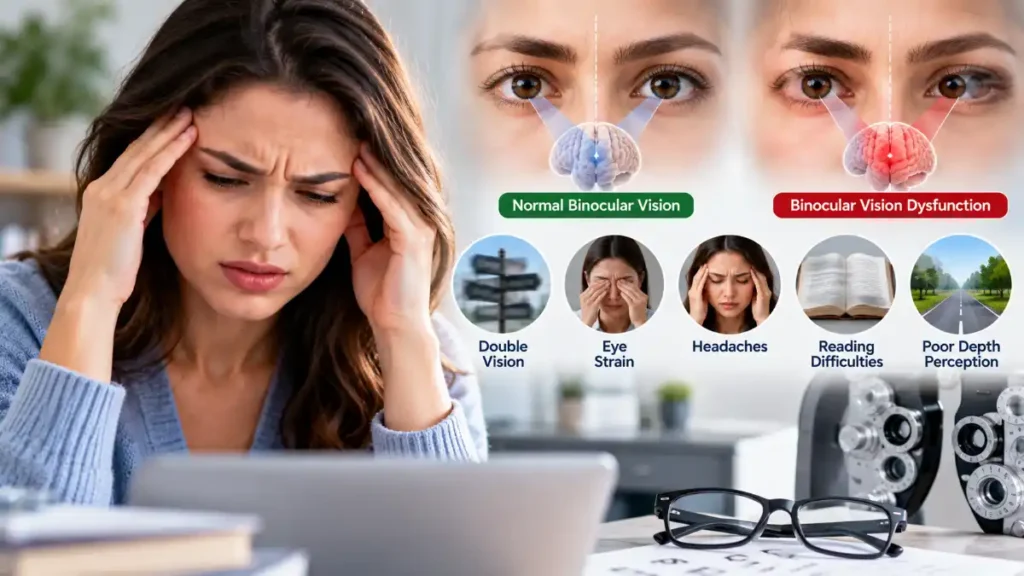
Binocular vision dysfunction (BVD) describes a group of conditions in which the eyes have trouble working together to produce clear, comfortable, single vision. Normally, both eyes focus on the same object, and the brain combines their images into one. When eye alignment or coordination is disrupted, people may experience double vision, blurred vision, headaches, eye strain, or difficulty judging distances.
BVD isn’t a single disease. It includes several binocular vision problems, each with different causes and treatment options. Symptoms can occur even when someone has 20/20 eyesight, so a comprehensive eye examination is often needed to identify the underlying problem.
What Is Binocular Vision Dysfunction?
Binocular vision allows both eyes to work together, helping the brain judge depth, distance, and the position of objects. Proper alignment and coordinated eye movements are especially important when reading, working at a computer, or shifting focus between nearby and distant objects.
Several conditions can interfere with this coordination:
- Convergence insufficiency: The eyes have difficulty turning inward together when focusing on nearby objects.
- Strabismus: The eyes are misaligned, either constantly or intermittently.
- Vertical heterophoria: A tendency toward slight vertical eye misalignment that requires extra effort to keep the images from both eyes aligned.
These conditions affect binocular vision in different ways. Some people experience noticeable double vision, while others mainly feel discomfort during prolonged visual tasks.
The symptoms and underlying mechanisms vary, which is why identifying the specific problem matters. A broader explanation of these conditions is available in the clinical overview of binocular vision dysfunction.
Binocular Vision Dysfunction Symptoms
Binocular vision dysfunction symptoms depend on the underlying condition, its severity, and the activities that place demands on eye coordination.
Common symptoms include:
- Double vision: Seeing two images of one object when both eyes are open. Double vision caused by eye misalignment typically disappears when either eye is covered.
- Blurred vision: Difficulty keeping objects consistently clear, especially during sustained visual tasks.
- Eyestrain: Tired, aching, or uncomfortable eyes after reading or using screens.
- Headaches: Discomfort that develops or worsens during activities requiring prolonged visual concentration.
- Reading difficulties: Losing your place, experiencing visual fatigue, or struggling to maintain comfortable focus.
- Poor depth perception: Difficulty judging distances or determining where objects are positioned.
- Dizziness or motion sensitivity: Feeling uncomfortable or disoriented in visually busy environments or during movement.
- Balance difficulties: Feeling less steady or experiencing visual disorientation in certain situations.
Symptoms may become more noticeable during computer work, reading, driving, or other activities that require sustained visual attention.
Double vision that continues when only one eye is open may have a different cause and still needs medical evaluation. Dizziness, headaches, motion sickness, anxiety, and concentration problems also have many possible explanations. None of these symptoms alone confirms BVD.
What Causes Binocular Vision Dysfunction?
The causes of binocular vision dysfunction depend on which aspect of eye coordination is affected. Some problems begin in childhood, while others develop or become noticeable during adulthood.
Possible causes and contributing factors include:
- Eye misalignment: When the eyes point in slightly different directions, the brain may struggle to combine their images comfortably.
- Convergence problems: Difficulty bringing both eyes inward for close-up tasks can cause discomfort when reading or focusing on nearby objects.
- Refractive differences: Unequal prescriptions or differences in the images formed by each eye may interfere with comfortable binocular vision, although they don’t necessarily cause misalignment.
- Neurological conditions: Disorders affecting the nerves or brain areas responsible for eye movements can disrupt coordination.
- Head injuries: Concussions and other brain injuries can sometimes affect convergence and coordinated eye movements.
In some cases, doctors cannot identify a specific cause. Existing problems may also become more noticeable as visual demands change with age, work, or daily activities.
For example, convergence insufficiency often begins in childhood but can also occur after a concussion or another brain injury.
How Is Binocular Vision Dysfunction Diagnosed?
There is no single standardized binocular vision dysfunction test that identifies every condition. Diagnosis generally requires a comprehensive eye examination to assess how well the eyes focus, align, and move together.
An optometrist or ophthalmologist may use several assessments:
- Medical and symptom history: Reviewing visual complaints, previous eye problems, medications, and relevant medical conditions.
- Visual acuity and refraction: Checking eyesight and determining whether prescription lenses are needed.
- Cover testing: Covering and uncovering each eye to detect alignment problems.
- Convergence testing: Measuring how effectively both eyes turn inward and maintain alignment during near work.
- Eye movement testing: Checking whether the eyes move smoothly and work together appropriately.
- Stereopsis testing: Assessing binocular depth perception when appropriate.
The doctor may recommend additional testing depending on the symptoms, examination findings, and suspected diagnosis.
A comprehensive eye examination assesses more than visual sharpness. It can also evaluate focusing, eye coordination, movement, and other aspects of visual function that basic screenings may miss.
Can You Have BVD With 20/20 Vision?
Yes. Having 20/20 vision means you can see certain details clearly at a standardized distance. It doesn’t necessarily mean your eyes align or coordinate properly.
Someone might read an eye chart without difficulty but develop headaches, eyestrain, or double vision while reading a book or working on a computer.
Similarly, passing a routine vision screening doesn’t rule out binocular coordination problems. Online questionnaires and self-tests may help you recognize symptoms worth discussing with an eye doctor, but they cannot establish a diagnosis.
Binocular Vision Dysfunction Treatment
Treatment for binocular vision dysfunction depends on the specific diagnosis, symptom severity, and examination findings. Options may include prescription glasses, prism lenses, targeted vision therapy, or medical and surgical treatment when appropriate.
Prescription Glasses and Prism Lenses
Regular prescription glasses may improve comfort when uncorrected refractive errors contribute to visual difficulties.
Prism glasses work differently. Their lenses redirect light to change the apparent position of an image, making it easier for some people with eye alignment problems to see a single image or reduce double vision.
However, prism lenses aren’t appropriate for every binocular vision disorder. Their effectiveness depends on the type and degree of misalignment, and they may provide relief without correcting its underlying cause.
Not everyone with BVD needs prism glasses, and an eye care professional should determine whether they are suitable.
Vision Therapy and Other Treatments
Vision therapy uses structured exercises to improve specific visual functions, including convergence and coordinated eye movements.
Certain treatments that train the eyes to work together have demonstrated benefits for convergence insufficiency, particularly in children. However, the evidence is more nuanced than simply saying vision therapy works for every patient.
A randomized clinical trial of convergence insufficiency treatment found improvements in measured eye coordination among children receiving office-based therapy. Self-reported symptoms improved in both the treatment and placebo groups, without a statistically significant difference between them.
Evidence for symptom relief in adults and for other binocular vision disorders remains more limited.
Depending on the diagnosis, treatment may involve supervised exercises, activities performed at home, or both.
For conditions such as strabismus, doctors may recommend optical correction, treatment of an underlying medical condition, or eye muscle surgery when appropriate.
No single treatment has been proven effective for every form of BVD. The most suitable approach depends on identifying the actual problem rather than treating symptoms alone.
Can Binocular Vision Dysfunction Improve or Go Away?
Some binocular vision problems improve considerably with appropriate treatment. Others may require long-term management, particularly when they involve persistent alignment difficulties or underlying medical conditions.
For example, treating convergence insufficiency may involve several weeks or months of exercises. Some patients begin noticing improvement around 12 weeks, while others need more time or continued follow-up.
Progress depends on the diagnosis, severity, associated health conditions, and individual response to treatment.
Prism glasses may reduce symptoms for selected patients, but they don’t necessarily provide a permanent correction. Vision therapy also cannot guarantee a cure or eliminate headaches, dizziness, or other symptoms that may have unrelated causes.
When Should You See an Eye Doctor?
Schedule a comprehensive eye examination if you regularly experience eyestrain, recurring double vision, reading discomfort, or headaches associated with visual tasks.
An eye care professional can assess whether binocular coordination contributes to your symptoms and determine whether further medical evaluation is necessary.
Sudden-onset double vision requires urgent medical assessment, especially if it has never happened before.
Call 911 in the United States or your local emergency number if sudden double vision occurs with warning signs such as:
- A severe or sudden headache
- Facial drooping or weakness
- Difficulty speaking or understanding speech
- Sudden loss of coordination or difficulty walking
- Numbness or weakness affecting one side of the body
New double vision following a significant head injury also requires emergency evaluation.
These symptoms may indicate a neurological emergency rather than a routine binocular vision problem. Medical guidance on double vision and when to seek urgent care emphasizes the importance of prompt assessment.
Do not drive yourself if you develop sudden double vision or other serious neurological symptoms.
Read also: Binocular Vision Dysfunction
Frequently Asked Questions
Can screen time make binocular vision dysfunction worse?
Prolonged screen use can make symptoms more noticeable, particularly if you have convergence insufficiency or difficulty maintaining comfortable near focus. Reading small text or working at a computer for extended periods may increase eye strain, headaches, or blurred vision.
However, screen use alone does not establish a BVD diagnosis or prove that it caused the underlying condition. If symptoms repeatedly interfere with computer work, consider a comprehensive eye examination.
Can children have binocular vision dysfunction without realizing it?
Yes. Children may not recognize or clearly describe problems with eye coordination, especially if their vision has always felt normal to them.
Instead of complaining about double vision, a child might avoid reading, lose their place frequently, rub their eyes, or close one eye during near activities. These behaviors can have several causes, so they should not be treated as proof of BVD.
An eye examination that includes appropriate binocular vision testing can help identify whether an eye coordination problem is contributing to the child’s difficulties.